Gentle Ways To Thaw A Freeze Response Without Overwhelm
When your system drops into freeze, it can feel like you are here, but not really here. Thoughts slow down or race in the background. Your body feels heavy, numb, or far away. You might look “fine” on the outside and feel completely shut down inside.
None of that means you are broken. It means your nervous system is trying to protect you in the only way it knows how.
If you want to understand which stress loop you get pulled into most often, you can start with the Stress Loop Quiz.
You do not need to blast yourself out of freeze. You only need tiny, kind signals of safety.
Quick answer if your brain is foggy right now
Thawing a freeze response works best when it is slow, tiny, and optional. Think warmth, micro-movements, gentle orientation to the room, and breath that does not force big change. Warm hands around a mug, softly naming three things you can see, or wiggling one toe may be enough for today.
If anything feels like “too much,” you are allowed to stop. Pacing is not failure. It is nervous system wisdom.
Why freeze happens
Freeze often shows up when your body decides that fighting or running is not possible or safe. The system hits a kind of internal “brake” to keep you from doing more than you can handle in that moment.
You might notice other signs of dysregulation too, like feeling jumpy, wired, or emotionally flat. If you want a simple overview of how all these stress states fit together, you might like this clear, nervous-system-wide look at what dysregulation can actually feel like in daily life.
Some people drop into what is often called dorsal vagal shutdown. Energy falls, motivation disappears, and even small things feel impossible. If that description fits you, this gentle guide to signs of dorsal vagal shutdown and how to softly come back can offer more context.
Freeze is not a character flaw. It is a survival pattern. That means it can also be updated with new patterns, one tiny signal at a time.
Gentle principles for thawing without overwhelm
When you are working with freeze, three big principles help:
-
Go smaller than you think you need.
-
Stop while it still feels okay.
-
Repeat safe, familiar steps instead of chasing intensity.
These principles are very similar to the idea of titration in somatic work. If you want to understand that more deeply, you might explore this kind explanation of why “titration” can be safer than pushing through when doing nervous system work.
Your system learns not from big heroic moments, but from small, repeated experiences of “I moved a tiny bit and nothing bad happened.”
1. Start with warmth and touch that feel genuinely safe
Warmth can send a simple “you are not in danger right now” message to the body.
You might try:
-
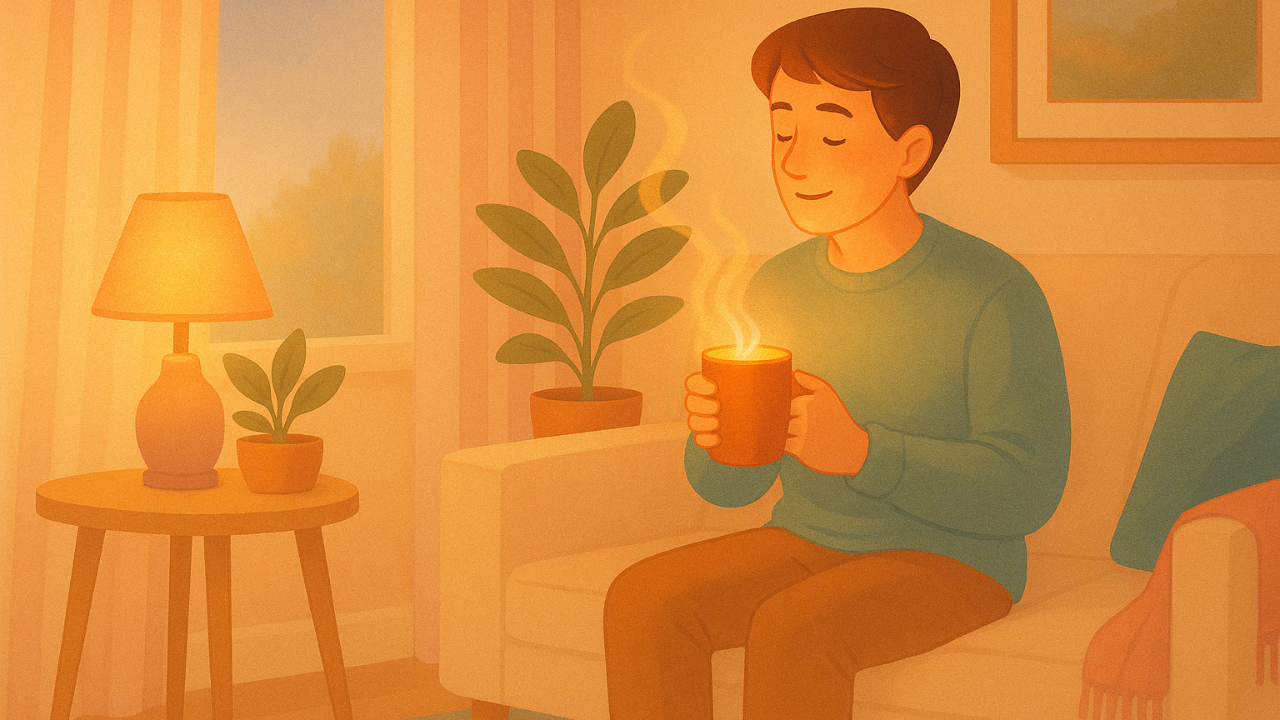
Holding a warm mug in both hands and feeling the temperature against your palms
-
Placing a warm cloth or heating pad (on a low, safe setting) over your chest
-
Putting a soft blanket around your shoulders
You do not have to feel relaxed for this to “work.” All you are doing is offering your body one small piece of information that this moment is different from the past.
If numbness is part of your freeze, it can help to know that this is a very normal response to chronic stress. You might feel less alone reading about why the body sometimes goes numb during stress, and gentle ways to reconnect with sensation.
Micro-script you can whisper or think:
“Just a little warmth is enough. I don’t need to feel anything big.”
2. Use tiny orientation instead of forcing presence
Freeze often pulls attention inward or far away. Orientation is a gentle way to widen your awareness back into the room, without forcing yourself to “be present” all at once.
Try this:
-
Let your eyes land on one object that feels neutral or slightly pleasant
-
Name it softly in your mind: “green plant,” “blue mug,” “window”
-
Let your gaze slide slowly to a second object, then a third
If you like step-by-step guidance, you may find comfort in this slow, body-friendly orienting practice that walks you through calming your nervous system with your eyes and attention.
You only need a few seconds. If your system protests, you can always go back to looking down or closing your eyes.
3. Choose micro-movements the body can actually agree to
Big movements can feel like too much when you are in freeze. Micro-movements are almost ridiculously small, which is why they often work.
Some options:
-
Wiggle one toe inside your sock
-
Gently roll your shoulders a centimeter and roll back
-
Press your feet into the floor for one breath, then release
-
Let your jaw loosen slightly, as if you are unclenching it 5 percent
These tiny cues can support your nervous system in shifting from “completely shut down” toward “a little bit engaged.” If you want examples of how these states look in real life, this story-based article on fight, flight, freeze, and fawn with gentle exits can make things feel less abstract.
You are not asking your body to run a marathon. You are asking it to move a few millimeters.
4. Gentle breath that respects your sensitivity
Many people notice that deep breathing actually makes them more anxious or dizzy. This is especially common after trauma or during freeze.
Instead of big breaths, you can:
-
Inhale for a count of 3, exhale for a count of 4
-
Make the exhale just a tiny bit longer than the inhale
-
Stop if you feel lightheaded, spacey, or trapped
If classic breathing exercises have backfired for you before, it may be soothing to read about why deep breathing can sometimes increase anxiety and what gentler options you can try instead.
One or two soft breaths are enough. Your system will notice even small changes over time.
5. Work with thaw in “sips,” not marathons
Thawing freeze is not about staying activated for long periods. It is about sipping tiny moments of connection, then coming back to neutral or rest.
You might:
-
Set a timer for 1 or 2 minutes
-
Choose one practice from above (warmth, orientation, micro-movement, or gentle breath)
-
Do it once or twice
-
Stop the moment it feels like “too much” or your body starts to protest
Over time, these sips can add up. If you want a more detailed step-by-step on leaving freeze behind with kindness, you can pair this article with a focused guide on coming out of a freeze response gently, especially when you feel stuck in shutdown.
If you notice that your system shifts between shutdown and burnout often, you might also later explore how to tell the difference between a true shutdown response and simple burnout.
You do not have to track all this in your head. Even one tiny sip a day matters.
If you are curious how your stress pattern tends to loop and repeat, the Stress Loop Quiz can give you a gentle starting map.
A 7-day “thaw plan” you can actually complete
Think of this as an experiment, not a challenge. You can change, shorten, or skip any step.
Day 1: Warmth only
Hold a warm mug or cloth for 30–60 seconds. Notice any tiny sensation, or the fact that you notice nothing. Both are valid.
Day 2: Three-object orientation
Look around the room and name three neutral objects. That is all. If you wish to do this exercise deeper, here is a gentle guide for the orienting practice.
Day 3: One micro-movement
Choose one joint (toe, shoulder, jaw) and move it just a little. Then stop.
Day 4: One soft exhale
Inhale for 3, exhale for 4. Do this once. If that is too much, simply sigh gently once.
Day 5: Feet on the floor
Let your feet rest flat. Notice one point of contact (heel, ball of the foot, edge of a toe). Stay with it for a few seconds.
Day 6: Combine two tiny practices
For example, warmth + micro-movement. Or orientation + soft exhale.
Day 7: Choose your favorite
Repeat the one that felt most doable. You are building trust, not testing endurance.
If you like structure, you can later layer this with a slow, daily plan like widening your window of tolerance with very small practices throughout the day.
Common sticking points and gentle fixes
“I feel nothing, so I must be doing it wrong.”
Numbness is a response, too. It often means your system is still protecting you. Staying with the practice for a few seconds, even while feeling nothing, is still contact. The numbness itself may soften over time.
“Trying to thaw makes me feel more panicky.”
Your system might still associate activation with danger. In that case, pause and give yourself permission to stay with more shut-down states for now. Practices that focus on safety, like orienting or touch, may be better than breath-based ones. On days when panic shows up, you might lean on this guide to grounding yourself during panic without needing to talk it all out.
“I jump between freeze and overdoing it.”
This seesaw is common. Your system may not trust that you will stop before overwhelm, so it slams you back into freeze as soon as you feel a little energy. That is why titration, very small amounts of work with lots of breaks, is so protective.
“I hate that I keep ending up in freeze at all.”
It makes sense to be frustrated, especially if this has gone on for years. It might help to remember that this is not a personal failure. It is the nervous system doing its best with old information. You are allowed to be angry and still treat your body with kindness.
FAQs
1. Why does the freeze response make me feel numb or disconnected?
Freeze reduces energy and awareness so you do not have to fully feel what is happening. Numbness, fog, or feeling far away are all common parts of this survival response. They can slowly shift as your body learns it is safer now.
2. How long does it take to thaw a freeze response?
There is no set timeline. Some people notice small changes in seconds. For others, it is a slow, months-long process. What matters most is moving in tiny steps that your system can tolerate, instead of trying to force a big breakthrough.
3. Can I thaw freeze without talking about my trauma?
Yes. Many people start with body-based tools first and only bring in story or memory if and when it feels right. You might focus on warmth, orientation, and gentle breath, and save narrative work for sessions with a trusted professional.
4. What if I get more anxious when I try breathing practices?
You are not alone. Deep breathing can sometimes increase anxiety or dizziness, especially if you already over-breathe without noticing. Try smaller breaths, shorter practices, or different tools like orienting or simple touch.
5. Is freeze the same thing as dissociation?
They overlap, but they are not exactly the same. Freeze is a state where energy drops and the body prepares for “doing nothing.” Dissociation is more about disconnecting from sensations, emotions, or parts of experience. They often travel together, and both deserve slow, kind support.
6. Should I see a professional for this?
If freeze is frequent, intense, or gets in the way of work, relationships, or basic care, consider speaking with a trauma-informed therapist, somatic practitioner, or other qualified professional. You do not have to navigate this alone.
More Gentle Reads
If this topic feels tender, you might like these related pieces:
- Grounding Techniques for Dissociation That Actually Work
- Polyvagal Theory Explained Simply
- EFT Tapping for Nervous System Calming: Simple Points to Feel Safe Again
Disclaimer: This article is educational and not medical advice. If you have health concerns, consider speaking with a qualified professional.
Discover Your Vagal Tone
Find out how dysregulated your nervous system is and get your personalized roadmap to feeling calm, energized, and in control