Gentle Ways To Eat After A Panic Day
If today has been a panic day, I am glad you made it here.
When your body has been in that sharp, wired state, eating can feel confusing. Your stomach may feel tight, fluttery, numb, or like it is not even part of you. Hunger might vanish, or you might only want quick comfort food and then feel sick afterward.
None of this means you are broken. It means your nervous system has been busy trying to protect you.
If you want a clearer picture of which stress pattern you are stuck in, you can start with the Stress Loop Quiz. It can help you see what kind of support your system may be asking for.
Take your time here. You can read this in small pieces.
Quick Answer: How To Eat After A Panic Day
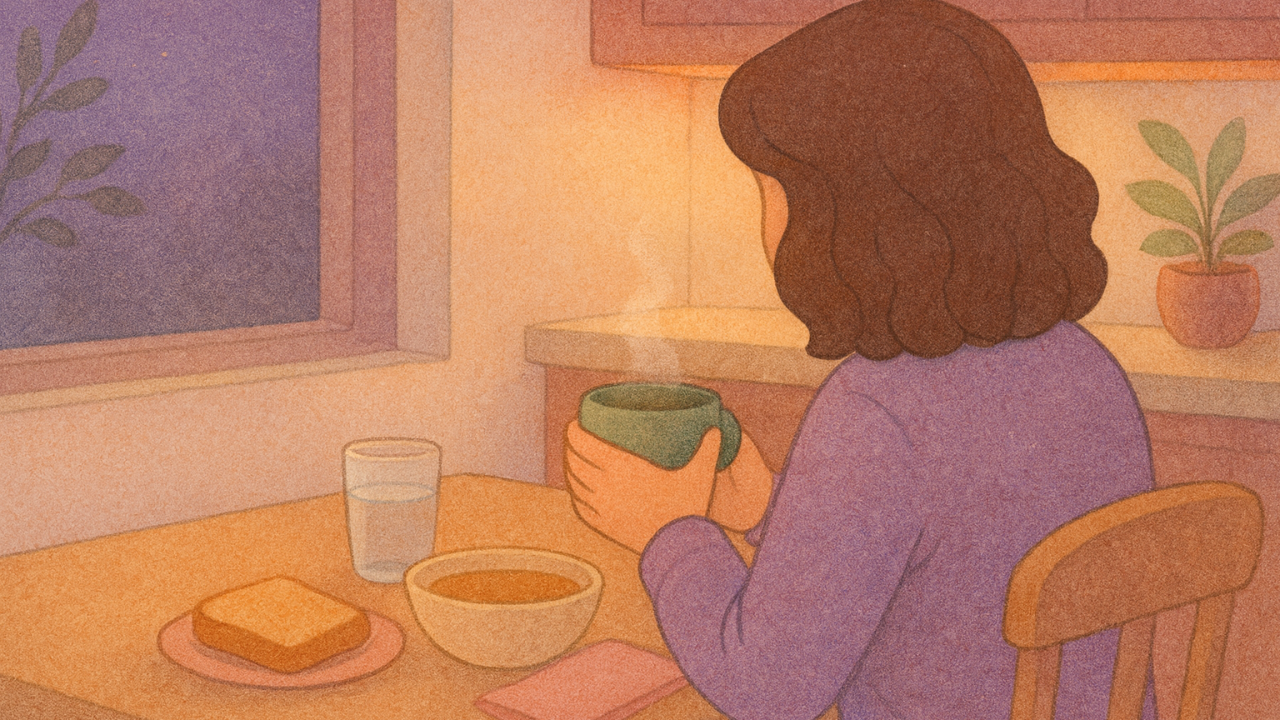
When you have had a panic day, your digestion may slow down or feel “off” for a while. Start with small amounts of warm, soft, simple foods. Sip a warm drink first, then add a few gentle bites. Pause to breathe and orient to the room before and during your meal. You are not trying to eat a “perfect” meal. You are offering your body little signals of safety so your digestion can slowly come back online.
Why Eating Feels So Hard After Panic
When panic shows up, your body often shifts into a survival state. Blood flow and energy get pulled to the parts of you that might need to fight, flee, or freeze. Digestion becomes less of a priority. That is why you can feel nauseous, clamped, or totally shut down around food.
It can help to understand more about what a panic episode actually is in your body and why it feels so intense. A gentle explainer on panic attacks can give you language for what just happened to you.
For many people, panic and digestion are tied into old experiences of stress, fear, or overwhelm. If you notice that “ready to jump out of my skin for no reason” feeling often, you may recognize yourself in this story about constant high-alert states.
Nothing is wrong with you for struggling to eat. Your system is trying to keep you safe with the tools it knows.
Start With Sips, Not Bites
After a panic day, liquids are often easier than solid food. They ask less of your stomach and still send some comfort signals to your body.
You might try:
- Warm water
- Gentle herbal tea, like chamomile, ginger, or peppermint if you tolerate them
- Light broth
- Warm oat milk, almond milk, or rice milk
Take very small sips. Pause between them. Let your shoulders soften if they can. You might even close your eyes for one breath.
If grounding is hard, you can bring your system down a notch before eating. A small, anywhere-friendly practice for grounding during panic without talk therapy can support your body to feel a little more here before you drink or eat.
Even if you only manage a few sips, that counts.
Soft, Warm, Simple Foods That Are Nervous-System Friendly
When your body has been flooded with panic, warm and simple often feels safer than cold and complex.
Many people find it easier to start with:
- Oatmeal or porridge
- Rice or congee cooked until very soft
- Scrambled eggs, if you eat eggs
- Mashed sweet potato or regular potato
- Banana with a little nut butter
- Simple soup with soft vegetables and maybe a bit of rice or noodles
- Soft rice noodles with broth
What you are looking for is softness, warmth, and low effort for your digestion.
If you are curious about how food and nervous system safety fit together, you may like a gentle guide on how to eat to feel safe, with nervous system-friendly meal ideas.
You do not have to follow a strict plan. Think “comforting and simple” rather than “perfect and clean.”
Use Safety Cues Before Each Bite
Eating after panic is not only about what you eat. It is also about the state your body is in while you eat.
Before you sip or take a bite, you might try:
- Put one hand on your belly, one hand on your chest, or let both hands rest around your midsection.
- Inhale gently through the nose if that feels okay.
- Exhale a little longer than you inhaled.
- Let your eyes slowly scan the room and land on three neutral or pleasant things you see.
This is a simple orienting cue plus a bit of soft breath work. It says to your body, “I am here. I am not in that moment anymore. It is safe enough to receive food.”
If classic deep breathing makes you more anxious, you are not alone. Many people do better with shorter, softer breaths or different styles of breathing. You might find relief in a guide that explains why deep breathing can be activating and what to do instead. If you feel dizzy because of over breathing, here is a gentle explainer as to why and some quick supportive tools you can use.
You get to find the version of “safe enough” that fits your body, not someone else’s template.
Listening To Your Gut-Brain Connection
You might notice that your stomach reacts quickly to emotional days. For some people that looks like butterflies, knots, or cramps. For others, it is numbness or a heavy, dull feeling.
This is part of the gut-brain connection. Your digestive system is covered in nerves that talk to your brain and back again. On panic days, that conversation can get very loud.
If you want a simple, non-clinical explanation of this link, there is a gentle article on the gut-brain connection and trauma that breaks it down without overwhelm.
You might also recognize yourself in a piece on “butterflies in your stomach” and how they relate to trauma or anxiety. It can be validating to see your body reactions described in plain language.
Knowing this is a real, nervous-system thing can soften some of the shame and self-blame.
If You Feel Nauseous, Frozen, Or Completely Shut Down
Sometimes, after a panic surge, your system goes into a kind of freeze or collapse. You may feel foggy, slow, or like your body is far away. Food may feel like too much.
In that state, tiny is the goal:
- A single bite of something very soft
- A few spoons of broth
- A piece of toast or a cracker
- A little applesauce, yogurt, or mashed banana
You can pair each tiny bit with a small grounding cue. For example, tap your feet gently on the floor as you swallow, or notice the sensation of the chair holding you.
If you have lived in long-term stress, it can also be helpful to explore how to reconnect with hunger and fullness after chronic stress. This kind of support can help you rebuild trust with your body over time, not in one day.
You can always stop if it feels like too much and return later. Titration, or doing things in small pieces, is a valid way to care for your nervous system.
A Soft Micro-Script For Eating After Panic
You can borrow these words if your inner critic gets loud around food:
“My body is not wrong for feeling this way.
It has been through a lot today.
I am allowed to go slow.
A few sips and small bites are enough for now.”
You can repeat this each time you sit down with food or a warm drink.
Gentle 1-Day Reset Menu After A Panic Day
This is not a diet. It is a very soft suggestion for structure on a wobbly day. Adjust for your own needs, allergies, and culture.
Morning
- Warm drink of choice
- Small bowl of oatmeal, congee, or toast with something simple
- One or two slow breaths and a scan of the room before you eat
Midday
- Soup with soft vegetables and rice or noodles
- Or rice with cooked vegetables and a small amount of protein
- A few minutes to look out a window or notice something neutral in your space after eating
Afternoon
- Snack like fruit, crackers, or yogurt
- Warm tea if that feels okay
Evening
- Soft cooked vegetables
- Potato, rice, or another gentle starch
- A protein that feels easy to digest for you
If you would like a bigger nervous system framework around days like this, the Stress Loop Quiz can help you name the loop you tend to get stuck in and suggest next steps.
A 7-Day Gentle Digestion And Nervous System Plan
You can treat this as a menu of ideas. You do not have to do all of it.
Day 1: Focus on warm drinks and soft foods. A small amount many times is better than a big meal your body cannot handle.
Day 2: Add a simple grounding cue before each snack or meal. Hand on belly. Longer exhale. Look around the room.
Day 3: Bring in a little more protein if it feels okay. Eggs, tofu, beans, lentils, or another option that works for your body.
Day 4: Notice your chewing. Try to chew each bite longer than usual. Not as a rule, but as an experiment in slowing down.
Day 5: After one meal, take a gentle walk or do a tiny movement practice. Even a few minutes can help digestion and nervous system flow.
If you like having a structured nervous system reset to lean on, this 10-minute nervous system reset for overwhelm is a kind option to support your whole system, not just your stomach.
Day 6: Gently bring in more fiber if your body tolerates it. Cooked vegetables, soft fruit, whole grains.
Day 7: Look back on the week. Which foods felt kindest. Which times of day felt easier. You can keep those as part of your personal “safe enough” menu.
You can loop through these seven days again, adjusting as you learn.
Common Sticking Points And Gentle Reframes
“I still have no appetite. Something is wrong with me.”
Your system may still be on alert. Start even smaller. Think spoons and sips, not meals. You can also return to your favorite grounding practice first and see if a tiny bit of hunger appears afterward.
“I am scared that eating will trigger panic again.”
This fear makes sense, especially if you have had panic around food before. You might choose one very safe-feeling food and eat it with lots of pauses. It can also help to pair eating with a calm, repetitive practice like soft humming, tapping your feet, or gently petting a blanket.
“My stomach hurts or feels crampy when I eat.”
Sometimes, after a panic day, the digestive muscles stay tense. Warmth can help. Think warm drinks, a warm pack on your belly, or simply holding your own hands over your stomach for a moment.
“I feel ashamed that I cannot ‘just eat like a normal person.’”
You are not lazy, dramatic, or broken. Your body has been trying to survive. Building resilience to withstand the storms of stress takes time and usually happens through very small changes, not force.
Your pace is valid. Your needs are real.
More Gentle Reads
If this article speaks to you, you might also like:
- How Blood Sugar Swings Fuel Anxiety And Nervous System Overload
-
Hydration for Nervous System Regulation: How Water Helps You Feel Safe Again
And if you want to know which stress loop you are most often stuck in, you can return to the Stress Loop Quiz whenever you are ready.
FAQs
1. Why does my appetite disappear after a panic day?
During panic, your body often shifts into survival mode. Digestion moves down the priority list, so hunger cues can go quiet. This is a nervous system response, not a personal failure.
2. What should I eat first after a panic attack?
Most people do better with something warm, soft, and simple. A small bowl of oatmeal, congee, soup, or mashed potato can be easier on your stomach than a heavy, complex meal.
3. Is it normal to feel nauseous or crampy when I try to eat?
Yes. The muscles in your stomach and gut can stay tense after panic. Warmth, slower eating, and smaller portions may help. If pain is severe or ongoing, consider speaking with a qualified health professional.
4. Should I force myself to eat when I am not hungry?
Try not to force. Instead, offer tiny amounts of food and drink throughout the day. A few sips and small bites can be enough to begin. Your appetite usually returns as your nervous system settles.
5. How can I calm my body before eating?
Many people find it helpful to ground first. You might try a short nervous system reset, gentle orienting, or a soft breathing practice that does not spike anxiety. Pairing a few grounding minutes with your meals can help digestion feel safer.
6. What if panic around eating keeps happening?
If panic keeps pairing itself with food, you are not alone and you are not making it up. Rebuilding trust with your body often needs steady, trauma-informed support. Consider talking with a therapist, dietitian, or other professional who understands both nervous system work and eating.
Disclaimer: This article is educational and not medical advice. If you have health concerns, consider speaking with a qualified professional.
Discover Your Vagal Tone
Find out how dysregulated your nervous system is and get your personalized roadmap to feeling calm, energized, and in control