How To Say No Without a Stress Crash
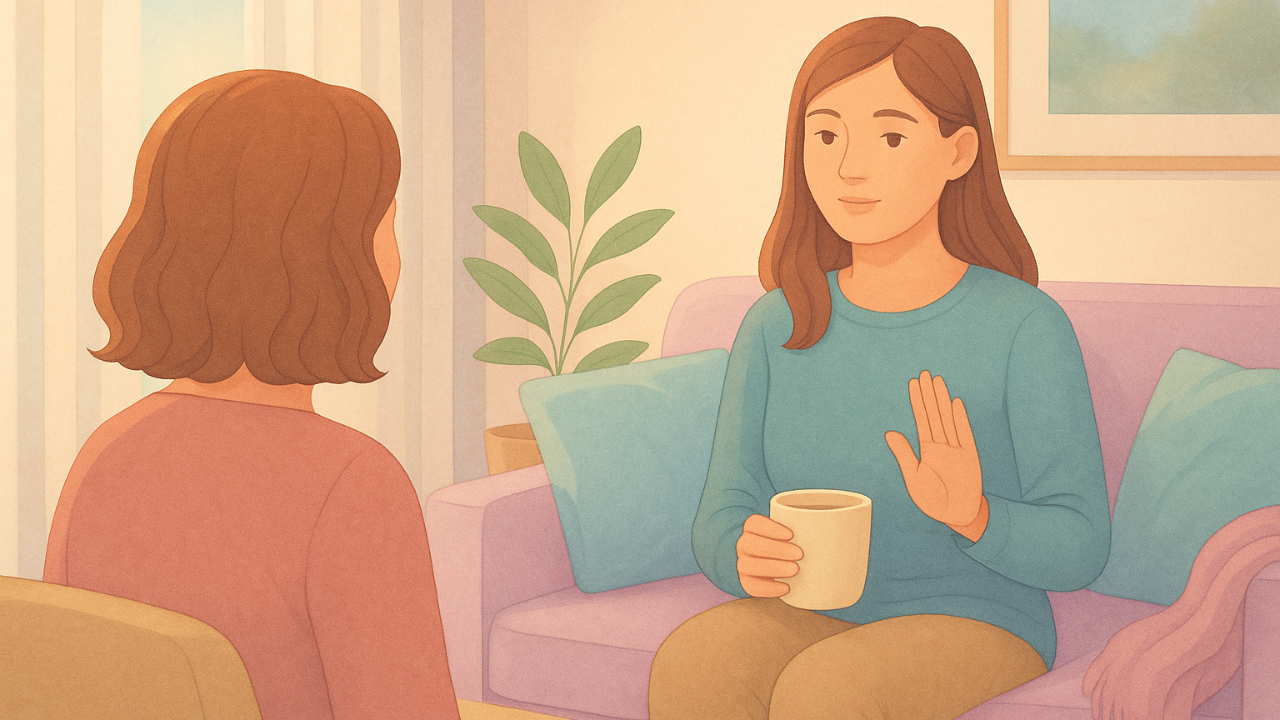
If the word “no” makes your chest tighten or your stomach drop, you are not broken. Many people with a sensitive nervous system feel a jolt of fear the moment they imagine disappointing someone. It can feel like your whole body is suddenly on trial.
You are not dramatic. Your system is trying to protect you.
Before we go further, you might want to understand your personal stress pattern so the rest of this guide lands more clearly. You can take the Stress Loop Quiz.
You deserve boundaries that do not cost you days of recovery afterward.
Quick Answer
Saying no without a stress crash becomes easier when you slow the whole process down, support your body first, and use simple phrases instead of forcing yourself into a big confrontation. Many people find that orienting to the room, softening their jaw, and using “partial no’s” helps reduce guilt and panic. It is less about being “confident” and more about teaching your nervous system that boundaries can be safe.
If you notice your body lives in a constant “ready to jump out of my skin” state, that may also be a sign of past stress and trauma patterns showing up in the present.
Why “No” Can Feel Like a Threat to Your Body
Some people can decline an invitation and move on with their day. For others, even a tiny no triggers:
- a racing heart
- a wave of heat or nausea
- a frozen throat
- a desperate urge to explain or apologize
This is not a personality flaw. It is nervous system history.
If you grew up in environments where saying no led to conflict, shaming, or punishment, your body may now treat boundaries as danger. Your system might jump into fight, flight, freeze, or fawn, even if the current situation is technically safe.
If you want to understand those states with real-life examples and gentle exits, you may find this breakdown of the fight, flight, freeze, and fawn responses supportive.
Your body is not trying to sabotage you. It is trying to keep you belonging, safe, and out of harm’s way, using old maps that once made sense.
Step 1. Support Your Body Before You Say Anything
Instead of jumping straight into the words, give your system a chance to soften first. Think “body first, conversation second.”
You can try one or two of these tiny cues:
1. Orient gently to the room
Let your eyes wander to three neutral or pleasant things. A plant. The window. The pattern on the floor. Name them silently.
“This is my plant. That is the window. There is the chair.”
This reminds your nervous system that you are here, in the present, not back in old conflict. You can refer to this gentle guide for a deeper orienting practice.
2. Loosen your jaw and shoulders
Many people walk around with a clenched jaw and tight shoulders without noticing. Try a slow exhale and let your shoulders drop a centimeter. It does not have to be dramatic.
3. Use a breath style that does not spike anxiety
If deep breathing makes you more anxious or dizzy, you are not alone. Many sensitive systems prefer gentler, smaller breaths instead of big, forced inhales. This guide on what to do when deep breathing makes you more anxious offers alternatives you can test.
Your only goal in this step is not calm perfection. It is “a tiny bit softer than I was two minutes ago.”
If you want more help mapping what calm and activation feel like for you, you can also take the Stress Loop Quiz.
Step 2. Use a Partial No When Your System Is On Edge
Instead of going from “I always say yes” to “I must say a firm no,” you can create a bridge: the partial no.
Partial no’s give you space without forcing your body to handle the full weight of a boundary all at once.
Examples:
- “Let me check my day and get back to you.”
- “I need a little time to think about this.”
- “I can’t say yes right now, but I appreciate you asking.”
- “I’m at capacity this week. Could we revisit this later?”
These responses still honor your limits, but they buy your nervous system time.
If you tend to slide into people-pleasing and later feel resentful or exhausted, it may help to explore a gentle path out of the fawn response and people-pleasing patterns.
Think of partial no’s as training wheels for your system. You can take them off later.
Step 3. Keep Your Actual “No” Short and Kind
When we are anxious, we often over-explain. We stack reasons, apologize three times, and try to manage the other person’s feelings. This usually makes the moment more stressful for us.
Try one of these short, kind boundary scripts:
- “I wish I could, but I can’t take that on.”
- “That doesn’t work for me, but thank you for thinking of me.”
- “Not this time, I need to protect my energy.”
- “I’m not available for that, but I hope it goes well.”
Short phrases are easier to remember when your mind is foggy and your heart is pounding. They also put less load on your nervous system.
If you want a bigger framework for how boundaries protect your body, you might like this gentle guide on setting boundaries to protect your nervous system.
You are allowed to stop talking once you have said your boundary. Silence is not rude. It is often a nervous system necessity.
Step 4. Have an Exit Ritual So You Don’t Crash Afterward
Sometimes the hardest part is not saying no. It is what happens in your body afterward.
Maybe you replay the conversation 50 times. Maybe your stomach flips. Maybe you suddenly feel wrung out, foggy, or numb. This is your system trying to discharge the stress of doing something new.
An exit ritual tells your body, “We are through the hard part. You can settle now.” You might try:
- stepping outside for 30–60 seconds and feeling your feet on the ground
- placing one hand on your chest and one on your belly and taking a small, kind exhale
- wrapping up in a blanket or shawl and letting your muscles slump for a moment
- drinking something warm and noticing the sensation as it moves down
If your system tends to crash into shutdown after stress, you are not weak. Your body may simply be flipping into a dorsal vagal survival pattern. This gentle guide to resetting your nervous system after trauma offers slow, practical steps for coming back online without forcing yourself.
Exit rituals can be very small. You are not trying to erase all sensation. You are just giving your body proof that the threat has passed.
Step 5. Pace Your Boundary Practice So You Don’t Overwhelm Yourself
Trying to transform every relationship at once can send your system into overload. Instead, think like a scientist. Small experiments, repeated often.
You might:
- start with low-stakes situations like declining a store membership card
- practice saying “not today” to a minor request at work
- send a text instead of having a face-to-face boundary talk at first
- choose one relationship where you feel relatively safe and practice there
This is pacing, not avoidance. Titrating your boundary practice helps keep your system inside a bearable zone instead of swinging between overdoing and collapse. If you want a wider container for this work, you can explore how to widen your window of tolerance with simple daily steps.
And if you are about to have a particularly hard conversation, you can also support yourself with a short nervous system plan before you talk.
You are not behind. You are learning how to walk in a new way. That takes time.
Step 6. Notice What Your Body Is Teaching You
Every time you say no, your body gives you data. Maybe your hands shake. Maybe you feel weirdly energized later. Maybe you sleep better.
Instead of judging those reactions, you can treat them as information.
Questions you might gently ask yourself afterward:
- “What did my body do before, during, and after the no?”
- “What helped me feel a little safer?”
- “What made it harder?”
- “Where did I override myself?”
These reflections help you slowly build resilience, so your system can withstand more stress without being thrown into a full crash. Over time, this is how many people begin building resilience to withstand the storms of stress, rather than feeling knocked flat every time.
If you like structure, you can even jot down a few notes after each boundary moment, almost like a small nervous system journal.
And if you want help spotting your patterns, the Stress Loop Quiz can give you a simple starting map.
A Gentle 7-Day Micro-Plan for Practicing No
You do not need to fix your whole life this week. Think very small.
Day 1: Practice one body cue, like jaw softening or a kinder breath, while you imagine saying no.
Day 2: Write down two partial no phrases that feel natural in your own words.
Day 3: Use one partial no in a low-stakes situation. Notice how your body feels afterward.
Day 4: Choose one short boundary script and say it out loud to yourself in the mirror. No pressure to use it yet.
Day 5: Say no in a small real-life moment and follow it with an exit ritual.
Day 6: Reflect on where you still say yes when your body is begging for rest. Offer yourself compassion instead of blame.
Day 7: Say one nourishing yes to yourself, like going to bed earlier or turning your phone off during dinner. This supports the same nervous system that is learning to say no.
Common Sticking Points (You Are Not Alone In These)
“I feel so guilty afterward.”
Guilt often shows up whenever we do something new that protects us. It does not always mean we did something wrong. Many people find that the more they pair boundaries with kindness, the less sharp the guilt becomes over time.
“I freeze and lose my words.”
This is a common nervous system pattern, not a character flaw. You can still protect yourself by saying, “I need to think about that and get back to you.” That tiny sentence can give your freeze time to thaw.
“My body goes numb or checked out.”
This can be a form of protection too. If you recognize yourself in the experience of going numb under stress, this gentle guide on why the body goes numb and how to reconnect with somatic tools may help.
“What if they leave or get angry?”
This fear is often very old. It deserves care, not dismissal. It may help to talk about this with a trauma-informed professional who understands how nervous systems adapt to past experiences.
“I want a step-by-step path, not just ideas.”
You are allowed to want structure. Try taking one concept from this article and pairing it with a simple nervous system exercise, like a 10-minute reset for overwhelm, so your body has a practical outlet.
More Gentle Reads
If this topic stirs a lot inside you, these related guides may feel supportive next:
FAQs
1. Why does my body panic when I try to say no?
For many people, the word “no” is tied to earlier experiences of conflict, shaming, or emotional danger. Your nervous system remembers, even if your thinking brain knows you are safe now. The panic is protective, not proof that you are weak.
2. Is it normal to feel guilty even when my boundary is reasonable?
Yes. Guilt often rises whenever you do something that protects you but feels unfamiliar. Over time, as your system learns that nothing terrible happens when you set limits, the guilt usually softens.
3. What if I freeze and can’t get any words out?
You can lean on simple backup phrases, like, “I need a moment to think about that,” or “Can I get back to you later?” These responses buy you time to regulate, then you can follow up by text or message once you feel more grounded.
4. How can I practice saying no without risking my closest relationships right away?
Start with low-stakes situations, or with people who feel safer. You might practice at a store, in a casual work setting, or by declining minor favors. Think of these moments as warm-ups, not tests.
5. What if my body crashes into exhaustion after setting a boundary?
That crash can be a sign that your system is shifting from high activation into a shutdown pattern. You can support yourself with very gentle, non-intense practices, like warm drinks, soft movement, or short orienting exercises, instead of pushing through.
6. When should I consider talking with a professional about this?
If your fear of saying no is affecting your health, relationships, work, or sense of self-worth, or if you feel stuck in long-term anxiety, panic, or shutdown, it may help to connect with a trauma-informed therapist or practitioner. You deserve support that honors your pace.
If you want a clearer picture of how your own stress pattern shapes the way you say yes and no, you can start with the Stress Loop Quiz.
Remember, you are allowed to protect your body and your heart at the same time.
Disclaimer: This article is educational and not medical advice. If you have health concerns, consider speaking with a qualified professional.
Discover Your Vagal Tone
Find out how dysregulated your nervous system is and get your personalized roadmap to feeling calm, energized, and in control