Interoception Training for Anxiety, A Gentle Beginner’s Guide
If you live with constant anxiety, you might feel like your body is a mystery. One minute you are “fine,” and the next your heart is pounding, your stomach flips, or your skin feels like it is buzzing. Interoception training is one way to slowly make your inner world feel less confusing and less scary.
If you would like help understanding your personal stress pattern, you can take the Stress Loop Quiz.
Sometimes that “buzzing for no reason” is actually your system responding to old stress or trauma. If you relate to feeling permanently on edge, you might feel less alone reading about what it is like to always feel ready to jump out of your skin.
Quick Answer
Interoception training is the practice of gently noticing your internal body signals, such as breath, heartbeat, tension, hunger, or temperature. For anxiety beginners, the goal is not to control every sensation, but to recognize early cues of stress before they explode into panic or shutdown. Over time, small, regular interoception moments may help you feel more grounded, more predictable to yourself, and a little safer in your own skin.
Why Interoception Matters When You Live With Anxiety
When your nervous system has been stressed for a long time, your body might only get your attention when something feels “wrong.” Heart racing. Stomach in knots. Chest feeling tight. It can feel like anxiety just jumps out of nowhere.
Interoception training can gently help you:
- Notice early signals instead of only emergencies
- Understand how your body says “too much”
- Respond sooner with kindness instead of panic
- Build trust that your body is not always the enemy
A simple way to understand why your body does this is to look at how your nervous system shifts between threat and safety. A kind explanation of these states is in this guide to polyvagal theory that keeps the science very simple and practical.
For some people, anxiety shows up as classic “butterflies” or stomach flutters that are actually nervous-system signals, not just random digestion. If you have ever wondered whether the flip in your stomach is trauma or anxiety, you might appreciate a gentle breakdown of those tender gut sensations.
A Gentle Start: 3 Simple Interoception Practices
These are small, beginner-friendly practices. You do not need to “do them right.” You only need to be curious, and willing to stop if anything feels like too much.
1. One-Word Temperature Check
Pick one spot in your body: your hands, your cheeks, or your feet.
- Notice the temperature for one breath.
- Give it one simple word: “warm,” “cool,” or “neutral.”
- Then you are done.
That is it. No deep insight needed. Just naming a sensation without judging it.
2. Where Your Body Meets the World
Sit or lie down. Let your attention move to the places where your body is supported.
- Notice the weight of your thighs on the chair.
- Notice your back on the couch.
- Let your body sink in one tiny bit more, if that feels safe.
If your system tends to slide toward numbness or “checked out,” it may help to read a gentle explanation of why your body goes numb during stress and how to re-enter slowly, without forcing it.
3. Chest and Belly Listening
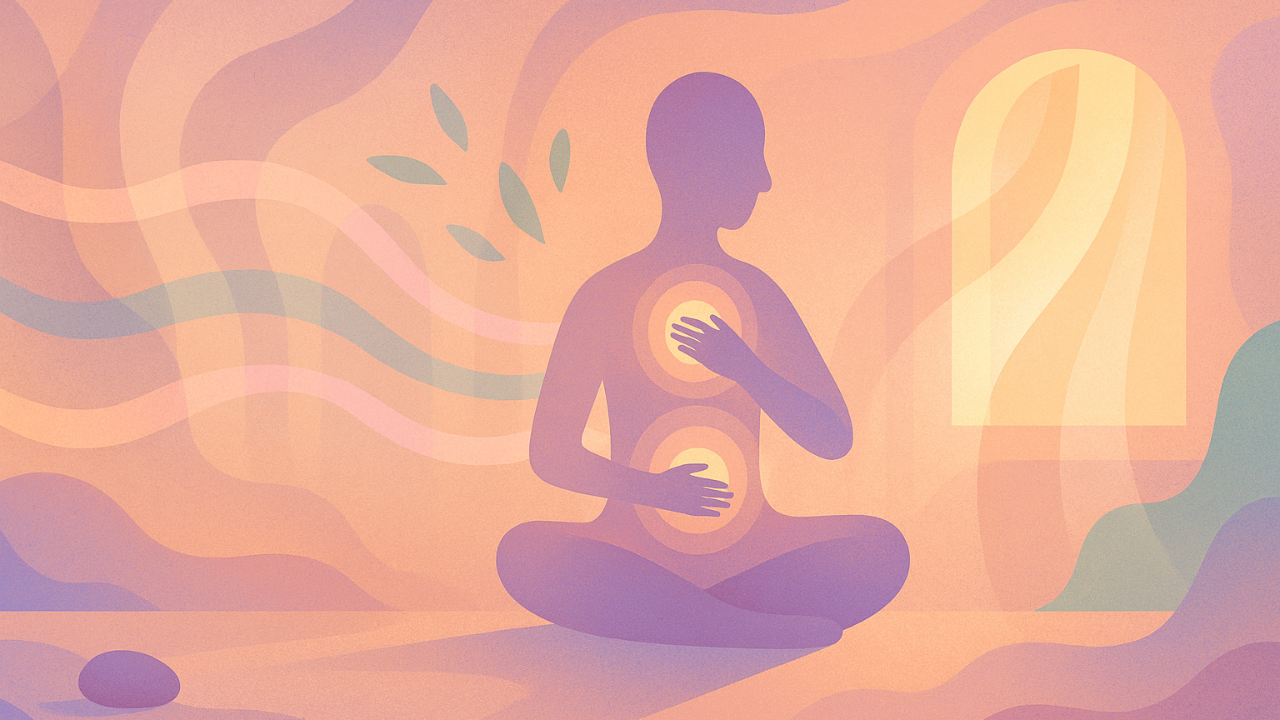
Place one hand on your chest and one on your belly.
- Take 2 or 3 natural breaths.
- Simply notice which hand moves more.
- If you like, whisper to yourself, “I am just listening, not fixing.”
If focusing on breath makes you anxious, you are not broken. Many people with trauma or strong anxiety find that classic “deep breathing” actually ramps them up. If that is you, it may help to explore some gentle alternatives and reasons why deep breathing can backfire.
When Body Sensations Feel Scary
For some people, turning their attention inward is not calming at first. It can be intense or even frightening. If this is you, you are not failing. Your system is simply used to equating sensation with danger.
Here are a few common experiences.
“As soon as I notice my body, I panic.”
If watching your heartbeat or breath spikes your anxiety, stay with very small doses. One second of noticing. One gentle label. Then shift your focus to the room or something neutral.
It can help to have a separate set of tools just for those moments when anxiety surges. You might like a guide to grounding during panic that you can use anywhere, with no talking required.
If a panic spike has already happened, you might also appreciate a step-by-step way to ground after a panic attack, so the body does not feel abandoned right after such an intense experience.
“I feel nothing at all.”
Numbness, fog, or “nothing” is still a body state. You can treat “I feel nothing” as a valid sensation. You might say, “Right now I notice numbness,” and then gently move your awareness to something neutral like your hands or your feet.
“My stomach is always tight.”
Many anxious bodies store fear and stress in the gut. Trauma and anxiety can both create patterns where the stomach tightens long before the mind notices. Learning how your gut and brain talk to each other may help you feel less confused by those constant flutters or cramps, and more able to respond kindly instead of with frustration.
A Tiny 7-Day Interoception Plan
Think of this as a friendly experiment, not a test. You can skip days. You can make anything smaller.
Day 1
Notice temperature in one body part for a single breath.
One word: warm, cool, neutral.
Day 2
Notice where your feet touch a surface.
Let them be heavy for two breaths.
Day 3
Hand on chest for three breaths.
Notice if the breath is short, long, or medium. No need to change it.
Day 4
Before you eat, notice your stomach.
Is it empty, full, or “I have no idea”? All answers are valid.
Day 5
Set a gentle reminder in your phone: “What is my body saying?”
Look around the room, then check one sensation in your body.
Day 6
Do a 30-second head-to-toe scan.
Start at the top of your head. Move slowly down to your toes.
Just notice, “tight,” “soft,” “numb,” or “okay.”
If you want a deeper body scan practice, this gentle guide and script can help.
Day 7
Choose your favorite practice and repeat it twice that day.
Morning and evening, or whenever works for you.
If you want help seeing your patterns over time, you might enjoy using journal prompts that help you track which nervous system state you are in, without judgment.
Common Sticking Points and Kind Fixes
You forget to practice.
Attach it to something you already do: brushing your teeth, starting your laptop, or making tea. One breath and one body word is enough.
You are scared of “opening the floodgates.”
Interoception does not have to mean diving into old memories. You are just noticing sensations. If anything feels too big, you can come back to external orienting, sound in the room, or a nearby color. You decide the dose.
You feel ashamed that you cannot feel your body “like other people.”
If you grew up with a lot of stress, your body likely did its best to protect you by turning down certain signals. That was intelligent, not wrong. You can rebuild connection now, slowly, at your own pace.
If you want a simple overview of how stress, trauma, and your nervous system fit together, this gentle guide to resetting your nervous system after trauma offers a practical, non-blaming view of why you feel what you feel.
If you would like to see which stress pattern you fall into and get next steps that match your body, you can take the Stress Loop Quiz.
Letting Interoception Stay Tiny
Interoception training for anxiety beginners is not about becoming hyper-focused on every twinge. It is about:
- Making space for your body to say, “I am here.”
- Listening just long enough to understand the message.
- Responding with small acts of care instead of criticism.
Your body has carried you through a lot. It may be protective, jumpy, or flat because it has had to survive. You are allowed to meet it now with curiosity instead of anger, one small sensation at a time.
If you notice that your anxiety often shows up in waves of physical discomfort, like chest tightness or racing heart, and you want to understand panic more clearly, there is a gentle explainer on what panic attacks are and why they happen that might help things feel less mysterious.
Remember, interoception is simply practicing, “What is my body saying right now?” and “How can I be a little kinder to that signal?”
FAQs
What is interoception in simple terms?
Interoception is your ability to notice internal body signals, like your heartbeat, hunger, tension, or the feeling of your breath, and to make sense of what they might be telling you.
How can interoception training help my anxiety?
For many people, interoception practice makes anxiety feel less “out of nowhere.” You start to notice earlier cues that you are getting overwhelmed, and this gives you more chances to pause, ground, and soothe yourself before things explode.
What if feeling my body makes me more anxious?
You can work in tiny doses and stay with very neutral sensations, like your feet on the floor or your hands resting on your lap. You can also mix in grounding tools that keep you connected to the room so you do not feel lost inside your body.
Do I have to do long practices?
No. One breath of noticing, one simple word, counts. You can always stop if anything feels too intense. Short, frequent, safe-feeling check-ins are often more effective than long, overwhelming sessions.
Can I do this if I feel numb or “not in my body”?
Yes. Numbness and disconnection are real sensations too. You can start there, gently, and slowly add very small bits of contact with neutral or pleasant sensations, like warmth on your hands or the feeling of a soft blanket on your legs.
When should I get extra support?
If sensations feel overwhelming, frightening, or linked with memories that are hard to handle alone, consider reaching out to a trauma-informed therapist, doctor, or other qualified professional to walk with you at a pace that feels safe.
Closing
Interoception training is not a performance. It is a slow, kind way of saying to your body, “I am willing to listen now, a little at a time.” Even if you only manage a single breath of noticing each day, that is still practice. It still counts.
If you would like help understanding your unique stress loop and what might actually help your body feel safer, you can take the Stress Loop Quiz.
This article is educational and not medical advice. If you have health concerns, consider speaking with a qualified professional.
More Gentle Reads
If you want to keep exploring this topic in small, digestible steps:
- How to Widen Your Window of Tolerance Daily
- Feeling Your Body Again After Numbness
- Grounding Techniques for Dissociation That Actually Work
Disclaimer: This article is educational and not medical advice. If you have health concerns or symptoms that worry you, consider speaking with a qualified healthcare professional.
Discover Your Vagal Tone
Find out how dysregulated your nervous system is and get your personalized roadmap to feeling calm, energized, and in control