Calm Your System After Anxiety Dreams
If you just woke up from anxiety dreams and your body feels like it is still “in it,” you are not alone. This can feel like waking up already behind, already braced, already trying to catch your breath.
Before you scroll or start problem-solving, take the Stress Loop Quiz. It can help you name what pattern your nervous system is running, and what usually helps you come back down.
A simple answer you can use right now
After waking from an anxiety dream (also called stress dreams, vivid dreams, nightmares, or an adrenaline wake-up), focus on three things: orient to the room, lengthen the exhale just a little, and add steady pressure or warmth. Keep it small. One to three minutes is enough to signal, “It’s morning, the dream is over, I’m here now.”
Why your body reacts like it was real
Dreams can activate your threat system. So even if your mind knows you are safe, your body may wake with a racing heart, tight chest, shaky stomach, or a “something is wrong” feeling. Sometimes it overlaps with nocturnal panic sensations or waking anxiety, even when there is no clear trigger.
If panic shows up in your mornings, it may help to understand what your body is doing, and why. Here’s a gentle explainer you can come back to What Are Panic Attacks? Why Do They Happen? Can I Stop Them?
The 3-minute “still in bed” reset
This is designed for those first moments when your system is loud and you need something simple.
Step 1: Orient to the present (30–45 seconds)
Let your eyes move slowly around the room. Name 3 neutral details:
“Ceiling.” “Door.” “Curtain.”
Then add one sentence:
“I’m in my room. This is today. The dream is over.”
If you want a clear, step-by-step version of orienting you can reuse anytime, this guide helps: Orienting Practice: A Gentle Way to Calm Your Nervous System.
Step 2: Make the exhale a little longer (45–60 seconds)
No intense breathing. No big inhale.
Try:
-
inhale normally through the nose
-
exhale gently through the mouth, slightly longer than the inhale, like you are fogging a mirror
Do 5 slow rounds.
If breathing practices tend to spike anxiety for you, you are not doing it wrong. Use alternatives instead: Why Deep Breathing Makes Me More Anxious, And What To Do Instead
Step 3: Add steady pressure or warmth (45–60 seconds)
Choose one:
-
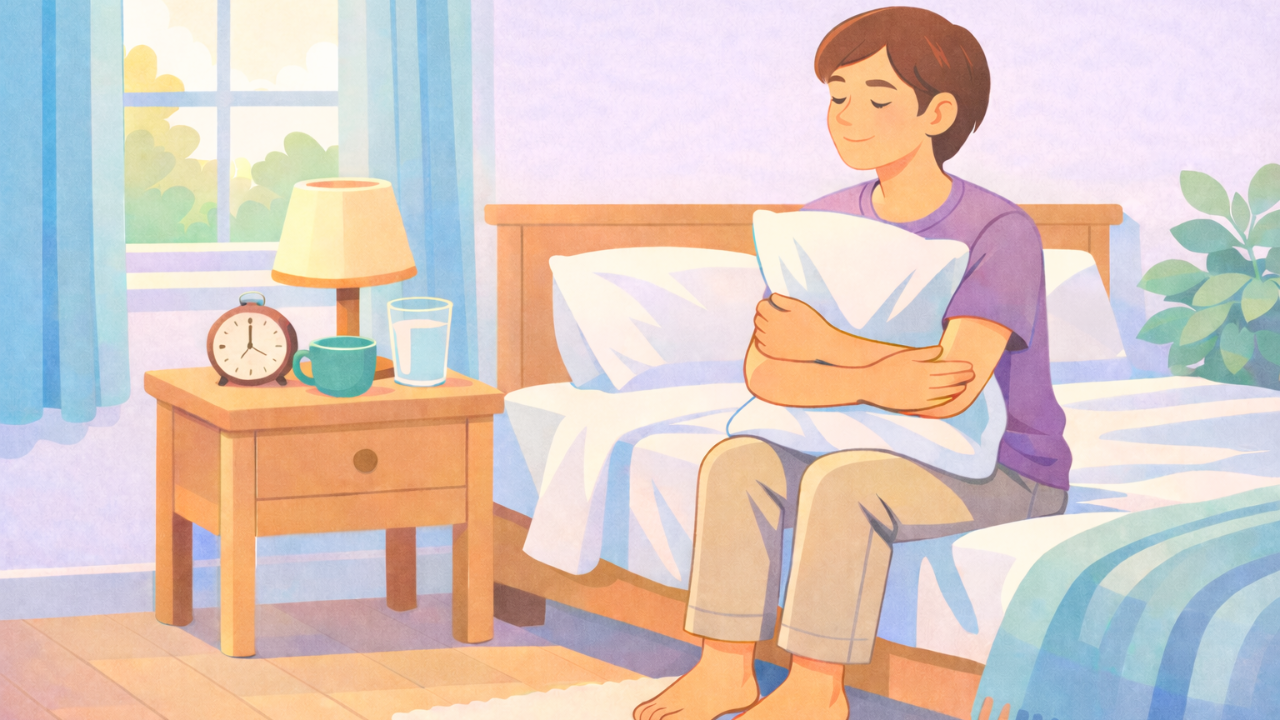
Hug a pillow to your chest and belly.
-
Wrap the blanket tighter around your shoulders.
-
Place one hand on your cheek and one on your upper arm.
-
Press your feet into the mattress for 2 seconds, then release.
This is not about forcing calm. It’s about giving your nervous system a clear “safe enough” cue.
If your mornings often start anxious, here’s a full menu of body-based options for morning anxiety.
Step 4: One tiny next step (15–30 seconds)
Pick one:
-
turn on a soft light
-
sit up and feel your feet on the floor
-
take one sip of water
-
open the curtain a few inches
Your nervous system likes “next step” clarity.
Hydration can be a surprisingly strong support after an adrenaline wake-up: Hydration for Nervous System Regulation: How Water Helps You Feel Safe Again.
If you woke up wired
Signs: racing thoughts, restless legs, clenched jaw, urgency.
Try “rhythm over effort”:
-
slow ankle circles under the blanket
-
gentle rocking while seated on the bed
-
quiet humming on the exhale for 10 seconds (you barely need volume)
If you’re dealing with repeated adrenaline spikes, this may help you connect dots and choose the smallest effective tools: How To Stop Adrenaline Spikes Naturally
If you woke up numb or foggy
Signs: heavy body, blank mind, distance, “I can’t feel myself yet.”
Try “warmth + contact”:
-
hold a warm mug and notice heat in your palms
-
put both feet on the floor and press gently for 2 seconds, release
-
name 3 colors you see in the room
If you want to understand numbness as a nervous system state (not a personal failure), this can be grounding: Why Your Body Goes Numb During Stress (and Gentle Somatic Ways to Reconnect)
A gentle 7-day plan for steadier mornings
Keep this tiny. Consistency matters more than intensity.
Day 1: Do the 3-minute reset once, even if it feels imperfect.
Day 2: Put your phone face-down for the first 3 minutes after waking.
Day 3: Add one sip of water before anything else.
Day 4: Add 60 seconds of orienting at the window.
Day 5: Do a 2-minute slow walk around your room after the reset.
Day 6: Write one sentence: “This morning my body felt ___.”
Day 7: Choose the one step that helped most, repeat it daily for the next week.
If you’re waking around 3 a.m. and the alarm state keeps looping, this plan can support your nights too: Stop 3 AM Wakeups With a Gentle Nervous System Plan
Midway check-in: take the Stress Loop Quiz so you’re not guessing what your system needs.
Common sticking points (with kind fixes)
“My brain wants to analyze the dream immediately.”
Try this micro-script:
“I can think about it later. First I’m helping my body feel safe.”
“Breathing makes it worse.”
Skip breathwork. Do orienting + steady pressure + water. You’re allowed to choose the route that feels safest.
“I calm down, then it spikes again.”
That can happen when your system is still metabolizing adrenaline. Go smaller and repeat. Two rounds of 90 seconds can be more regulating than one long practice.
“I’m scared this means something is wrong with me.”
A rough night does not mean you’re broken. It may mean your system is stressed, overextended, or carrying more than it has capacity for right now.
If you frequently feel “ready to jump out of your skin” even without a clear reason, this article may help you feel less alone and more oriented: Why do I always feel ready to jump out of my skin for no reason?
More Gentle Reads
-
A 10-Minute Nervous System Reset For Overwhelm You Can Do Anywhere
-
Vagus Nerve Stimulation Exercises Without Devices: A Gentle At-Home Guide
FAQs
Why do anxiety dreams make me wake up with a racing heart?
Because your nervous system can interpret dream threat as real threat. You may wake in a fight-or-flight state, even if your conscious mind knows you’re safe.
Is it better to process the dream or calm my body first?
For most people, calming the body first helps. Once you’re steadier, you can reflect on the dream if you want, from a more resourced place.
What if I wake up panicky and feel like I can’t breathe?
Start with orienting and steady pressure first, then try a very gentle exhale-lengthening only if it feels okay. If symptoms feel severe or unusual, consider checking in with a qualified professional.
I keep waking up at the same time every night, is that normal?
It can be common during stress. A consistent wake time can become a learned pattern in the body. Gentle, repeatable cues (light, water, orienting, small movement) can help retrain safety over time.
What if deep breathing makes me more anxious?
You’re not alone. Skip deep breathing and use other regulation tools like orienting, steady pressure, humming, or gentle movement. Use the “breath alternatives” approach until breathing feels safe again.
Can these tools stop nightmares or anxiety dreams completely?
They may help reduce intensity over time for some people by building stronger safety cues and improving downshifting. There’s no guaranteed quick fix, so keep it small and consistent.
If you want a clearer “what do I do when my body wakes up like this?” path, take the Stress Loop Quiz.
Disclaimer: This article is educational and not medical advice. If you have health concerns, consider speaking with a qualified professional.
About Neurotoned
Neurotoned is a trauma-informed nervous system support program designed to help people shift out of chronic stress, overwhelm, and shutdown using short, body-based practices. Our approach is grounded in vagus nerve science and somatic psychology, with simple tools you can use in everyday life, even on “wired” or “numb” days. The goal is gentle, practical nervous system regulation that helps you feel safer in your body, one small step at a time. Explore how Neurotoned supports nervous system regulation with small, body-based practices.
Discover Your Vagal Tone
Find out how dysregulated your nervous system is and get your personalized roadmap to feeling calm, energized, and in control