Calming Your Nervous System After Nightmares
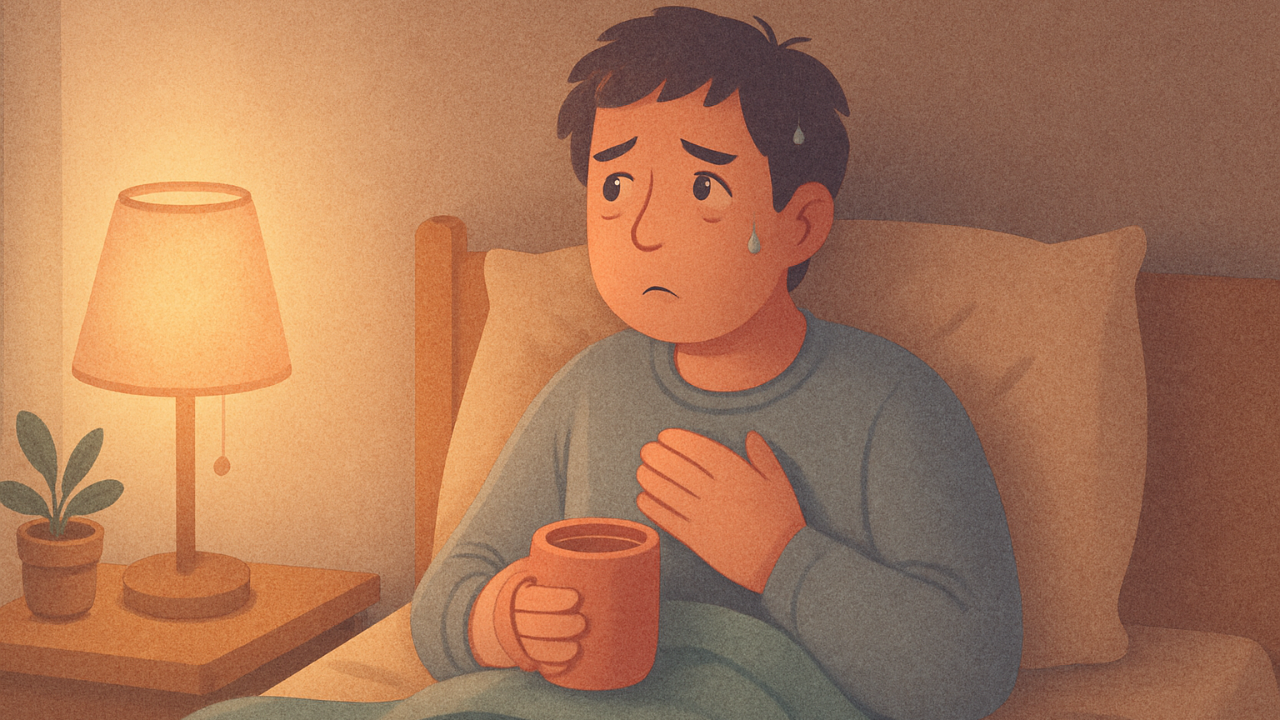
Waking from a nightmare can feel like your whole body has been dropped into danger. Heart pounding. Muscles tight. Breath shallow. Even when you know, logically, “it was just a dream,” your nervous system may still be in full alert.
If this happens to you, there is nothing wrong with you. Your body is trying to protect you and just has not yet gotten the memo that the threat is over. This article will walk you through soft, practical ways to calm your nervous system after nightmares and help your body feel safe enough to rest again.
If you want a simple way to understand which stress loop your nervous system tends to fall into at night, you can start with the Stress Loop Quiz.
You deserve to wake up and know there are kind tools waiting beside you.
Quick Answer: How To Calm The Nervous System After Nightmares
Nightmares light up the same threat pathways as real danger. That is why you can wake up safe in bed, yet your body still feels like something terrible is happening. To calm your nervous system after nightmares, focus less on “fixing the dream” and more on sending your body clear safety signals. Gentle orientation to the room, slower exhales, warm touch, and small movements can help your system climb down from the alarm. Many people find it helpful to pair these steps with a simple nighttime routine that already supports better sleep, so the body learns, over time, that night is allowed to be safer.
Why Nightmares Hit Your Nervous System So Hard
When you dream, your emotional and survival systems are active. If the dream is frightening, your brain and body can respond as if something real is happening right now. For people with trauma, chronic stress, or long-term anxiety, the nightmare may tap into deeper layers of stored fear.
You might notice sensations that feel familiar from your daytime life too, like that wired feeling of being ready to jump out of your skin for no obvious reason. If that resonates, you might feel seen by this exploration of why some bodies stay stuck in high alert for years.
At night, your usual coping strategies are not available. You are in the dark. You may be alone. Your nervous system can feel even more vulnerable.
Nightmares can also stir up the body side of trauma, which is why physical symptoms and emotional pain can get tangled together. When this happens a lot, it may help to understand more about how emotional hurt and body pain interact, so you can stop blaming yourself for “overreacting.”
Your reaction after a nightmare is not weakness. It is a nervous system doing its best with the information it has.
A Gentle Post-Nightmare Reset
You do not have to do this perfectly. Think of these steps as a soft menu. Take what feels doable. Leave what feels like too much.
Step 1. Let your eyes prove you are safe now
Once you wake up, keep the lights low if you can, but let your eyes slowly move around the room.
Name what you see, quietly in your mind or in a whisper.
“Pillow. Lamp. Curtain. My phone. The door.”
You are giving your brain new data about the present. This is a simple form of orienting, and it can be powerful over time, especially when used as part of a nightly rhythm before bed too.
Step 2. Bring your hands to where your body feels the alarm
Notice where the fear sits. Chest. Belly. Throat. Jaw.
Place one or both hands there. You do not need to force yourself to relax. Just feel your own touch and the warmth of your palms.
If your heart is racing, it might help to remember that night-time heart flutters are a known nervous system pattern, not a sign that you are “crazy.”
You are saying to your body, “I am here with you.”
Step 3. Use breath that does not make you more anxious
Not all breathing practices feel good. If deep breathing has ever made you feel more panicky or dizzy, you are not alone. Some nervous systems need softer breath tools, especially at night.
You can try a tiny pattern like inhale for 3 counts, exhale for 4 or 5, in a way that feels easy, not forced. If you know that big “deep breaths” tend to make you feel either dizzy, or trapped or overwhelmed, you may prefer gentler alternatives that were designed for sensitive bodies.
Let your exhale be like a quiet sigh. Lips parted a little. No pressure to “relax,” just slower.
Step 4. Add warmth and weight to your body
Nightmares can leave your system feeling floaty, shaky, or numb. Warmth and gentle weight are some of the fastest ways to tell the nervous system “you are here, in this bed, in this moment.”
Ideas you might try:
- Hug a warm water bottle or heated pack to your chest or belly
- Pull a heavier blanket over your legs
- Place one hand on your heart and the other under a pillow, feeling the slight pressure
If you often wake from nightmares with your thoughts racing, and your body braced for hours, it may help to weave these pieces into a broader plan for night-time calm. Many people find relief when they treat their “racing mind at night” as a nervous system pattern that can change, not as a personal flaw.
Step 5. Invite small movement back in
After a nightmare, some bodies feel wired, others feel frozen, and many feel both at once. If you notice that frozen, heavy feeling, gentle movement can help your system thaw without forcing it.
Try:
- Rolling your ankles under the blanket
- Wiggling your toes inside socks
- Rolling your shoulders forward and back
- Slowly turning your head side to side
If you live with trauma, you might notice that these tiny movements echo the kind of somatic work that helps reset the nervous system over time, especially when practiced during the day as well.
You do not have to “shake it off” in one big dramatic movement. Small movement is still real movement.
When Nightmares Echo Old Trauma
Sometimes the dream content maps directly onto past experiences. Other times, the story in the dream is different, but the feeling in your body is eerily familiar.
In those moments, you might notice:
- A sense of dread that does not match your current life
- A belief like “I am not safe anywhere”
- Body sensations that feel old and young at the same time
It can help to name what is happening in simple language.
“Part of me is remembering something old. I am in my bed now. I am safe enough in this moment. My body is allowed to come down from this.”
You might pair that with one gentle practice you already know so that the nightmare becomes a cue to reach for support rather than to detach. Over time, you can even build a simple nighttime routine that your body starts to recognize as “the part where we calm down now.”
If things feel too intense or overwhelming, you always have permission to reach out to a qualified professional for more support.
Wired After A Nightmare: When Sleep Feels Impossible
For some people, the hardest part is not the dream, but the hours afterward. You are wide awake. Your mind is scanning for threats. Your body refuses to let go.
You might sit up in bed and feel like you cannot settle back down because you are waiting for the next bad thing to happen.
In those moments:
- Sit up with your back supported.
- Place your feet on the floor, if you can do so safely.
- Let your eyes gently take in the room again, especially corners and doorways, so your midbrain can check for danger.
- Use one short, familiar practice instead of inventing a whole new routine while you are scared.
Many people like to have a pre-planned “emergency night routine” written down, so they do not have to think. That might include one or two small vagus nerve exercises, a glass of water, and a soft script to speak aloud. You can read this gentle resource to know more about vagus nerve routines for better sleep.
If your nightmares and night wakeups are frequent, you may also find it helpful to explore a specific plan for repeated wakeups, especially those 3 a.m. jolts that make your body think the world is ending.
You do not need a perfect night to start healing. You only need a few more moments where your system learns, “I can come down from this.”
Numb, Blank, Or Frozen After Nightmares
Not everyone wakes from nightmares in a panic. Some people wake up feeling nothing. Heavy. Disconnected. Like their body is made of stone.
This is not failure. It is often a form of protective response called shutdown or freeze.
If you recognize yourself here, you might also resonate with gentle articles that speak to numbness, shutdown, or burnout as nervous system experiences, not moral flaws.
You might:
- Start with warmth, such as wrapping a blanket tightly around your shoulders
- Name three sensations, even if they are subtle, like “pressure on my back,” “the coolness of air on my face,” or “the texture of the sheet under my hand”
- Allow one tiny movement, such as slowly flexing your fingers or toes
Some bodies respond very well to small, repetitive, pendulating movements that rock gently between comfort and activation, especially over days and weeks rather than in one intense session.
Again, there is no rush. Coming back online is allowed to be slow.
A 7-Day Mini Plan For Calmer Nights
This is not about curing nightmares in a week. It is about giving your body a predictable pattern of kindness so that your nervous system has something steady to lean on.
Day 1: Notice how your body feels the next time you wake from a nightmare. Name three sensations without trying to change them.
Day 2: Add the orienting step. Let your eyes move around the room for at least 30 seconds while you name what you see.
Day 3: Introduce gentle breath. Use a 3-count inhale and 4-count exhale, keeping it light and easy.
Day 4: Add warmth and weight. Prepare a blanket, heavy pillow, or warm pack next to the bed before you go to sleep.
Day 5: Practice a short nighttime calming routine even on nights without nightmares so your body learns the pattern.
Day 6: When you wake up, choose one small movement practice and repeat it for one or two minutes, like slow shoulder circles or ankle rolls.
Day 7: Reflect in a few sentences: Which step felt most supportive? Which felt like too much? Adjust the plan to fit your real nervous system, not an ideal version of you.
If you would like help seeing your stress patterns more clearly, so you can choose tools that match your system, you can take the Stress Loop Quiz and build from there.
Common Sticking Points
“I feel silly doing all this. It was just a dream.”
Your survival system does not distinguish between “real” and “unreal” threats during a nightmare. If your body is reacting, then support is appropriate. You are not silly for needing comfort.
“Once I wake up, I cannot fall asleep again.”
Your system might be stuck in a pattern of nighttime hypervigilance. Pairing post-nightmare tools with a gentle, repeating evening routine can slowly retrain your body that it is allowed to downshift.
“My nightmares are trauma-related. Is this enough?”
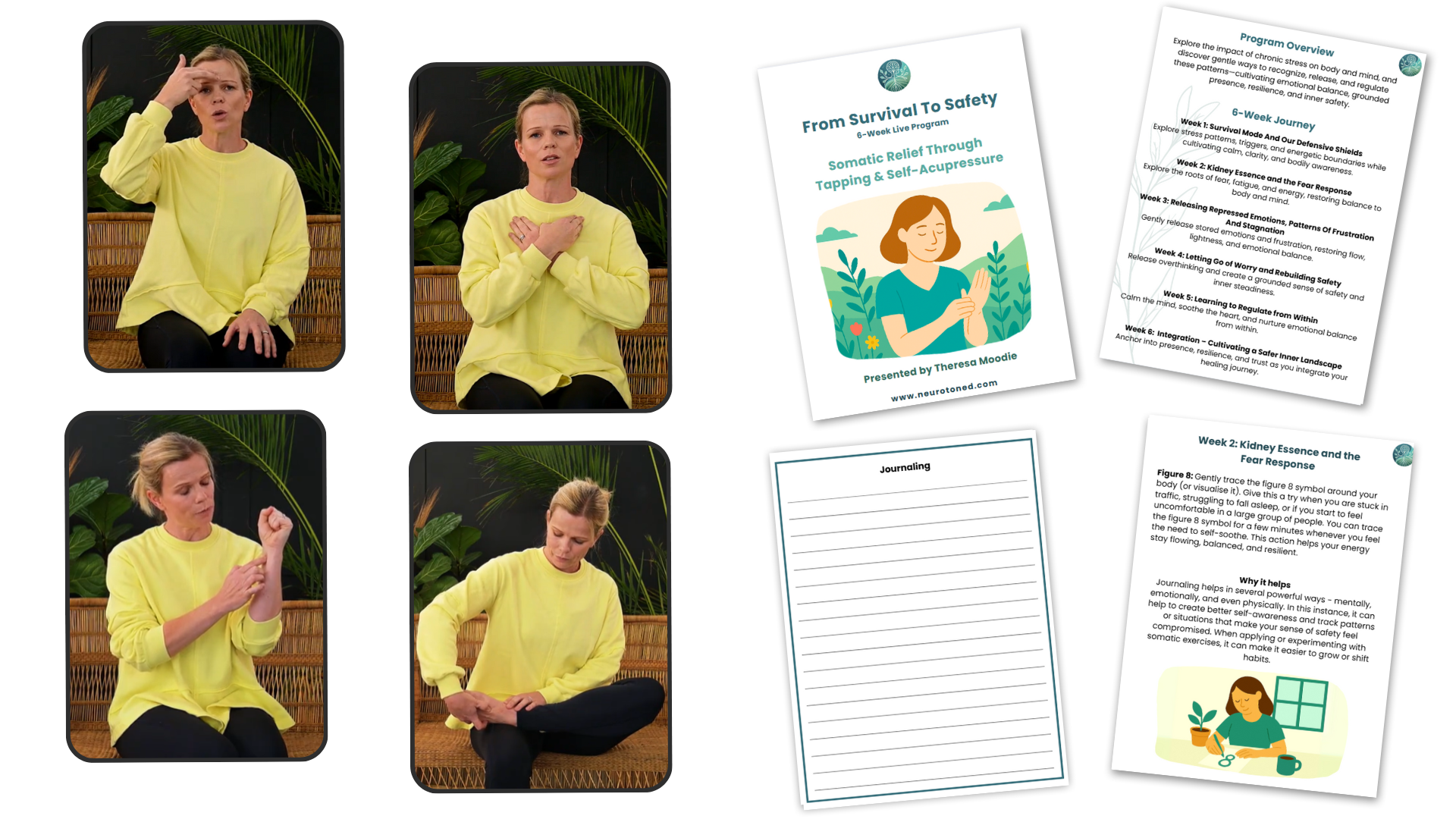
These practices may help soften the edges and reduce intensity, but if trauma is involved, you may benefit from trauma-informed support over time, such as therapy, somatic work, or group programs. Night practices can sit alongside that care.
“I wake up multiple times a night, not just after nightmares.”
Night waking can overlap with blood sugar, hormones, stress cycles, or trauma. A small nervous system routine, practiced regularly, can help your body feel safer through the night even if wakeups still happen.
More Gentle Reads
If you would like a few more kind, related pieces to curl up with later, here are some soft next steps.
- A simple, nervous system friendly guide to what panic actually is and how to meet it with grounding, not shame: What Are Panic Attacks? Why Do They Happen? Can I Stop Them?
- A clear, warm explanation of polyvagal theory that can help you understand why your night reactions feel so strong: Polyvagal Theory Simply Explained
- A bigger picture guide to resetting your nervous system after trauma that pairs well with these nighttime tools: How To Reset Your Nervous System After Trauma: A Gentle, Practical Guide
FAQs
1. Why do nightmares affect my body so much, even when I know they are not real?
Nightmares activate the same basic threat circuits as real danger. When you wake up, your thinking mind may realize you are safe, but your body still carries the chemistry and muscle patterns of the dream. It often needs clear safety cues from your senses and your breath to come back down.
2. How long should it take to calm my nervous system after a nightmare?
There is no one right timeline. Some people feel more settled within a few minutes. Others need half an hour or longer, especially if they live with chronic stress or trauma. The goal is not to be “fast,” but to give your body repeated experiences of, “I can come down from this eventually.”
3. Should I always get out of bed after a nightmare?
Not always. For some people, staying in bed with added warmth, touch, and breath feels safest. For others, standing up to orient to the room helps a lot. You can experiment and see which feels less overwhelming to your system. The key is that you do not shame yourself for what you choose.
4. What if deep breathing makes me more anxious when I wake up scared?
If deep breathing spikes your anxiety, your body may interpret big inhales as more arousal. Smaller, softer breaths with slightly longer exhales tend to feel safer for many people. It can also help to focus on sensations, like warmth or the feel of the blanket, rather than the breath itself.
5. Does this mean my nervous system is broken?
No. Your nervous system is doing exactly what it was designed to do, respond to perceived danger. If you have a history of trauma, loss, or chronic stress, your system may be more sensitive, but that does not mean it is broken. It means it needs consistent, kind support.
6. When should I consider getting professional help?
If nightmares are frequent, intense, or interfering with your ability to function, or if they bring up trauma memories that feel unmanageable, it may be very helpful to speak with a trauma-informed therapist, doctor, or sleep specialist. You do not have to carry this alone.
Closing Reminder
Your nervous system is not failing you when it reacts strongly after a nightmare. It is trying, in a clumsy way, to keep you alive. With small, repeated signals of safety, it can learn that nights do not have to be war zones.
If you want help understanding which pattern your body tends to fall into, you can take the Stress Loop Quiz and use your results to choose kinder tools.
Disclaimer: This article is educational and not medical advice. If you have health concerns, consider speaking with a qualified professional.
Discover Your Vagal Tone
Find out how dysregulated your nervous system is and get your personalized roadmap to feeling calm, energized, and in control