Evening Vagus Nerve Routine To Settle Your Body For Sleep
Some nights your body is exhausted, but your system feels like it is still “on.”
Your shoulders stay tight.
Your thoughts race.
Sleep feels very far away.
If this happens a lot, you are not broken. Your nervous system is likely still in protection mode. An evening vagus nerve routine for better sleep can give your body a predictable way to downshift.
If you want to understand how your stress patterns show up across the day, you can take the Stress Loop Quiz.
If you are tired right now, here is the short version
A gentle evening vagus nerve routine uses slow exhales, soft sound, warm touch, and tiny movements to tell your body “you are safe enough to rest.” These practices may support your vagus nerve, which helps your system move out of fight, flight, or freeze and into a calmer, more sleep-friendly state. Five to ten minutes is enough. Over time, the repetition teaches your body that night means “we can soften now.”
Why your nervous system struggles to switch off at night
If you have lived with trauma, chronic stress, or long seasons of worry, your body has had to act like a guard dog. It scans for danger, even in bed. You might notice this as a strong startle response, muscle tension, or feeling “ready to jump out of your skin for no reason.”
The vagus nerve is a major highway between brain, heart, lungs, and gut. When it has enough support, it helps your system settle into a “rest and digest” state that makes sleep easier. When your vagus nerve is under strain, your body may get stuck in high alert. A simple guide to improving vagal tone during the day can support what you do at night.
If you like having a simple map of how all of this works, you might enjoy a small, kind breakdown of polyvagal ideas that keeps the language very human.
A simple evening vagus nerve routine for better sleep
Try this as a gentle template, not a rule. You can shorten, skip, or adapt anything. If something feels too intense, you can stop and choose a smaller step.
1. Make your space a little softer (1–2 minutes)
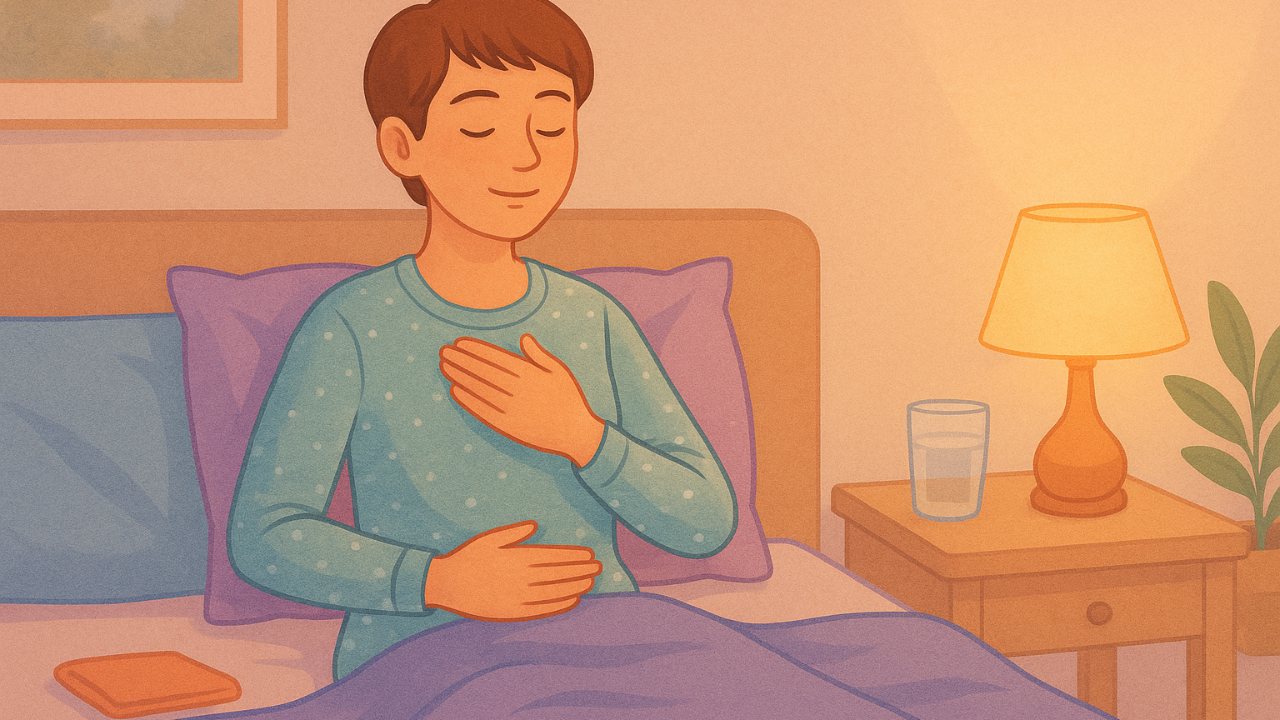
Dim the lights if you can.
Put your phone a bit farther away.
You might add a lamp instead of bright ceiling lights.
If screens are part of what keeps your system wired at night, a screen-free evening routine can pair well with this vagus-focused one.
2. Choose your position
Sit on your bed with pillows behind you, or lie on your side with your knees lightly bent. Notice the places your body is already supported. Let the bed or chair carry a bit more of your weight.
Mini script you can whisper to yourself: “I do not have to hold everything up right now.”
3. Long, gentle exhales (2 minutes)
Inhale through your nose in a natural way.
Exhale through your mouth like you are slowly fogging a mirror.
Let your exhale be a little longer than your inhale.
If traditional deep breathing has ever made you feel more anxious or dizzy, you are not alone. Many people with sensitive systems need softer breath options, which is why this practice stays small and kind. You can find more gentle alternatives here if you tend to get over-activated by breathwork.
4. Soft sound for the vagus nerve (1–2 minutes)
Let your lips rest together and make a very quiet “mmm” sound.
Feel for vibration in your chest, throat, or lips.
You can pause whenever you like.
If you are curious about sound but do not want to sing, there is a whole gentle approach to vocal toning that keeps things very low-pressure and private.
If sound feels too much, you can skip it and rest your hands gently on your chest and belly instead.
5. Warmth and tiny movements (3–4 minutes)
Place a warm compress, rice sock, or warm cloth over your chest or the back of your neck. Let the heat meet any tight places.
While the warmth is there, add very small movements:
- Slow half-circles with your shoulders
- A tiny yes/no nod with your head
- A soft side-to-side sway of your upper body
If you enjoy learning other device-free vagus nerve ideas for daytime, this gentle at-home guide fits well with what you are doing at night.
You can also explore a simple, trauma-informed approach to vagus nerve breathing that respects your limits.
6. Arrival breaths in bed (2–3 minutes)
When you are ready to lie down fully, let your attention move from “thinking about the day” to “feeling the bed.”
Notice:
- The weight of your heels
- The way your back or side is held
- The fabric against your skin
Take three very soft breaths and say, “I am allowed to arrive in this moment.”
For more support on settling your system before you actually close your eyes, there is a gentle guide focused only on calming your nervous system before bed.
If you feel wired at night
Some people climb into bed and feel like their whole system is buzzing. If that is you, your body may need a bit more movement before it is willing to slow down.
You can try this sequence before the routine above:
- Stand next to your bed and shake your arms and legs for 10 seconds
- Gently march in place for another 10 seconds
- Pause, feel your feet, and then sit or lie down to begin your vagus routine
If your system often feels “stuck on” from the day, this nighttime routine can work alongside a broader nervous system plan for insomnia relief.
This is also a good moment to notice your personal patterns using the Stress Loop Quiz, especially if nights are much harder than mornings.
If you feel numb or checked out
Other nights you might feel shut down instead of wired. Heavy. Flat. A bit far away from yourself. In polyvagal language, this can look like a dorsal response.
If you lean more toward numbness, try a tiny bit of “up” before you move into softening:
- Sit up with your back supported
- Press your feet into the bed or floor and release
- Look around the room and name three things you see
Then start your long exhale practice and the warm compress. You can also explore what dorsal shutdown looks like and how to come back in very small, kind steps if this is familiar for you.
A 14-day mini plan to teach your body this new pattern
Think of this as teaching your system a new “night script.” The goal is not perfection. It is repetition.
Days 1–3: Two-step pattern
- Make your space softer
- Do 2–3 minutes of long, gentle exhales
That is all. Let your body learn this is the new evening cue.
Days 4–7: Add sound or warmth
Keep the first two steps.
Then add either soft humming or a warm compress.
If humming feels too much on some days, you can choose a quiet body-based exercise like pendulation or another somatic tool instead.
Days 8–10: Full routine, once
Move through all steps: space, position, breath, sound, warmth, tiny movement, arrival breaths.
Notice what feels most helpful. Notice what feels like “too much.” Adjust.
Days 11–14: Your personal version
By now you will know which parts your body loves. Create a two- or three-step version that feels realistic for your actual life.
If you are a caregiver, parent, or busy professional, you might pair this routine with a short nighttime nervous system plan for your specific season, such as the one designed for very busy moms.
The key is consistency that feels kind, not rigid.
If you want help seeing your patterns across these two weeks, the Stress Loop Quiz can give you a simple starting map.
Common sticking points and gentle adjustments
“My mind gets louder when I slow down.”
This is very common. When the body gets a bit safer, the mind sometimes finally has space to speak. You are not doing it wrong.
You can:
- Keep your eyes open
- Add tiny movement while you breathe
- Focus your attention on one simple sensation, like the warmth on your chest
“I fall asleep but wake up at 3 AM.”
Your nervous system may still be running old protection scripts. You can use a shorter version of this routine if you wake in the night. Two soft exhales, one round of humming, and a warm compress can be enough.
If 3 AM wakeups happen often, you might like a gentle plan that focuses only on that pattern.
“Some nights this feels pointless.”
Your body may not show change right away. Think of it like watering a plant whose soil has been dry for a long time. The first few times, it looks like nothing is happening. But something is shifting underneath.
FAQs
1. How long should my evening vagus nerve routine be?
Most people do well with five to ten minutes. If your nights are very full, you can start with two minutes and extend slowly.
2. Can I do this routine completely in bed?
Yes. You can sit or lie in bed for the whole thing. Some people like to stand briefly to shake out tension first, then finish the steps under the covers.
3. Will an evening vagus nerve routine fix my insomnia?
This routine is not a cure, and it is not medical treatment. It may help your nervous system find a calmer state that supports sleep. If your sleep issues are severe or long-lasting, consider talking with a qualified professional.
4. What if deep breathing makes me feel worse?
Go slower and smaller. Shorter inhales. Softer, slightly longer exhales. You can also focus more on warmth, tiny movements, and gentle sound, and follow ideas from alternative sleep-friendly breath practices.
5. Can I combine this with other sleep hygiene habits?
Yes. This routine works well with quieter lighting, steady blood sugar, and consistent bedtimes. It also fits with any current tools you are already using from your therapist or doctor.
6. Is it okay if I fall asleep in the middle of the routine?
Yes. That is often the body’s way of saying, “This was enough.” You can consider that a success.
More Gentle Reads
If your nights are tender right now, you might also like:
- How To Calm Racing Thoughts At Night (Nervous System Tools That Help)
- How to Sleep After Trauma: Calming Night Practices That Help
- Why Heart Palpitations Feel Worse at Night, A Nervous System View
Disclaimer: This article is educational and not medical advice. If you have health concerns, consider speaking with a qualified professional.
Discover Your Vagal Tone
Find out how dysregulated your nervous system is and get your personalized roadmap to feeling calm, energized, and in control