Tiny Nervous System Micro Resets for Caregiver Burnout
If you care for others, you carry a lot. You may be “on” from the moment you wake up until you fall into bed. Sometimes it feels like your body never really gets to come down.
Maybe you notice that you snap faster than you want to. Maybe you feel strangely flat and far away from yourself. Maybe your chest feels tight even on a quiet day.
Before we go further, here is something small you can do right now. Take the Stress Loop Quiz to see where your body might be getting stuck and which patterns show up most for you.
Caregiver burnout is not a character flaw. It is a nervous system that has been holding everyone together for a long time, often without enough rest or support. Micro resets are tiny moments where you turn toward your own body and say, “I see you. I am here too.”
If you want a bigger picture of how caregiver stress shapes the body and what trauma-informed care can look like in real life, you might appreciate this gentle overview of nervous system tips for caregivers.
Quick Answer: What Are Nervous System Micro Resets for Caregivers?
A micro reset is a 10 to 60 second pause where you give your nervous system a clear, kind cue of safety. It might be a slow exhale, a warm touch on your chest, a sip of something soothing, or letting one muscle soften. For caregivers, micro resets fit into real life: in the bathroom, next to a hospital bed, in your car, or at the kitchen sink. Over time, these tiny moments may help your body shift out of constant emergency mode into a steadier, more sustainable rhythm.
Why Caregiver Burnout Shows Up in Your Body
Caregiving often means being alert to someone else’s needs all the time. Your nervous system learns to stay ready. Ready to wake up if they call. Ready to solve a problem. Ready to calm someone else, even when you are empty.
That long-term “readiness” can show up as:
- Feeling wired and jumpy
- Feeling numb or shut down
- Tension headaches or jaw pain
- Trouble falling or staying asleep
- A sense that you are not really in your own life
Sometimes it can be hard to tell if you are “just tired” or if your system is closer to shutting down. If you are unsure which state you are in, this simple guide on telling the difference between shutdown and burnout may help you name it.
You are not imagining it. Your body is trying to protect you in the only ways it knows how. Micro resets are your way of giving it new options.
Micro Resets You Can Use While Actively Caregiving
These are meant to fit into the caregiving day, not outside of it. Take what feels doable and leave the rest.
1. The “One Soft Shoulder” Reset
Let one shoulder drop by just a few millimeters. Let your jaw loosen a little. Exhale slowly through your mouth, like you are fogging up a window.
Nothing dramatic. Just a soft signal: “We are allowed to shift one notch down.”
If you are juggling work and care at the same time, you might like this collection of short nervous system microbreaks you can use between tasks.
2. Three-Object Orienting
Pause and let your eyes gently wander. Name three things you see that feel neutral or even slightly pleasant.
For example: “Green plant. Soft blanket. Ray of light on the floor.”
This simple orienting helps many people feel a little less trapped in their thoughts and more in the room with their body.
3. Warm Touch Reset
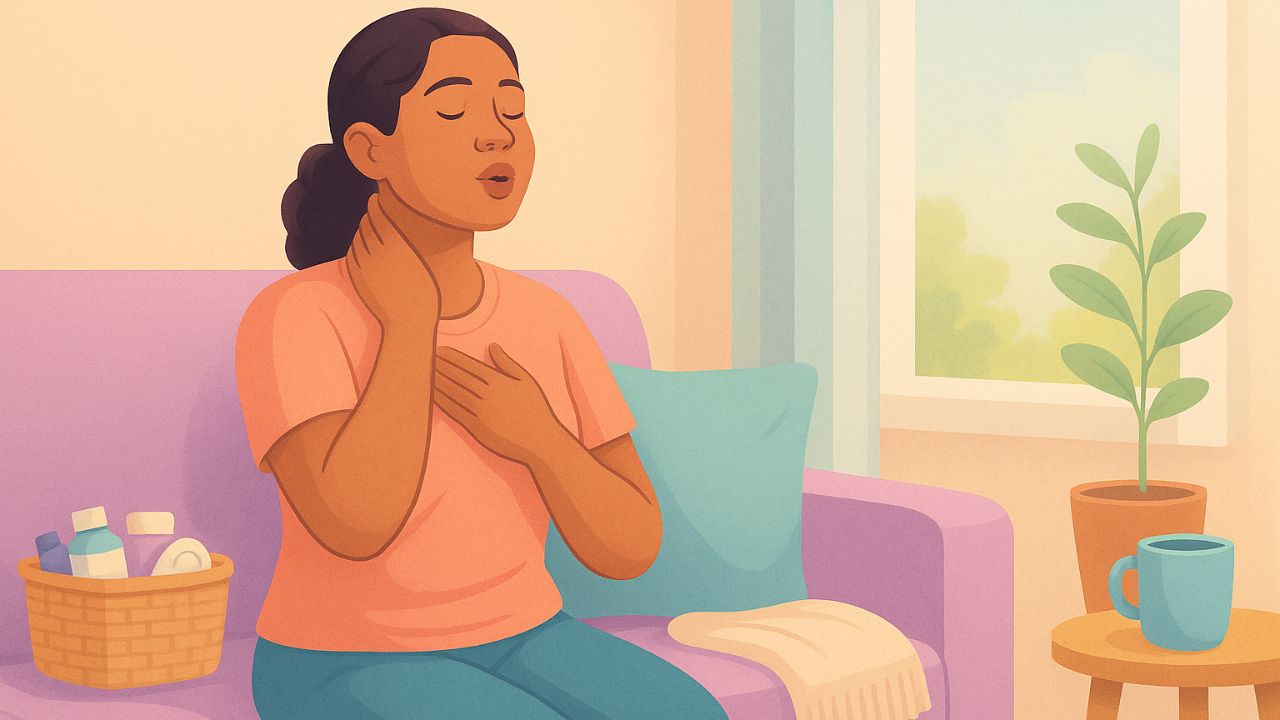
Place one hand over your heart and one over your belly. Feel the warmth of your own palms. You do not need deep breaths if those make you anxious. Just feel the contact, and allow your breath to be soft and natural.
Later, when you do have a few more minutes, you might enjoy a slightly longer reset like this gentle 10-minute practice for overwhelm.
4. One Kind Sip
Caregivers often ignore thirst. Take one slow sip of water, tea, or broth. Notice the temperature, the texture, the way it moves down your throat.
If supporting your body from the inside feels important right now, this simple guide to hydration and nervous system regulation can give you a kind, science-informed frame.
5. Micro Boundary Pause
Before saying yes to a request, silently think: “One breath.” Take that breath, then answer.
It is tiny. It is also a real boundary. Over time, these micro pauses make it easier to set clearer, bigger boundaries when needed.
If you want more support in this area, you might explore a gentle approach to setting boundaries that protect your nervous system without harshness.
When You’re Wired vs When You’re Numb
Caregiver burnout can swing between two extremes. You might feel revved up one day and completely flat the next.
If you feel wired and on edge
Try:
- Longer exhales than inhales
- Letting your gaze soften and rest on something steady
- Loosening your jaw for five seconds
- Holding a warm mug or compress
This kind of “too much” energy often responds well to very small, repeated cues. Many people in this state also find it helpful to read about nervous system regulation for burnout recovery, so they know their symptoms have a name and a path.
If you feel numb, foggy, or far away
Try:
- Splashing cool water on your hands
- Gently pressing your feet into the floor
- Naming three sensations in the room (like “pressure, warmth, fabric”)
- Doing a tiny shoulder roll or neck stretch
If you often go into a numb state, it can help to understand why the body does that and how to reconnect gradually.
You never have to force yourself to “wake up.” Instead, think of offering your body very soft invitations to come a little closer.
A 7-Day Micro Reset Plan for Caregivers
You are not adding more “shoulds.” You are sprinkling small moments of care through a week that is already full.
Day 1: Every time you stand up, drop one shoulder and soften your jaw for one breath.
Day 2: Once in the morning and once in the evening, place a hand on your heart for three natural breaths.
Day 3: Have one drink of water that you sip slowly, without doing anything else.
Day 4: Pause before one request and take your “micro boundary” breath.
Day 5: Name three objects or colors that feel gentle in the room where you spend the most time caregiving.
Day 6: Choose one moment that usually spikes your stress and try a micro reset in that exact spot.
Day 7: Repeat the one reset that felt easiest. Let that be your “anchor” practice for now.
If you live with kids or a baby, you can adapt this by weaving in shared tiny pauses. This guide on quick nervous system resets for new parents has examples you can copy and make your own.
And if you want a simple, repeatable structure for daily support beyond just one week, you might find comfort in a gentle at-home nervous system reset routine.
You can also retake the Stress Loop Quiz after a few weeks of tiny changes to see how your patterns might be shifting over time.
Longer-Term Care for a Burned-Out Nervous System
Micro resets are powerful, but they are not the whole story. Over the longer term, your system may need:
- More steady access to rest or backup support
- Food and hydration that your body can actually digest
- Safer boundaries around how much you carry alone
- Gentle practices that help you move between stress and calm
If you want a trauma-informed map for building that kind of resilience, this kind, practical guide to resetting your nervous system after trauma can be a helpful companion.
Caregiving and burnout recovery are marathons, not sprints. The point is not to become perfectly regulated. The point is to have a few more small ways to be on your own side.
And remember, if it feels supportive, you can always come back to the Stress Loop Quiz to get a clearer picture of where your body might need extra care.
Common Sticking Points
“I don’t have time.”
You are probably right that you do not have large blocks of time. That is why we keep micro resets tiny. Your nervous system will still notice a three-second shoulder drop or one kind sip. If you keep forgetting, you can pair a micro reset with something you already do, like washing your hands or opening a door.
“I forget until I explode.”
Many caregivers only remember their needs after a meltdown or panic. If that is you, you are not failing. You can still add a reset after the hard moment, and you can set one very small cue in your environment, like a sticky note, a bracelet, or a stone in your pocket, to remind you earlier next time.
“It feels too emotional when I slow down.”
For some people, slowing down even a little can bring up tears, anger, or grief. This is common. You can shorten the practice even more, keep your eyes open, and focus on something concrete like the feel of your feet or the temperature of your drink. You might also appreciate a gentle guide on grounding during panic that does not rely on talk therapy.
“I try, but then I slide back into old patterns.”
Patterns that were built over years will not change overnight. Each tiny reset is like watering a new path. Some days you will forget. That is not proof it is not working, just proof that you are human.
FAQs
1. What makes micro resets so helpful for caregiver burnout?
Micro resets work with how your nervous system actually functions. Tiny, repeated cues of safety are easier to receive than long, intense practices. Over time, those cues may help your body spend less time in constant stress and more time in states where rest and repair are possible.
2. How often should I do a micro reset?
There is no perfect number. Many people aim for one small reset every hour or whenever they switch tasks. Others start with just two moments per day, like morning and bedtime, and build from there.
3. Can micro resets replace therapy or medical support?
No. These practices are educational and supportive only. They do not replace therapy, medical care, medication, or crisis support. If you are struggling to cope, consider talking with a qualified professional who understands trauma and caregiver stress.
4. What if micro resets make me more aware of how exhausted I am?
That can happen. Awareness is not a sign something is wrong. It may be your body finally telling the truth. You can respond by going even slower, shortening the practices, and adding a little more external support where possible.
5. Can I practice micro resets with the person I care for?
Often yes, especially with children or loved ones who are open to it. You might share one or two simple practices, like taking one soft breath together or noticing three gentle things in the room.
6. How long until I feel a difference?
It varies. Some people notice small shifts right away, like a softer jaw or fewer spikes of panic. For others, it may take weeks of scattered, imperfect practice to feel more space in their day. Your timeline is not a verdict on your worth or your effort.
More Gentle Reads
If you want to keep exploring this topic, here are a few kind next steps.
For those caring for kids or juggling parenting and stress, you might like this soft bedtime routine that helps anxious children and their caregivers feel more connected at night.
If you are a caregiver with small kids around, this guide on staying regulated when little ones need you constantly can offer very real-life examples.
If you are holding everything for a family and working through long days, this nighttime nervous system routine for busy moms may give you a gentle template to copy.
Disclaimer: This article is educational and not medical advice. If you have health concerns or symptoms that worry you, consider speaking with a qualified healthcare professional.
Discover Your Vagal Tone
Find out how dysregulated your nervous system is and get your personalized roadmap to feeling calm, energized, and in control