Gentle Indoor Grounding When You Can’t Go Outside
Some days even opening the door feels like too much. The weather, your energy level, pain, or a spike of anxiety can all make going outside unrealistic. You are not failing. Your nervous system is just letting you know it needs grounding that feels reachable and safe.
If you want help understanding what kind of stress loop your body is stuck in, you can start with the Stress Loop Quiz.
Below are indoor grounding practices you can use from your couch, bed, desk, or floor. Take what feels doable, leave the rest.
Fast Answer Box
You can ground indoors by giving your body simple, present-time sensory cues. Press your hands into something solid, do a tiny task you can finish in seconds, or offer yourself a gentle self-hold. These actions tell your nervous system “I am here, right now,” which may help dial down panic, numbness, or racing thoughts. Start with very small steps and adjust if anything feels like too much.
Why Indoor Grounding Helps Your System
Grounding is not about nature points. It is about your nervous system getting enough signals of “here, safe enough, right now.”
Indoor grounding works because your body reads texture, weight, temperature, and gentle movement as information. Solid contact and predictable sensations can soften the feeling of being scattered or “floaty.”
If you notice your system is often overwhelmed or buzzing, you might also relate to this kind, practical guide on creating a short reset when everything feels like too much.
Indoor tools give you a way to support yourself on days when going outside is simply not going to happen.
Indoor Grounding Practices You Can Do Anywhere
1. Let Your Body Lean Into Something Solid
When your mind races, your body often feels like it has nowhere to land. Give it a clear landing place.
Try:
-
Press your palm into the arm of a chair or the edge of a table.
-
Sit with your back resting against a wall or headboard.
-
Let your feet press slowly into the floor, one at a time.
You are not forcing yourself to relax. You are just letting your body feel “this is solid, and I am supported here.”
If panic is part of your story, this gentle guide to grounding during intense spikes can be a helpful next step to pair with indoor practices.
2. Micro-Tasks That Take 10 to 20 Seconds
When you feel flooded, big self-care practices can feel impossible. Instead, try something that lasts only a few breaths. The goal is not productivity. It is completion.
Ideas:
-
Wipe a small part of the counter or table.
-
Straighten the corner of a blanket or pillow.
-
Put two or three items in a small pile.
-
Close one drawer gently.
Your brain gets to register “I started and finished something,” which can soften the feeling that everything is too big. If you work at a desk or from home, you might like using these indoor practices as tiny pauses, similar to the microbreak ideas in this workday nervous system guide.
If you try a micro-task and feel more anxious, shrink it further. Wipe only one spot or straighten one object, then stop.
3. Sensory Anchors You Already Have Indoors
You do not have to buy anything special. Most homes already have several grounding anchors hiding in plain sight.
You could:
-
Hold a warm mug or a glass of cool water.
-
Wrap a soft blanket around your shoulders.
-
Sit where you can feel the wall, couch, or chair behind your back.
-
Smell something mild and familiar, like a favorite lotion or tea.
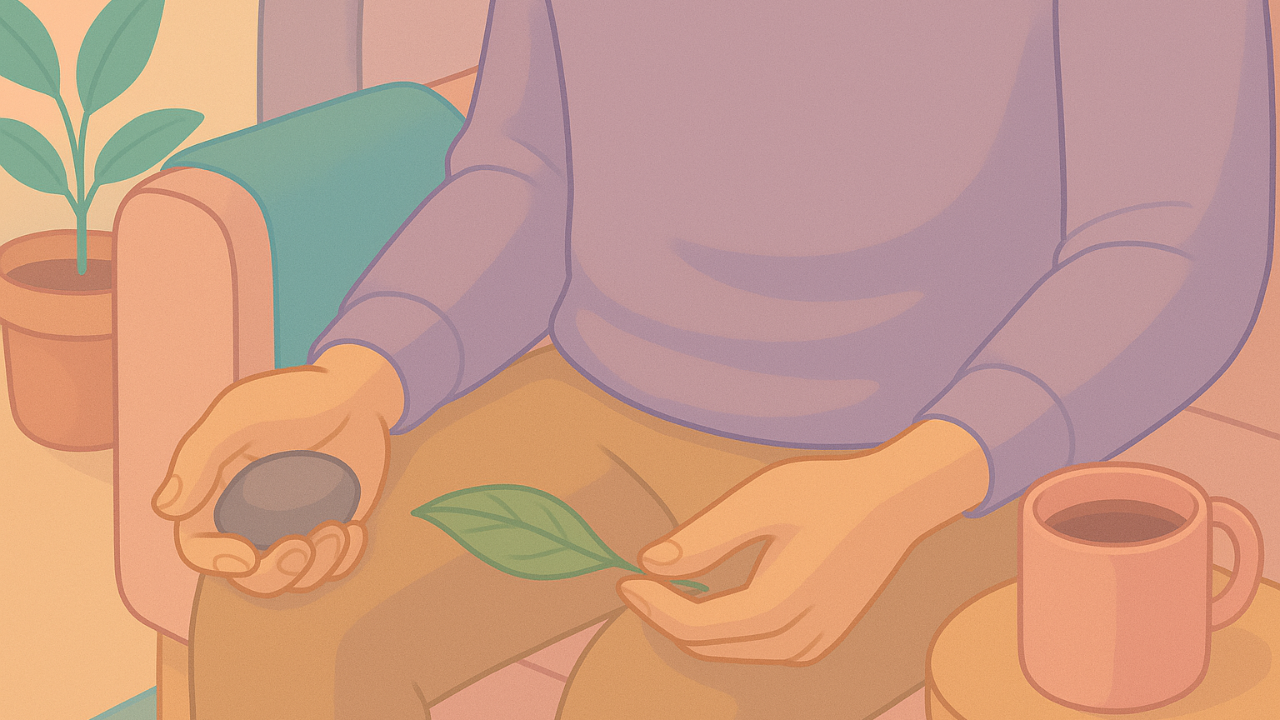
If nature feels soothing for you, you can also keep a small natural object indoors like a smooth stone, a leaf, a shell, or a piece of wood. Many people find the texture and weight grounding, especially on days when going outside is not possible. It can be a gentle way to bring the steadiness of nature inside your home.
This can be especially comforting if your body often sends mixed signals, like stomach fluttering or a sense of emotional shakiness. You might like this simple guide that explains what those sensations can mean in a trauma-informed way.
Let yourself notice one sensation at a time: the warmth in your hands, the coolness on your lips, the weight of the blanket, or the texture of a stone. If focusing on sensation feels overwhelming, you can move in and out of it, noticing it for a few seconds, then looking away or shifting your body.
4. Gentle Self-Holds That Send “I’m Here With You”
Self-contact can be a powerful cue of safety, especially when you feel alone with your experience. Think of it as a physical “I am here with you” to your own body.
Some options:
-
Cross your arms and rest your hands on your upper arms in a soft self-hug. (This step-by-step guide on doing a butterfly hug may be helpful if you want a deeper practice.)
-
Place one hand on your chest and one on your belly.
-
Rest both hands on your thighs with a steady, kind pressure.
If self-touch feels too intense, you can place your hands over a pillow or blanket instead of directly on your body. For people who feel disconnected or “far away,” these kinds of touch-based tools can be especially grounding. This gentle guide on grounding techniques for dissociation may give you more ideas to adapt indoors.
5. Let Your Eyes Slowly Explore the Room
When you feel stuck in your thoughts or your body is braced for danger, your eyes often lock on one thing or feel very narrow. Widening your gaze gently can give your nervous system new information.
You might:
-
Slowly let your eyes wander to three to five objects in the room.
-
Silently notice colors, shapes, or edges.
-
Let your eyes rest for a moment on anything that feels neutral or slightly pleasant.
You are not searching for danger. You are letting your body notice “this is the room I am in right now.” This is a version of a practice called orienting, and if it feels supportive, you might like a more detailed, step-by-step orienting guide to use on harder days.
Mid-article reminder, if you want a clearer picture of how your nervous system tends to react, you can take the Stress Loop Quiz.
6. A 60-Second Weighted Moment
Weight and containment are deeply regulating for many nervous systems. Indoors, you can create that sense of weight without any special tools.
Try:
-
Place a folded blanket or small pillow on your lap.
-
Sit on the floor with your back against the couch and let the cushions hold you.
-
Tuck your feet under a blanket or duvet and feel the weight around them.
Set a timer for 30 to 60 seconds if that feels helpful. If you notice your mind wandering, that is normal. You do not have to focus perfectly for your body to benefit.
7. A 7-Day Indoor Grounding Plan
You do not have to do everything at once. This plan is intentionally small.
Day 1
Press your palm into something solid for 10 seconds.
Day 2
Do one micro-task that lasts 10 to 20 seconds.
Day 3
Choose one sensory anchor, like a warm drink or a blanket, and sit with it for three slow breaths.
Day 4
Try a gentle self-hold for 20 to 30 seconds, then release.
Day 5
Let your eyes move around the room, noticing three colors or shapes.
Day 6
Create a 60-second weighted moment with a pillow, blanket, or leaning on a wall.
Day 7
Combine two practices you liked, for example a micro-task plus a self-hold.
If you want more structure for short, repeatable resets you can do from home, this 10-minute nervous system reset guide might give you a simple rhythm to follow on high-stress days.
You can repeat this plan for another week or stretch the days out. Go at the pace your body can handle.
Common Sticking Points
“I feel nothing when I try these.”
Numbness is often your system’s way of protecting you. Instead of forcing yourself to feel, try something with more texture or movement. Even a few seconds of shifting your weight or squeezing a pillow counts. If numbness is a big theme for you, you may find it validating to read about why the body sometimes goes numb and how to reconnect gently.
“I get more anxious when I notice my body.”
You can work in tiny sips. Touch the chair for two seconds, look away, then maybe come back later. There is no rule that says you need to stay with sensation for a long time.
“Grounding works, but it does not last.”
That is common. Your nervous system may need repeated reminders of safety. Short indoor practices throughout the day can help you build steadier resilience over time, especially when paired with other microbreaks and resets.
“It feels silly to do this at home.”
You are not being dramatic. You are supporting a very real body that has carried a lot. Many people use these kinds of micro-practices at their desks, on the couch, or even in the bathroom for a quiet moment to themselves.
If you want a simple way to keep track of how these practices change your daily patterns, the Stress Loop Quiz can be a helpful starting map.
FAQs
1. Can indoor grounding really help as much as going outside?
Yes. While nature can be soothing, your nervous system mostly cares about safety cues like warmth, support, and predictability. A soft blanket, a solid wall, or a weighted pillow can offer powerful grounding indoors.
2. What if I feel silly or self-conscious doing these practices?
That is very normal. You can start with the versions that are nearly invisible, like gently pressing your feet into the floor or feeling the weight of a mug in your hand. Over time, it often feels less awkward as your body learns “this actually helps.”
3. How often should I ground during the day?
There is no strict rule. Many people notice more benefit from several tiny practices spread through the day instead of one long session. You might pause for 10 to 30 seconds whenever you notice your shoulders creeping up or your thoughts speeding.
4. Is it okay if I still feel anxious after grounding?
Yes. Grounding is not a switch that turns off all symptoms. Think of it more as lowering the volume a little or giving your body something solid to hold onto while the waves move through.
5. Can I use these tools if I am also in therapy or on medication?
Usually yes, and many therapists encourage grounding. These tools are educational and supportive, not a replacement for professional care. If you are unsure, you can ask your therapist or doctor how to weave them in.
6. What if I start remembering hard things when I slow down?
That can happen. If you feel overwhelmed, you can stop, open your eyes, move your body, or do something more neutral like looking around the room. Consider talking with a qualified professional if memories or emotions feel too big to handle alone.
More Gentle Reads
If you would like to keep building a gentle toolkit for your nervous system, you might also like:
- Daily Nervous System Reset at Home
- The Polyvagal Ladder, Gently Explained for Overwhelmed Beginners
- How to Focus When You Feel Dysregulated
Disclaimer: This article is educational and not medical advice. If you have health concerns, consider speaking with a qualified professional.
Discover Your Vagal Tone
Find out how dysregulated your nervous system is and get your personalized roadmap to feeling calm, energized, and in control