A Nervous System Stability Checklist For Moving Homes
Moving homes can feel like your whole body is being unplugged from one life and plugged into another. Even if you are excited, your nervous system may read the change as “danger” or “loss.” You might feel jumpy, numb, foggy, or like you are about to cry over tape that keeps sticking to itself.
Before we go into the checklist, here is a gentle invitation. If you want to understand the specific stress patterns that show up in your body, you can take the Stress Loop Quiz.
It may help you see why this move feels so big inside, even if it looks “normal” on the outside.
Quick answer in plain language
A nervous system stability checklist for moving homes includes: orienting to your spaces often, breaking tasks into tiny steps, using simple breath and body tools that do not flood you, staying on top of food, water and rest, and planning “landing rituals” for both the last day in your old home and the first week in your new one. When you treat the move as a series of small nervous-system conversations, instead of one huge push, your body usually copes more gently with the change.
Why Moving Feels So Intense In Your Body
Your nervous system loves familiar signals. The path from bed to bathroom. The sound of the fridge. The way morning light hits one wall.
Moving strips all of that away at once. To your survival system, this can feel similar to other overwhelming experiences, even if nothing “bad” is happening now. If you already tend to feel wired, jumpy, or on edge in daily life, you might recognize yourself in this explanation of feeling ready to jump out of your skin for “no reason,” and how past overwhelm can keep your body on high alert.
There is nothing wrong with you for reacting strongly to a move. Your body is trying to keep you safe in a situation that feels unpredictable.
Before You Pack: Give Your System A Map
Think of this as pre-regulation for your move.
1. Name what your body might do
You might:
- Get more irritable or snappy
- Feel frozen and unable to start
- Have racing thoughts at night
- Forget to eat, drink, or rest
Simply naming this lowers shame. It also helps you remember that your responses are nervous-system patterns, not personal failures.
If you want a simple picture of how your nervous system shifts between states, it can help to read a gentle introduction to widening your window of tolerance so you have more space for change and emotion.
2. Choose two “core tools” ahead of time
Instead of trying ten techniques, pick only two that feel kind and doable.
For example:
- One orienting or grounding practice
- One body-based or breath-based tool
If you do not yet have a favorite orienting practice, this step-by-step guide can help you learn how to let your eyes and body quietly scan a room in a way that signals “I’m safe enough right now.”
You will use these two tools again and again through the move.
During Packing: Micro-Steps Instead Of Marathon Mode
Packing is where many people tip into “just push through.” That is often the moment the nervous system flips into overload.
3. Turn rooms into tiny zones
Instead of “Pack the kitchen,” try:
- Clear one shelf
- Sit down and take 3 slow breaths
- Pack one drawer
- Drink some water
- Decide on just one next tiny step
This is titration. A little stimulation, then a little rest. If you want to understand why “a little at a time” is safer than forcing yourself through, this piece on titration versus pushing through in somatic work explains the idea in simple language.
Your goal is not productivity at any cost. Your goal is just enough activation that your body can still find its way back to okay.
4. Use “doorway regulation”
Each time you move from one room to another:
- Pause in the doorway
- Feel your feet on the floor
- Let your eyes sweep the space slowly
- Exhale a little longer than your inhale
Half a minute like this at each doorway can stop you from accumulating hours of invisible stress.
Body Basics: Keep The System Fed And Watered
Moving days are notorious for suddenly realising you have had three sips of water and two bites of something since morning.
5. Make “regulation snacks” easy
Pack a small, visible “body basics bag”:
- Water bottle
- A few simple snacks that feel grounding
- Electrolyte sachet if you like those
- Lip balm, hair tie, or anything that makes your body feel a little more cared for
There is a reason hydration often shifts people from “spinning” to “slightly more steady.” If you want a deeper, nervous-system-focused look at why water matters, this article on hydration for nervous system regulation may give you ideas for small habits that help you feel safer in your own body.
Set a gentle intention: “Every time I finish a box, I take a sip.”
Saying Goodbye To The Old Home
Leaving a place can stir grief, relief, anger, or numbness. Sometimes all in one hour.
6. One simple goodbye ritual
You might:
- Stand in the doorway of each main room
- Let one memory appear, without analysing it
- Notice what your body does (tight, soft, tears, nothing)
- Thank the space quietly, if that feels right
If this brings up older pain or trauma, remember you are allowed to pause, step outside, and use any gentle reset you already have. If you need ideas, this guide on how to reset your nervous system after trauma offers practical, non-overwhelming steps that apply to many big transitions, including moves.
You do not have to force closure. You are simply letting your body register that this chapter is ending. This resource on gentle nervous system tools for grief waves may be supportive when they come.
Landing In The New Home: Teach Your Body “This Is Mine Now”
Your new home does not feel like home yet. Your senses are still on alert.
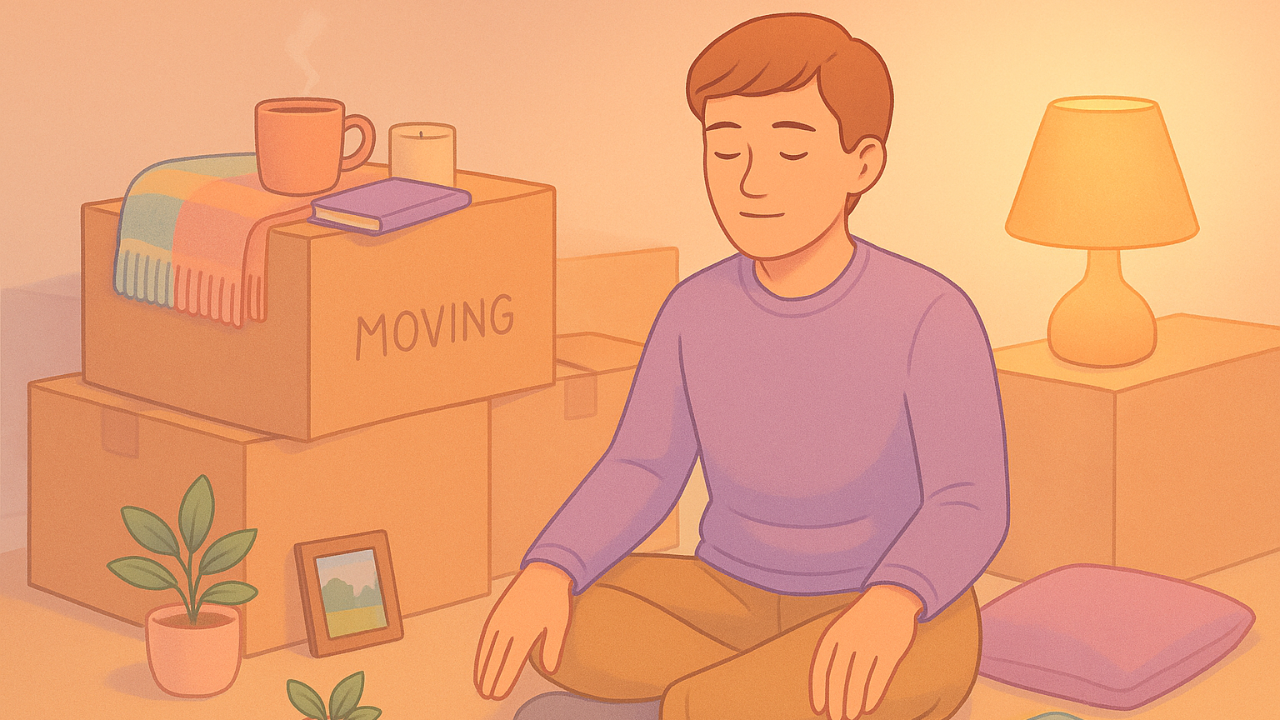
7. Create one small island of safety
Instead of trying to “set everything up,” start with one corner:
- A chair or cushion
- A soft blanket or sweater
- A lamp or candle (if safe)
- One familiar object, like a photo or plant
Let this be the place you come back to when you feel overwhelmed. Even ten seconds of sitting there and noticing the light, the textures, and your breath can help your system start to attach safety to this new space.
8. Use your two core tools daily for the first week
For example:
- Morning: orienting around one room
- Evening: a short body-based practice before sleep
If you want more support choosing small, kind tools that you can actually keep doing, the Stress Loop Quiz can help you see which patterns your body leans toward, and which practices might match.
Repeat, even if it feels “too simple.” Your nervous system learns through repetition, not through impressiveness.
A 7-Day Gentle Stability Plan For Your Move
You can adapt the timing, but keep the spirit small and kind.
Day 1: Pre-move awareness
Notice how your body feels when you think about the move. Write down three sensations. Use one orienting practice.
Day 2: One room in tiny bites
Choose a single room and break it down into zones. Practice doorway regulation each time you switch zones.
Day 3: Body basics focus
Keep your “body basics bag” visible. Aim for regular sips of water and one real meal, even if simple.
Day 4: Emotional prep and titration
Spend five minutes imagining saying goodbye to your current space, then come back to something neutral. Remember that moving slowly between “hard” and “okay” is the core of titration.
Day 5: Goodbye ritual
Walk through the old home and say a simple goodbye in each main room.
Day 6: Arrival ritual
Create your small island of safety in the new home. Sit there for three minutes and notice what feels even 5 percent okay.
Day 7: Check your window
Ask yourself: “On a scale from shut down, to okay, to wired, where am I today?” If you want support turning this into an ongoing habit, this piece on tracking your nervous system states with simple journal prompts can give you gentle structure.
Common Sticking Points And Gentle Adjustments
“I keep waiting until I ‘feel ready’ to start packing.”
This often means your system is overwhelmed before you even begin. Let yourself start with one shelf or even one pile of papers. Then pause, orient, and breathe.
“Once I start, I go into a tunnel and cannot stop.”
That tunnel is a survival response. Instead of judging it, build in external pauses, like an alarm every 30 minutes. Each alarm is a cue to stand up, stretch, drink water, or step outside.
“I feel like I lose myself during big changes.”
Big transitions can pull you into old patterns of people-pleasing, overachieving, or shutting down. That does not mean you are broken. It means your nervous system is doing what it learned. If you want more language for this, you might resonate with the idea of feeling like you “do not have a self,” and how that links to past overwhelm and nervous-system survival strategies.
“I am still exhausted weeks after moving.”
Your body did not just move boxes. It moved identity, routine, and safety cues. Your system is still recalibrating. Keep using very small daily practices, rather than waiting for one big reset.
If you want help figuring out which tiny practices might match your own patterns, the Stress Loop Quiz can give you a clearer map of how your stress loops behave, and where to support them.
More Gentle Reads
If this move is part of a season of bigger change, these pieces may feel like soft company:
- How To Calm Travel Anxiety And Reset Your Nervous System On The Go
- Morning Routine to Reset Nervous System
- Daily Nervous System Reset Routine at Home
Tiny Closing Reminder
You are allowed to move slowly, even in a season that feels rushed. Your worth is not measured in how efficiently you pack or how quickly you “adjust.”
Disclaimer: This article is educational and not medical advice. If you have health concerns, consider speaking with a qualified professional.
And if you would like support seeing your own patterns more clearly as you move through this transition, you are always welcome to take the Stress Loop Quiz.
Discover Your Vagal Tone
Find out how dysregulated your nervous system is and get your personalized roadmap to feeling calm, energized, and in control