Morning Routine to Reset Nervous System
If you wake up feeling tense, wired, or already behind, your body may still be living in a stress loop from yesterday. Many women begin the day with their system in fight, flight, or freeze before their feet even hit the floor.
That’s why a nervous system reset morning routine matters. It helps you begin the day in safety, not survival.
You can take the Stress Loop Quiz to learn which pattern your body tends to fall into.
What a Nervous System Reset Morning Routine Does
This kind of routine uses sensory awareness, gentle breath, and small movements to remind your body it’s allowed to rest again. Instead of jolting into phone alerts or coffee jitters, you practice orienting, grounding, and regulating.
In essence, you’re retraining your body to wake up without alarm inside.
If mornings feel heavy or panicky, it may help to understand what’s happening in your physiology. Articles like Polyvagal Theory Explained Simply show how your body’s vagus nerve acts like a safety dial, shifting you between calm and defense.
A 5-Step Nervous System Reset for Morning Calm
1. Wake Without Shock
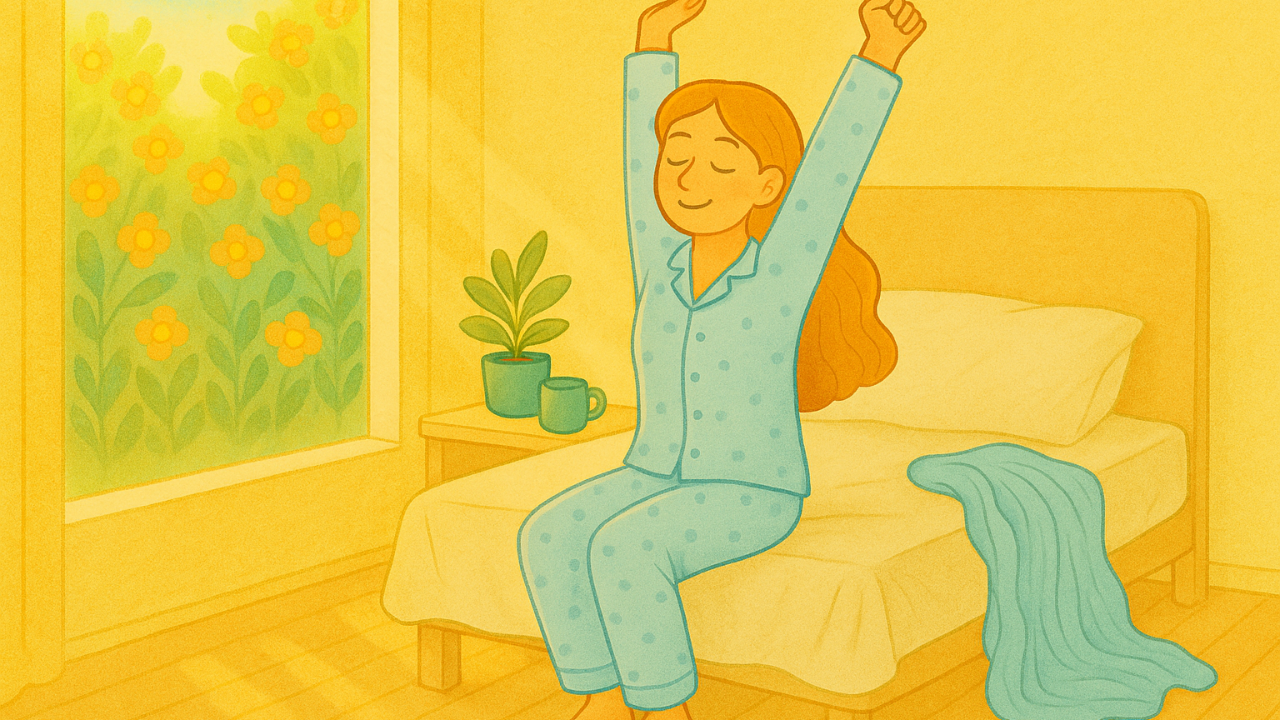
Before getting out of bed, feel the weight of your body. Let your breath drop low into the belly. If your mind races, gently look around the room and name three things you see. This orienting step signals the brain that there’s no threat here. You can try this guided version: Orienting Practice: A Gentle Way to Calm Your Nervous System.
2. Feel Your Feet
Sit up and plant both feet on the floor. Press them slightly into the ground. Feel the texture under your toes. This brings your awareness out of racing thoughts and into physical safety. If you tend to dissociate or go numb in the mornings, Grounding Techniques for Dissociation That Actually Work may help deepen this practice.
3. Hydrate and Nourish
Drink water before caffeine, and eat something with protein and complex carbs within 45 minutes of waking. This stabilizes your blood sugar, helping you avoid that mid-morning crash or panic flutter. Learn more in Blood Sugar Swings and the Nervous System: Finding Steady Calm.
4. Reset Through Breath and Small Movement
Spend five minutes combining breath and gentle motion:
- Inhale through the nose for four counts
- Exhale through the mouth for six
- Add a light sway, shoulder roll, or soft yawn
If breathing makes you anxious, you’re not doing it wrong—your system may just need another entry point. Why Deep Breathing Makes Me More Anxious, And What To Do Instead explains this beautifully.
You can also explore A 10-Minute Nervous System Reset For Overwhelm You Can Do Anywhere when you want a full guided sequence.
5. Step Into Light
Morning sunlight helps regulate your circadian rhythm and tells your body it’s time to wake gently. Even two minutes near a window with a warm drink can help. If you often feel morning panic, you may want to pair this with Somatic Tools for Morning Anxiety.
7-Day Gentle Start Plan
| Day | Focus | Practice |
|---|---|---|
| 1 | Grounding | Feel your feet before looking at your phone |
| 2 | Hydration | Drink a full glass of water before coffee |
| 3 | Breath | Practice a 4-6 exhale for three minutes |
| 4 | Movement | Sway or stretch to music for one song |
| 5 | Nourishment | Eat protein early |
| 6 | Light | Sit near sunlight or an open window |
| 7 | Integration | Combine your three favorite steps |
Little actions, repeated daily, change the baseline of your nervous system more than any single big practice.
When Mornings Feel Hard
If you wake up frozen or tearful, you may be touching a dorsal vagal state—your system’s protective shutdown mode. Be gentle here. Read Signs of Dorsal Vagal Shutdown and How to Gently Come Back to understand how to ease out of that state safely.
When you learn to meet your body where it is, rather than force it into positivity, regulation becomes possible.
More Gentle Reads
-
Fight, Flight, Freeze, Fawn: Real-Life Examples and Gentle Exits
-
Vagus Nerve Breathing for Trauma Recovery: Small, Kind Steps That Actually Help
Disclaimer: This article is educational and not medical advice. If you have health concerns, consider speaking with a qualified professional.
Discover Your Vagal Tone
Find out how dysregulated your nervous system is and get your personalized roadmap to feeling calm, energized, and in control