Reset After Workplace Conflict, Nervous System First
Workplace conflict can flood your body in seconds. One sharp email, one tense meeting, one raised eyebrow, and suddenly your heart is pounding, your stomach drops, and your brain feels foggy or on fire. If that is you right now, you are not overreacting. Your nervous system is trying to protect you.
If you want a clearer picture of how your stress patterns show up, you can take the Stress Loop Quiz.
Featured Snippet-Style Answer
When workplace conflict happens, your nervous system reacts before you can think about being “professional.” The fastest way to reset is to focus on your body first. Gently orient to the room, lengthen your exhale, and give your muscles permission to unclench. Small, repeatable somatic tools tell your brain that the threat is over, so you can come back to clarity, boundaries, and repair without abandoning yourself.
Why Workplace Conflict Hits Your Body So Hard
Your system watches for danger in tone, facial expressions, posture, and silence. A cold reply, a public correction, or being talked over can feel like social danger, which your survival brain reads almost like physical danger.
If this kind of stress leaves you feeling “ready to jump out of your skin,” it may be reassuring to know there are body-based explanations for that wired, on-edge feeling and gentle ways to work with it.
Your reaction is not a personal failure. It is a nervous system trying to keep you safe with the tools it learned from past experiences.
Step One: Orient Your Body Before You “Fix” The Conflict
Most of us want to immediately explain, defend, or mentally replay every detail. The problem is that while your body is in a stress state, your thinking brain is not at full power. A few seconds of nervous system care can change the entire tone of what happens next.
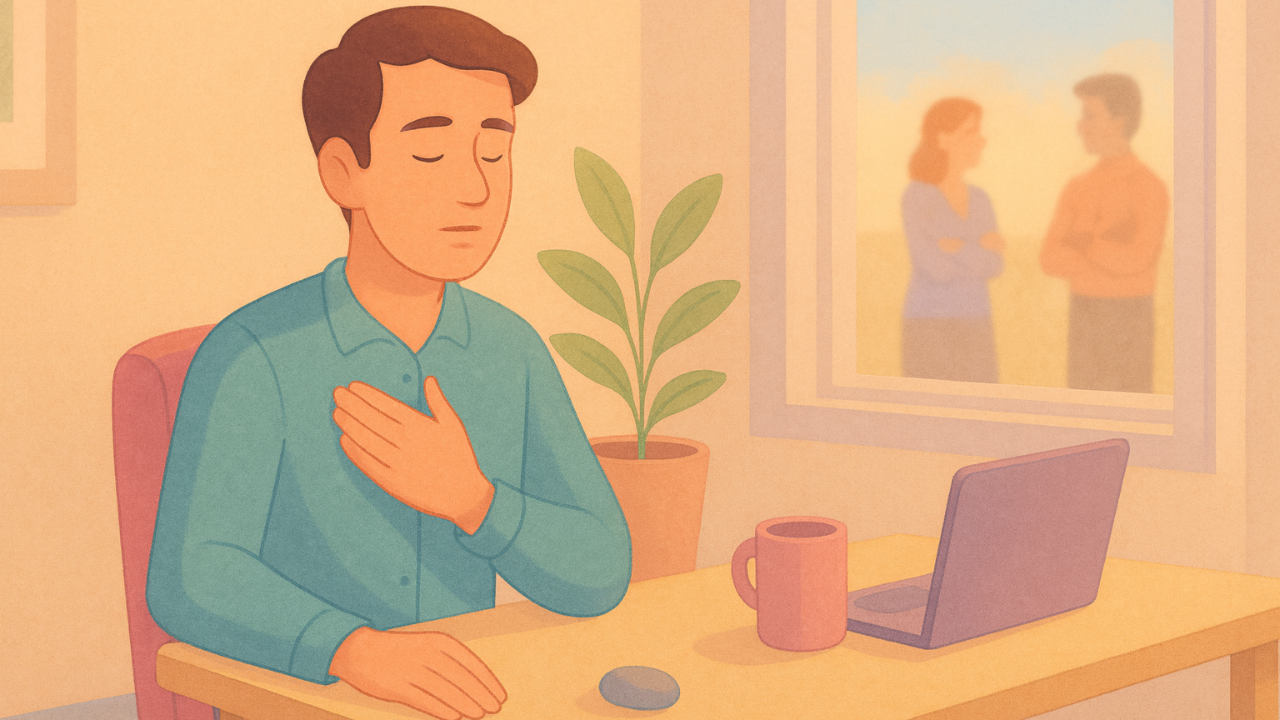
A simple way to start is with an orienting practice that helps your body notice you are not in immediate danger. You can try this at your desk, in the bathroom, or outside the building.
A quick orienting reset
-
Let your eyes slowly scan the space, one section at a time.
-
Silently name three colors, three shapes, or three objects you see.
-
Feel the support under you, whether it is a chair, the floor, or a wall.
-
Notice one thing that feels even a tiny bit pleasant or neutral, like light on the wall or a plant in the corner.
If deep breathing makes you feel more anxious or dizzy, you are not doing it “wrong.” Some systems respond better to gentler breath tools and shorter practices.
When Conflict Leaves You Wired And Activated
Sometimes conflict leaves you buzzing, angry, or unable to sit still. This is a version of fight or flight. Your body has energy it wanted to use to argue, defend, or escape.
Instead of forcing yourself to sit perfectly still at your desk, you can give that energy a safe way to move.
Small releases you can do discreetly
- Press your feet into the floor and lift your heels on the exhale.
- Squeeze the armrests of your chair, then let your hands soften.
- Gently roll your shoulders up as you inhale and drop them as you exhale.
- If you have privacy, stand up and shake out your hands for 10 to 20 seconds.
If you know you have a full, demanding workday, it can help to plan tiny nervous-system microbreaks into your schedule instead of waiting until you are already overloaded.
Remote or hybrid workers may notice conflict lands differently when it is on screens, in chat, or over video. There are small, camera-friendly tools that can help your body reset even when you are glued to a laptop.
When Conflict Leaves You Frozen, Numb, Or Blank
Not everyone gets wired. Some people go blank in the middle of conflict. Words disappear. Emotions feel shut off. You might sit in the meeting thinking “say something” and nothing comes out.
This is also a survival pattern. Your system may be slipping toward a kind of shutdown that helped you cope in earlier situations.
Gentle ways to come back online
- Press your feet firmly into the floor and notice your socks, shoes, or the texture under you.
- Curl your toes tightly inside your shoes and slowly release them.
- Place one hand on your chest and one on your lower ribs or belly. Feel whichever hand feels easier to connect with.
- See if you can notice even the smallest sensation, like warmth, pressure, or the weight of your clothing.
If you recognize this numb, far-away feeling from other parts of your life, you are not alone. There are very small, titrated practices that can help you reconnect with your body again, at your own pace.
Micro-Scripts To Use In The Moment
You do not have to explain your entire nervous system history to take care of yourself at work. A few simple phrases can buy you time and create a bit more safety for your body.
To pause a heated conversation
“I want to respond thoughtfully, not react. I need a few minutes to regroup and then I can come back to this.”
To ask for space after a difficult meeting
“That conversation stirred a lot up for me. I am going to take a short break and then look at what needs to happen next.”
To slow things down before they escalate
“This feels important. Can we slow the pace for a minute so I can take this in?”
If you know a hard conversation is coming, it can help to care for your nervous system ahead of time so you are not starting from empty.
A Gentle 7-Day Workplace Reset Plan
This is not about “fixing” yourself in a week. It is about building tiny habits that tell your body it is allowed to feel a bit safer at work.
Day 1: One orienting pause
Choose one moment, even 30 seconds, to look around your space and name what you see.
Day 2: One caring exhale
When you notice tension, gently lengthen just one exhale and see what shifts.
Day 3: One microbreak between tasks
Before you open your next email or join your next call, take 20 seconds to feel your feet or stretch your hands.
If you want a short, guided structure you can repeat, you might find a 10-minute reset especially helpful on days that already feel overloaded.
Day 4: One post-conflict check-in
If conflict happens, ask, “What is my body feeling right now?” and offer yourself one small tool from this article.
Day 5: One boundary with yourself
Choose one thing you will not replay after work, like a single sentence or look, and gently redirect when your brain goes back there.
Day 6: One environmental tweak
Adjust something in your space that feels nourishing, like adding a plant, moving your chair to see more light, or keeping a grounding object on your desk.
Day 7: Reflect and widen your window
Notice which small practices helped you feel even slightly safer or more steady this week. This is how you slowly widen your window of tolerance for workplace stress.
If you want a bigger picture of the patterns running underneath your work stress, you can revisit the Stress Loop Quiz.
When The Conflict Is Ongoing Or The Culture Is Tough
Sometimes the problem is not a one-time disagreement. It is a pattern. A manager who never apologizes. A team that uses sarcasm. A culture that rewards overwork and emotional numbness.
Nervous system work cannot magically fix an unsafe environment, but it can help you:
- Notice red flags earlier.
- Save some of your energy for life outside work.
- Make clearer decisions about what is sustainable for you.
If you are returning to the office after remote or hybrid work, your body may be adjusting to noise, social cues, and constant proximity again. That is a lot for a sensitive system.
You are allowed to take your body’s signals seriously, even if everyone around you seems fine.
Common Sticking Points
“I do not have time to regulate at work.”
You do not need 30 minutes. Most of the practices in this article take 10 to 60 seconds and can be done under the radar.
“I should be used to this by now.”
Your nervous system does not get “used to” chronic stress in a good way. It often gets more sensitized. What you can build is resilience, which is your ability to come back to yourself after activation.
“If I care for my nervous system, I will let my guard down and people will walk all over me.”
Regulation is not about becoming passive. It is about having enough steadiness to set boundaries, say no, or ask for repair without your body feeling like it is in a fire.
“I leave work, but the conflict comes home with me.”
An after-work downshift can help your body understand that the workday is over, even if your brain wants to keep replaying everything.
If you want a simple way to see which stress loop you tend to fall into, you can take the Stress Loop Quiz again.
FAQs
1. Why does workplace conflict affect me more than my coworkers?
Everyone’s nervous system has a different history and level of sensitivity. Past experiences, current stress load, sleep, hormones, and health all influence how strongly conflict hits your body.
2. How long should it take to “get over” a conflict?
There is no right number. Some conflicts resolve in minutes, others echo for days. What often helps is not forcing yourself to “move on,” but giving your body small chances to complete the stress response.
3. Is it better to talk through conflict right away or wait?
It depends. If your body is in a strong stress response, waiting until you have even a bit more regulation usually leads to clearer, kinder communication.
4. What if I freeze every time my boss confronts me?
Freeze is a common nervous system pattern, especially when there is a power imbalance. Small grounding practices before and after meetings can help, and over time, your system can learn that you have more options than shutting down.
5. Can nervous system work replace HR or structural changes?
No. Nervous system tools help you cope, protect your health, and make decisions. They do not replace the need for fair policies, safe culture, and appropriate support.
6. When should I consider professional support?
If work conflict regularly leads to panic, shutdown, sleep problems, or physical symptoms that scare you, consider talking with a qualified medical or mental health professional for personalized guidance.
More Gentle Reads
If this article spoke to you, you might also like:
A Gentle Post Meeting Comedown Routine For Sensitive Nervous Systems
Nervous System Microbreaks to Help Remote Workers Stay Calm and Focused
Disclaimer: This article is educational and not medical advice. If you have health concerns, consider speaking with a qualified professional.
Discover Your Vagal Tone
Find out how dysregulated your nervous system is and get your personalized roadmap to feeling calm, energized, and in control