Why Holidays Trigger Fight-or-Flight Response
If the holidays make you feel edgy, snappy, teary, wired, or strangely numb, you are not broken. Your nervous system is doing what it was built to do, scanning for safety, predicting what comes next, and trying to protect you.
If you want a quick way to understand your personal stress pattern (and which tools tend to work best for you), take the Stress Loop Quiz.
The simple explanation
Holidays often trigger fight-or-flight because they combine pressure, sensory overload, disrupted routines, and emotionally charged relationships. Even “good” gatherings can feel intense to the body when there’s unpredictability, performance expectations, or old family dynamics. Your nervous system does not decide based on logic alone, it decides based on cues.
Many people also notice the body signs first, like a tight chest, buzzing limbs, or that classic “butterflies” feeling that can be anxiety or a stress response.
Why the holidays hit so hard, in nervous system terms
1) Pressure is a threat cue, even when it’s invisible
Holiday culture quietly tells you to be joyful, be social, spend money, show up, perform gratitude, keep the peace, and “make it special.” That can create a constant internal push. Your body may read that push as urgency, and urgency can flip the system into protection.
If you want a gentle way to build capacity for that kind of pressure over time, this resilience guide pairs well with holiday season stress.
2) Sensory overload stacks faster than you think
Crowded stores. Bright lights. Travel noise. Multiple conversations at once. Strong smells. More screen time. Less quiet. Your nervous system has a limited bandwidth. When it’s full, it can respond with irritability, panic, or shutdown.
If you relate to feeling like you’re “ready to jump out of your skin” with no clear reason, you’ll feel seen in the linked article.
3) Family dynamics can wake up old survival patterns
You can be an adult with a stable life, and still feel ten years old at the dinner table. That’s not weakness. It’s conditioning. Your nervous system learned what certain tones, facial expressions, or roles meant in the past, and it may react before you even form a thought.
Sometimes this shows up as a painful inner story of “I don’t belong” or “something is wrong with me,” especially in social settings. If that lands, this piece on worthiness can be a tender companion.
4) Unpredictability burns safety fuel
Delays, last-minute changes, surprise guests, schedule shifts, long meals, and awkward conversations are all “unknowns.” A nervous system that values safety tends to prefer predictable sequences. When the sequence keeps changing, your body may go into alert.
If travel is part of your holiday stress, this on-the-go nervous system reset can help you plan for steadier cues.
5) Your body can hold emotional pain as physical pain
Holiday stress is not only mental. It can show up as headaches, stomach flips, jaw clenching, tight shoulders, chest heaviness, and exhaustion. That does not mean something is “all in your head.” It often means your nervous system is carrying load.
If you want a clearer explanation of how the nervous system links emotional and physical pain, this is a supportive deep dive.
6) Even “good connection” takes energy
Being around people, even people you love, can be stimulating. If you are already running on low sleep or a stretched schedule, you may have less recovery capacity. Your system may choose fight-or-flight simply because there are not enough pauses.
If you want a simple way to track capacity and widen it gently, this window-of-tolerance guide is a practical next step.
What fight-or-flight looks like during the holidays
It’s not always a classic panic attack. It can look like:
-
Getting short, controlling, or argumentative
-
Wanting to leave, cancel, or hide in the bathroom
-
Tight chest, shallow breathing, stomach flips
-
Insomnia or adrenaline surges at night
-
Numbness, brain fog, “I’m not really here”
-
Feeling ashamed that you can’t “just enjoy it”
If you’re unsure whether what you’re feeling is panic (and why it happens), this guide breaks it down in plain language.
Gentle ways to calm your system without forcing yourself to be “fine”
You don’t need a big breakthrough. You need small safety signals your body can believe.
If you want help matching the right tool to your stress state today, take the Stress Loop Quiz.
Practice 1: 30-second orienting before you walk in
This is a fast way to tell your nervous system, “I’m here, now.”
-
Look for three neutral objects (lamp, doorway, plant).
-
Name one detail about each (shape, color, texture).
-
Let your exhale be a little longer, just once or twice.
If you want a full step-by-step version you can practice ahead of time, this orienting guide is a great “holiday rehearsal.”
Practice 2: Feet plus jaw release when you feel trapped in conversation
This is simple, but it works because it gives the body a “no emergency” message.
-
Press both feet into the ground for 3 seconds
-
Drop your shoulders one millimeter
-
Unclench your tongue from the roof of your mouth
If you want a deeper “in the moment” guide for panic without needing to talk it through, this grounding article is built for real life.
Practice 3: A boundary script that protects connection
Boundaries are nervous system care. You don’t need to over-explain.
Try one sentence:
-
“I’m going to step outside for a minute, I’ll be back.”
-
“I can do two hours, then I need to head out.”
-
“That topic is hard for me, I’m going to pass.”
-
“I’m keeping it simple this year.”
This gentle approach to boundaries that doesn’t create a stress crash afterward can also help.
Practice 4: If deep breathing makes you worse, use a breath alternative
Some nervous systems feel more anxious when they try to “take a deep breath.” That’s common, especially when you’re already activated.
If breathing ramps you up, start with this guide on what to do instead, with softer options.
A tiny 14-day plan for holiday nervous system steadiness
Small, doable actions tend to stick.
Days 1–3: 30 seconds of orienting once per day
Days 4–6: Practice one boundary sentence out loud, alone
Days 7–9: Add one recovery pause after social time (5 minutes, no phone)
Days 10–12: Choose one simplification (one less errand, one less event, simpler food)
Days 13–14: Write down what helped, and repeat it
If you want a ready-made plan built specifically for this season, this holiday stress nervous system plan is a great companion.
Common sticking points (with kind fixes)
“I tried calming down, but my body didn’t listen.”
Start smaller. Your system may need neutral cues first (orienting, feet pressure), then it can accept breath or touch.
“I feel guilty for needing space.”
Guilt is common when you step out of an old role. A gentle truth: space now often prevents a blow-up later. This article on how to exit people pleasing and the fawn response with kindness may be a supportive read.
“My family pushes back.”
You can repeat the same line, calmly, without defending it. Consistency is a safety signal, too.
“I crash after gatherings.”
That’s not failure. That’s a nervous system that used a lot of energy. Plan your recovery like it matters, because it does.
For additional support, you may want to check this resource on nervous system tools that can help you feel safe during family gatherings.
FAQs
Why do I feel anxious around family even when they’re being nice?
Because your nervous system learns patterns over time. Familiar people and places can carry old cues, even if the present moment is calm. Your body may be reacting to “then,” not “now.” If you need support on social anxiety, here are some gentle vagus nerve exercises that may help specifically with this.
Can happy events still trigger fight-or-flight?
Yes. Excitement is still activation. When you add unpredictability, crowds, noise, and pressure, your system may tip into survival mode.
Is it normal to feel numb during the holidays?
Yes. Numbness can be a protective response (freeze or shutdown). Gentle warmth, pressure, and orientation often work better than forcing yourself to “cheer up.” You can read more with this resource on why the body goes numb after stress, including some gentle ways to reconnect.
How do I calm down fast at a gathering?
Try a bathroom reset: feel your feet, relax your jaw, slow your exhale, and look at three neutral objects. Then decide your next small choice (stay 10 minutes, step outside, change seats). For additional resources, this read on how to stop adrenaline spikes naturally may help.
When should I talk to a professional?
If your symptoms feel unmanageable, your sleep is consistently disrupted, or you feel stuck in panic, numbness, or despair, consider talking with a qualified professional for support.
More Gentle Reads
-
A 10-Minute Nervous System Reset For Overwhelm You Can Do Anywhere
-
Fight, Flight, Freeze, Fawn: Real-Life Examples and Gentle Exits
Closing
You don’t have to win the holidays. You just have to move through them with a little more steadiness, and a little less self-blame. Your body is not trying to ruin anything. It is trying to protect you.
If you want help figuring out which regulation tools match your stress loop best, take the Stress Loop Quiz.
Disclaimer: This article is educational and not medical advice. If you have health concerns, consider speaking with a qualified professional.
About Neurotoned
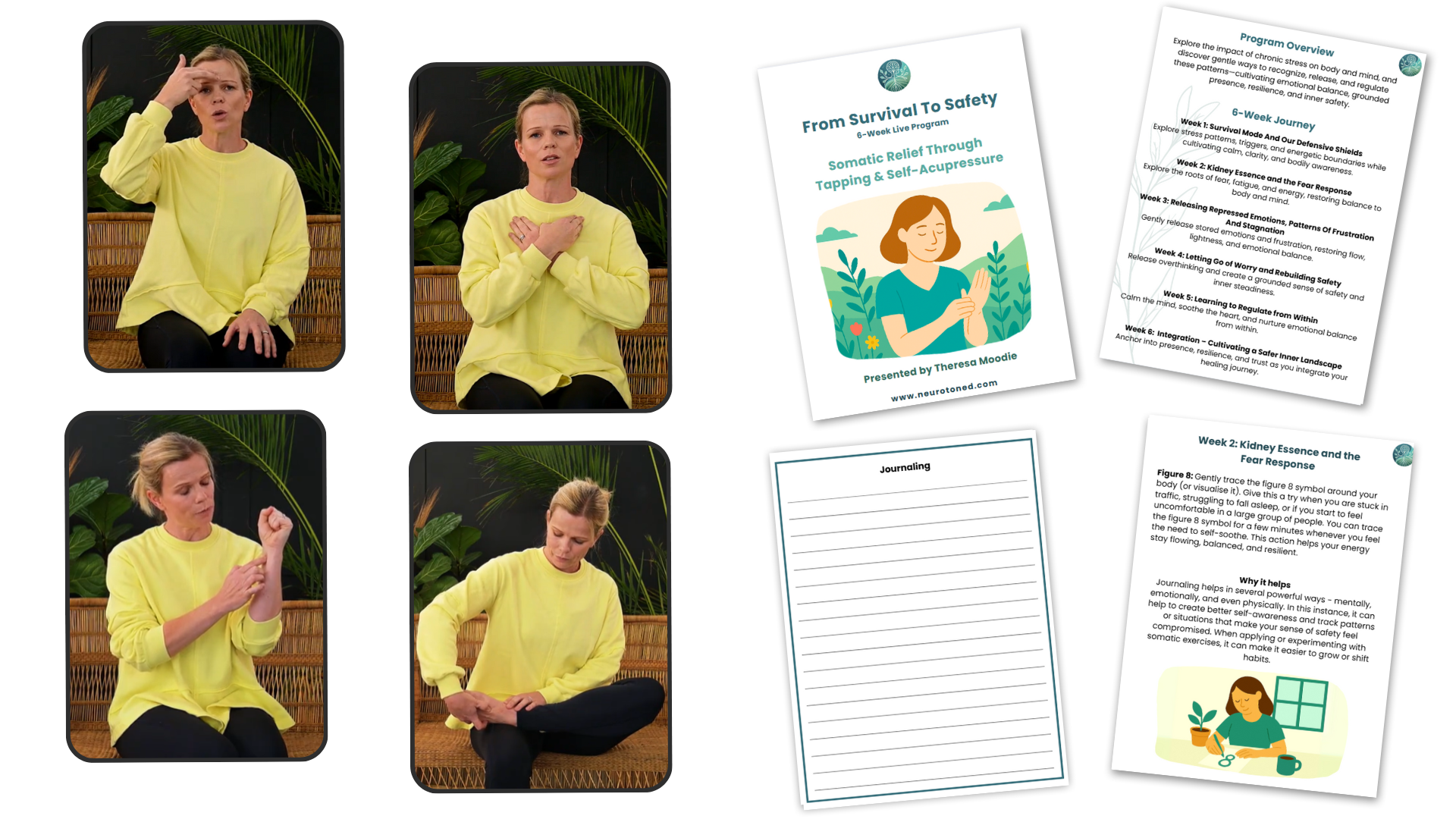
Neurotoned is a trauma-informed nervous system support program designed to help people shift out of chronic stress, overwhelm, and shutdown using short, body-based practices. Our approach is grounded in vagus nerve science and somatic psychology, with simple tools you can use in everyday life, even on “wired” or “numb” days. The goal is gentle, practical nervous system regulation that helps you feel safer in your body, one small step at a time. Explore how Neurotoned supports nervous system regulation with small, body-based practices.
Discover Your Vagal Tone
Find out how dysregulated your nervous system is and get your personalized roadmap to feeling calm, energized, and in control