Why Some People Regulate Better Outdoors (Nervous System Traits)
If you calm down faster outside, it is not “all in your head.” For some nervous systems, the outdoors brings enough cues of safety and enough space to breathe that your body finally stops bracing.
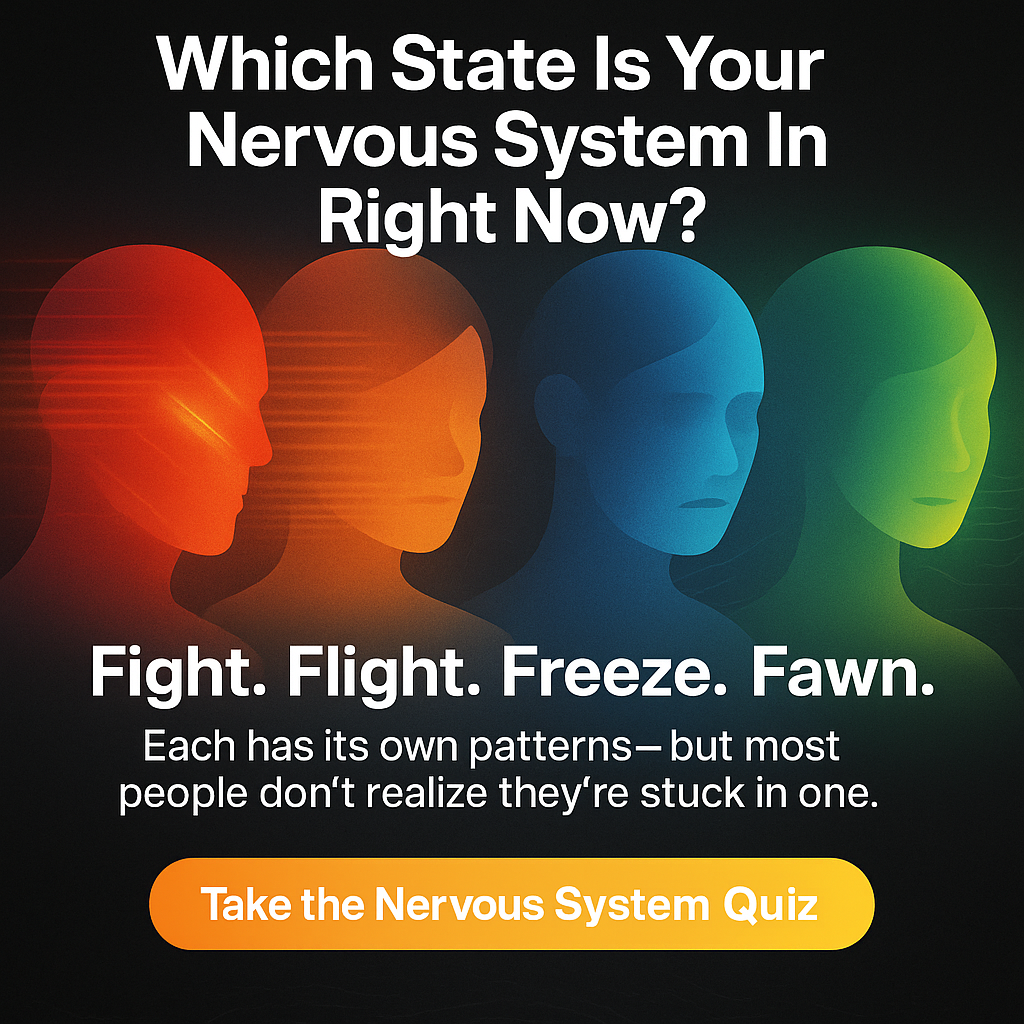
If you want a quick read on what state you’re in right now (wired, shut down, or steady but tender), take the Stress Loop Quiz.
The simple answer
Some people regulate better outdoors because nature often lowers sensory strain and gives the nervous system clearer safety signals. More space, softer sounds, fewer social demands, natural light, and gentle movement can make it easier for your body to settle without forcing anything.
You might notice this as fewer adrenaline spikes, less chest tightness, fewer racing thoughts, or a feeling like you can finally “land” in your body.
Outdoors regulation, in real-life language
This can show up as:
-
You feel calmer when you can see the sky or a horizon.
-
Your thoughts loosen when you walk without an agenda.
-
You breathe easier when you are not under fluorescent lights.
-
Your body stops buzzing when you hear leaves, wind, or steady ambient sound.
-
You feel less “trapped” when you have room to move.
If you relate to that hair-trigger feeling where your body wants to jump out of its own skin, this is the same system at work, just getting a different environment to scan. You might like this deeper explanation of that “ready to bolt” sensation.
Nervous system traits that often do well outdoors
1) Your system regulates through space
Some people calm down when they have physical options: more room, more exits, fewer tight corners. Open space tells your body, “I can move if I need to.”
2) Your system regulates through orienting
Orienting is when your eyes and head gently track the environment, not to hunt for danger, but to confirm safety. Outdoors naturally invites this. If you want a step-by-step way to do it (without making it a performance), try this gentle orienting practice.
3) Your system is sensitive to “indoor load”
Indoor life can be a lot: screens, alerts, artificial light, background conversations, tight time pressure, social masking. If you often feel scattered or foggy indoors, you may find that nature reduces the mental “effort” required to stay okay. If focus is a struggle when you’re dysregulated, this may help you work with your brain instead of against it.
4) Your system responds strongly to body basics
For some bodies, regulation starts with the basics: hydration, blood sugar steadiness, temperature comfort, light movement. Outdoors often improves a few of these at once. If you want one small lever that is surprisingly powerful, this guide on hydration and steadier nerves can be a good support.
5) Your system shifts states quickly, and environment matters
If you resonate with terms like “window of tolerance,” “autonomic state,” “ventral vagal,” “dorsal shutdown,” or “fight or flight,” environment can be the difference between coping and settling. If you want the simplest explanation of these ideas (without jargon), this polyvagal overview is a helpful foundation.
Other phrases you might hear for this topic
People describe “regulating better outdoors” in a lot of ways, including:
-
feeling calmer in nature
-
“green time” or “nature breaks”
-
forest bathing (shinrin-yoku)
-
grounding outside
-
sensory relief, sensory reset, or sensory downshift
-
nervous system reset walk
-
attention restoration, soft fascination
-
biophilia (our natural pull toward living systems)
-
getting out of hypervigilance
-
returning to safe and social
If any of those phrases fit, you are in the right place.
A 4-minute outdoor reset you can do anywhere
Use this when you step outside, even if it is just a doorway or a small patch of sidewalk.
-
Find one stable object (tree trunk, wall, fencepost). Let your eyes rest there for two slow breaths.
-
Name three neutral facts you see (shapes, colors, distance). No need for “gratitude” or positivity.
-
Feel your feet inside your shoes. Press down gently for a count of three, then release.
-
Widen your gaze (soft focus), taking in the whole scene at once.
-
Exhale slightly longer than you inhale for three cycles, only as comfortable.
Micro-script: “I’m here. I have space. Nothing to solve in this minute.”
if you want to match the tool to your state (wired vs numb), the Stress Loop Quiz can point you toward the right intensity.
If outdoors helps, but you can’t always get outside
You still deserve relief.
Try “outdoors-adjacent” options:
-
stand by an open window for 60 seconds
-
sit near a plant with your phone face-down
-
look at the sky from a doorway
-
take one slow lap in a hallway, then pause at a window
And if you truly cannot access outside right now, use this gentle indoor grounding guide as a companion.
A tiny 7-day plan (for nervous systems that hate big plans)
Day 1: Step outside for 2 minutes, no phone.
Day 2: Add a slow, aimless walk for 3 minutes.
Day 3: Do the 4-minute reset above once.
Day 4: Pair outside time with a hard moment (after email, after drop-off, after a call).
Day 5: Walk beside something containing (a wall, hedge, fence) if open space feels too big.
Day 6: Choose one “safe spot” and return to it, same time of day if possible.
Day 7: Write one sentence: “Outdoors helps me most when ______.”
Common sticking points (with kinder fixes)
“Outside makes me more anxious.”
That can be a real safety-cue issue, not a willpower issue. Try contained outdoors: porch, balcony, walking next to a wall, or sitting in your car with windows cracked.
“I feel silly doing nervous system stuff in public.”
Make it invisible. Soft eyes, longer exhales, and feeling your feet looks like nothing.
“My neighborhood is loud.”
Aim for “less noise,” not perfect quiet. Even one tree-lined street or a small corner with a wider view can be enough.
“Breathing exercises backfire for me.”
You’re not broken. Some people feel worse with deep breathing. Try gentler breath options like a softer exhale, humming, or orienting first. (More on this in the reading list below.)
More Gentle Reads
If outdoors helps you regulate, you can treat that as useful information, not a random quirk. Your nervous system is telling you what it needs: space, softer input, movement, and safety cues you can actually feel.
If you want help choosing the right tool for your current state, take the Stress Loop Quiz.
Disclaimer: This article is educational and not medical advice. If you have health concerns, consider speaking with a qualified professional.
Discover Your Vagal Tone
Find out how dysregulated your nervous system is and get your personalized roadmap to feeling calm, energized, and in control