
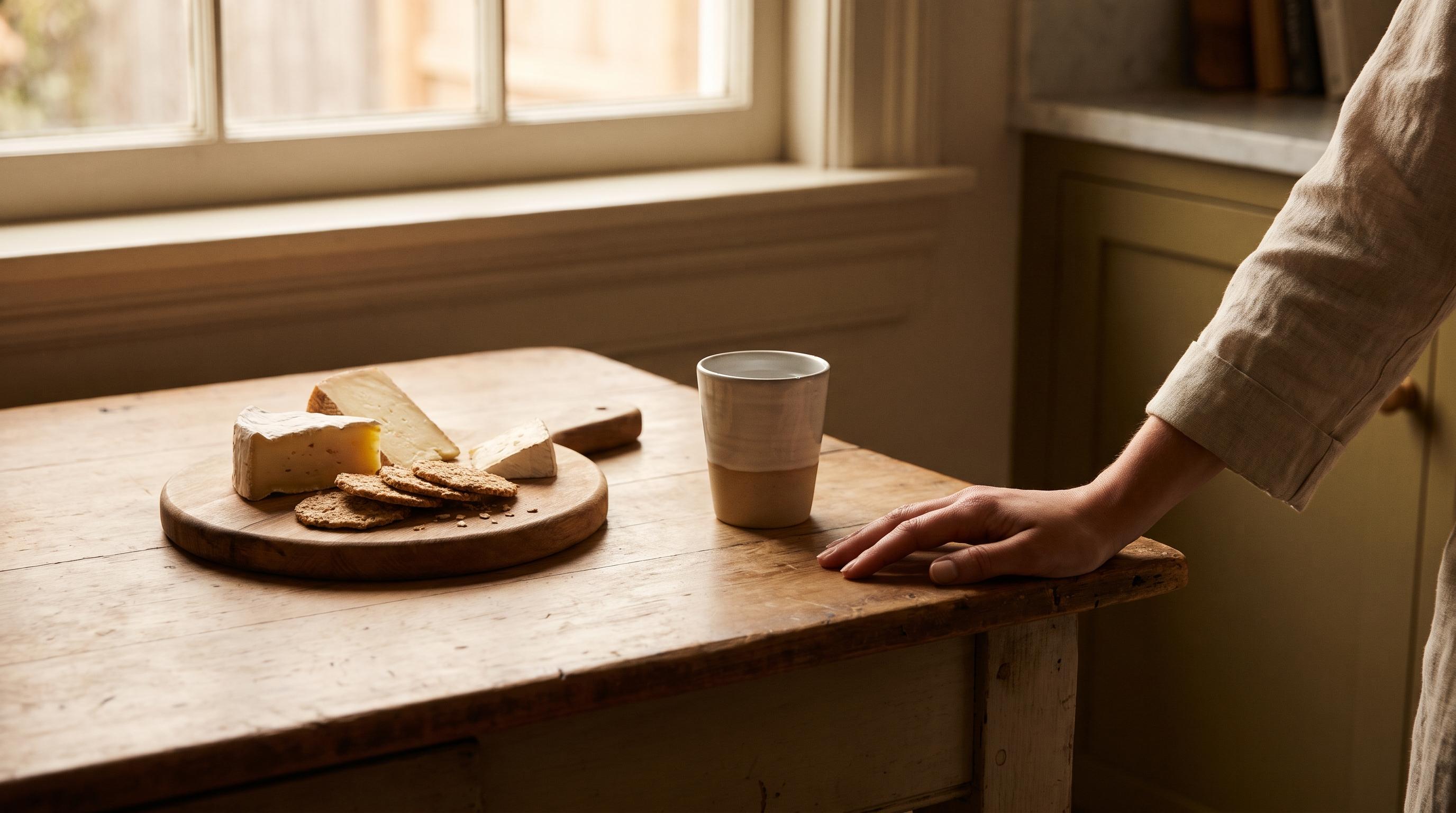
Cheese Anxiety: When a Cheese Board Leaves You Wired
It's 10pm and you're home from a friend's birthday. You had a glass of wine, a few crackers and more aged cheddar than you meant to. Now you're lying in bed, your heart is thudding against the pillow, and one question loops: is this cheese anxiety, or am I just anxious?
Or maybe it's a different moment. Someone unwraps a wedge of blue cheese at the table, the smell reaches you, and your throat tightens before you've had a single thought.
Quick Answer: "Cheese anxiety" usually means one of two things: feeling jittery or uneasy after eating cheese, or a real fear or strong disgust toward cheese itself. For most people who aren't taking an MAOI antidepressant, there's little good evidence that cheese causes anxiety, and one survey even linked eating more cheese and yogurt with lower anxiety. A fear of cheese is a recognized specific phobia, and the main approach for it is gradual, supported exposure, not more avoidance.
First, a safety note. If you take an MAOI antidepressant, a short medical commentary on the "cheese reaction" explains how the tyramine in aged cheese can cause a dangerous rise in blood pressure. A sudden severe headache, chest pain or pounding heart after eating is an emergency. Swollen lips, tongue or throat, hives, or trouble breathing after food isn't anxiety either: get urgent help. And any new, severe or changing symptom, like palpitations, chest pain or dizziness, needs a doctor first, before you decide it's nerves.
If you're not sure whether your body tends to run wired or go flat when it's stressed, the Stress Loop Quiz can give you a gentle place to start.
What Most Pages About Cheese and Anxiety Get Wrong
Most advice on this search says the same thing: cut out aged cheese, or switch to "low-tyramine" fresh cheeses to calm your anxiety. For most people, that's the wrong first move.
Here's why. The evidence just isn't there for people who aren't on an MAOI. A small survey of university students found that the group with lower anxiety actually ate more yogurt and cheese. A survey like that can't show that cheese calms anyone, and studies on fermented foods and mood point in different directions. But it does make "cheese causes anxiety" hard to stand behind.
Histamine often comes up too. It's a real chemical in aged foods, but histamine intolerance is still a proposed condition. A narrative review of the research found its symptoms are scattered and non-specific, and that diagnosing it is still uncertain.
And cutting foods has a cost. Each food you drop out of fear quietly teaches your body that food was dangerous. The list tends to grow. So does the worry around eating. Even the pages about cheese phobia warn that avoiding cheese can play a part in disordered eating. A kinder path is to notice how your body feels, keep a simple log, and talk with a clinician before you cut anything out.
Why Your Body Feels Anxious After Cheese (or Around It)
Your nervous system is always asking one question: am I safe right now? It answers by shifting between a few states:
- Fight or flight: your body speeds up to deal with danger. Faster heart, tight muscles, racing thoughts.
- Freeze: you're revved up and braced, but stuck. Like holding your breath with your whole body.
- Shutdown: the system powers down. Heavy, foggy, flat, far away.
- Safety: rest and digest. Your breath is easy and your belly can do its work.
A rich meal sets off ordinary sensations. Your stomach is full and pressing up. Your face gets warm. Lying down, you can feel your pulse. Add wine, a late night and a long week, and there's plenty going on in your body that has nothing to do with danger.
But a nervous system that's already on guard reads those signals as a threat. The sensation sparks a worry, the worry releases more adrenaline, and the adrenaline makes the sensation stronger. That's the loop.
Picture a woman who had a cheese plate at 8pm and a glass of red. At 11, she feels her heartbeat in her ear against the pillow. She picks up her phone and searches. By midnight the brie is the villain and she's wide awake. The cheese might have played a small part. The fear did most of the work.
If your stomach is where it shows up first, this guide to that stomach flipping feeling explains what's happening.
When the Fear Is of Cheese Itself
For some people, the trouble starts before a single bite. Cheese has a strong smell and a strong texture, and disgust is one of the body's oldest protective reflexes. A fear can grow from one bad moment, like food poisoning or being made to eat something as a child. Then the smell alone is enough to send your body into flight: nausea, a tight throat, the urge to leave the room.
This has a name, turophobia, and it's real. Mayo Clinic's guidance on specific phobias describes exposure therapy, done gradually with a therapist, as the main approach for fears like this.
A Gentle Check-In for Cheese Anxiety (5 Minutes)
You can use this right after eating, or when the smell or even the thought of cheese sets you off. It isn't meant to prove anything about cheese. It's meant to help your body settle enough that you can see clearly.
- Pause and look around. Let your eyes move slowly around the room and name three things you see. The lamp. The blue mug. The window. You may notice a breath arrive on its own, or your shoulders drop a little.
- Name the sensations, plainly. "Warm face. Full belly. Heart beating fast." No story yet, just the facts. Sensations often get a little quieter once they're named. If this feels hard, this beginner's guide to interoception can help you build the skill.
- Separate the sensation from the story. Say you're at the kitchen sink rinsing plates and the thought comes: "That brie is doing something to me." Try saying, "I'm noticing my heart, and I'm noticing a worry about the cheese." Two different things. You may feel a little space open up between them.
- Give the out-breath a little room. Breathe in normally. Let the out-breath be slightly longer, like softly fogging a window. Three or four rounds, no more. If focusing on your breath makes you more anxious, skip it. Here's why that happens and what to try instead.
- Rest a hand on your belly. Let it be warm and still. Notice its weight and the gentle rise and fall underneath. Many people feel their belly soften a little under steady contact.
- Jot one line. The time, what you ate, how you felt from 0 to 10, and what else was going on: sleep, wine, coffee, a hard conversation. This sounds too simple to matter. Try it for a week before you decide.
When You Feel Wired
Your body wants to move, so let it. Walk slowly from room to room. Press your feet into the floor, or push your palms against a wall for a few seconds and let go. Look out a window at something far away. You're giving the extra energy somewhere to go.
When You Feel Numb or Flat
Sometimes a big meal leaves you heavy and far away instead. Sit up rather than lying down. Hold a warm mug and notice its texture. Sway gently side to side. Small, warm, steady input often helps more than trying to think your way back.
If It's Cheese Itself You Fear
Don't force it, and don't do it alone if the fear is strong. With a therapist, small steps might start far away: a photo of cheese, then cheese across the room. Rate your fear from 0 to 10 and stay only until it drops a little. Stop well before panic. Slow is the point.
A 7-Day Plan for Cheese Anxiety
| Day | Focus | Time |
|---|---|---|
| 1 | Look around and name three sensations after any meal | 2 min |
| 2 | Start a one-line food and feeling log | 2 min |
| 3 | Practice "I'm noticing a sensation, and a worry" | 3 min |
| 4 | Slightly longer out-breath or a hand on your belly after eating | 3 min |
| 5 | Note the other things in your day: sleep, wine, coffee, stress | 3 min |
| 6 | Try the wired or flat variation, whichever fits today | 4 min |
| 7 | Read your log kindly and pick one thing to bring to your doctor | 5 min |
If a day feels like too much, repeat the one before. There's no prize for finishing fast.
Common Sticking Points
"I already cut out cheese and I feel safer."
That relief is real, and it makes sense. It just tends to be short, and it can make the next food feel risky too. Try not to add any new cuts while you're logging, and talk to a doctor or dietitian if your list keeps growing.
"Keeping a log makes me more anxious."
Then make it smaller. One line, once a day, in the evening. You're not tracking every bite. You're just giving future you a little information.
"I can't tell if it's my body or my nerves."
You don't have to know tonight. Sorting that out is a doctor's job, and your log will help. The check-in can help your body settle either way.
"Just the smell sends me out of the room."
That's your flight response doing its job. Leaving is allowed. Once you're out, look around and name what you see. If eating is getting hard in general, these ideas for eating when you're anxious may help, and a therapist can help you work with the fear itself.
FAQs
Can cheese cause anxiety?
For most people, there's little good evidence that it does. The sensations after a rich meal can feel like anxiety, and an alert nervous system can turn them into worry. The real exception is people taking MAOI antidepressants, for whom aged cheese can be dangerous.
Which cheeses have the most tyramine?
Aged cheeses generally have more tyramine, and fresh, unaged cheeses generally have less. This matters most if you're on an MAOI. If you are, follow the food list your prescriber gives you rather than one from the internet.
Is a fear of cheese a real thing?
Yes. It's sometimes called turophobia, and it's a type of specific phobia. A therapist can guide gradual exposure, which is the main approach for fears like this.
Can lactose intolerance cause anxiety?
It doesn't cause anxiety on its own, but bloating, cramps and a sudden urge to find a bathroom can feel alarming and keep your body on alert. If dairy reliably upsets your stomach, a doctor can help you sort out what's going on.
Is cheese safe with antidepressants?
Most antidepressants aren't MAOIs, but it's always worth asking your prescriber or pharmacist which kind you take. If you're on an MAOI, take the food guidance seriously. A sudden severe headache or chest pain after eating needs emergency care right away.
Should I stop eating cheese if I feel anxious after it?
Not as a first step. Try logging how you feel for a week or two, and bring what you notice to a clinician. Cutting foods out of fear can make food anxiety bigger over time.
More Gentle Reads
- How to Eat to Feel Safe: Nervous System-Friendly Meals
- Reconnecting With Hunger And Fullness After Chronic Stress
- Why Coffee Makes You Anxious: Caffeine and Your Nervous System
- Grounding After a Panic Attack, Step by Step
Disclaimer: This article is educational and not medical advice. If you have health concerns, consider speaking with a qualified professional.