How To Eat When Anxiety Takes Away Your Hunger
Anxiety can switch off your hunger in a way that feels confusing and scary. Your mind knows you “should eat,” but your body feels tight, numb, or shut down. You stare at food and feel nothing, or you feel a wave of resistance.
If that is you, nothing is wrong with you. Your nervous system is doing its best to protect you.
If you want help seeing how your stress pattern works and what might calm it, you can take the Stress Loop Quiz.
Quick Answer Box
When you feel anxious but not hungry, focus less on “eating a real meal” and more on helping your body feel safe enough to receive tiny bites. Very small portions of soft, simple foods, warm drinks, and gentle nervous system practices before and after eating often help. You are not forcing yourself. You are inviting your body back into contact with nourishment, one tiny step at a time.
Why Anxiety Makes Your Hunger Disappear
When your body senses threat, it shifts energy away from digestion toward survival. Blood flow moves to your muscles. Your heart rate may increase. Your stomach feels clenched, fluttery, or completely numb.
This is not you “failing at eating.” It is your biology.
If you have a history of big or chronic stress, you might notice that your gut reacts quickly to emotion. The way the gut and the brain talk to each other is a big part of why anxiety can silence your appetite. A simple, kind explanation is in this guide to the gut–brain connection and trauma.
Sometimes, your body has been in this pattern for a long time. After ongoing stress, your hunger and fullness cues can feel far away or unreliable. If that rings true, you may find comfort in reading about reconnecting with hunger and fullness after chronic stress.
Both of these patterns are your system trying to keep you alive. Our goal is not to fight that. Our goal is to bring in just enough safety that digestion can switch back on.
Shrink The Task Until It Feels Almost Silly
When eating feels overwhelming, “make a meal” is way too big. So we shrink the task.
Think in tiny invitations, not full plates
You might try:
-
Three spoonfuls of yogurt
-
Half a banana
-
A few sips of smoothie
-
A small mug of broth
-
One piece of toast with a little butter or nut butter
-
A soft-boiled egg
Your job is not to be “a good eater.” Your job is to send your body a gentle message: “Food is here. You are safe enough for a little bit.”
It can help to support your nervous system for a few minutes before food. Many people like a simple 10-minute reset they can do anywhere, which you can adapt as a pre-meal ritual.
If even reading about food feels like too much, pause here. Look away from the screen. Let your eyes move around the room. Notice colors, edges, and shapes. Then come back when you feel ready.
Help Your Body Feel Safer Before You Eat
Appetite comes from a body that feels safe enough, not from willpower. A few seconds of settling your nervous system can make those first bites more possible.
If you feel wired, jittery, or “about to jump out of your skin”
Try one or two of these for 30 to 90 seconds:
-
Press your feet into the floor and feel the pressure.
-
Wrap your hands around a warm mug and feel the heat.
-
Let your gaze slowly travel around the room, naming what you see.
-
Gently lengthen your exhale, but skip any breathing pattern that makes you more anxious.
If classic deep breathing ramps you up, you are not alone. There are softer alternatives when deep breathing makes things worse.
If you feel numb, floaty, or far away from your body
This is also a survival response. You did not “mess up.” Try one:
-
Run warm water over your hands and feel the temperature.
-
Sit near a window and notice light, shadows, and sounds.
-
Hold something with texture and really explore it with your fingers.
-
Stand and sway gently, like a tree in slow wind.
If you often go into numbness when stressed, this gentle guide on why your body goes numb and somatic ways to reconnect may help you feel less alone.
You are not forcing yourself to “snap out of it.” You are adding tiny drops of safety.
What To Eat When You’re Anxious And Not Hungry
Your body does not need a perfect macro-balanced plate when you are in active anxiety. It needs something that feels doable.
Think about three qualities: soft, simple, and steady.
Soft foods that do not ask much of digestion
-
Soups or blended vegetable soups
-
Oatmeal or cream of rice
-
Mashed potatoes or mashed sweet potato
-
Soft rice or congee
Simple foods with mild flavors
-
Plain or lightly flavored yogurt
-
Applesauce or mashed banana
-
Toast or a small piece of flatbread
-
Crackers with a thin layer of nut butter
Steady-energy add-ons
Once you tolerate a few bites of soft carbs, you can add:
-
A spoonful of nut butter
-
A bit of avocado
-
A soft-boiled or scrambled egg
-
A few bites of yogurt with some nuts or seeds
If you want more ideas later, you might like a deeper dive into nervous system–friendly meals that help your body feel safe while you eat.
Try not to judge what “counts.” Right now, three bites of mashed potato absolutely count.
How To Eat When You Can Only Handle A Few Bites
Here is a tiny framework you can repeat.
The “Three-Bite Loop”
-
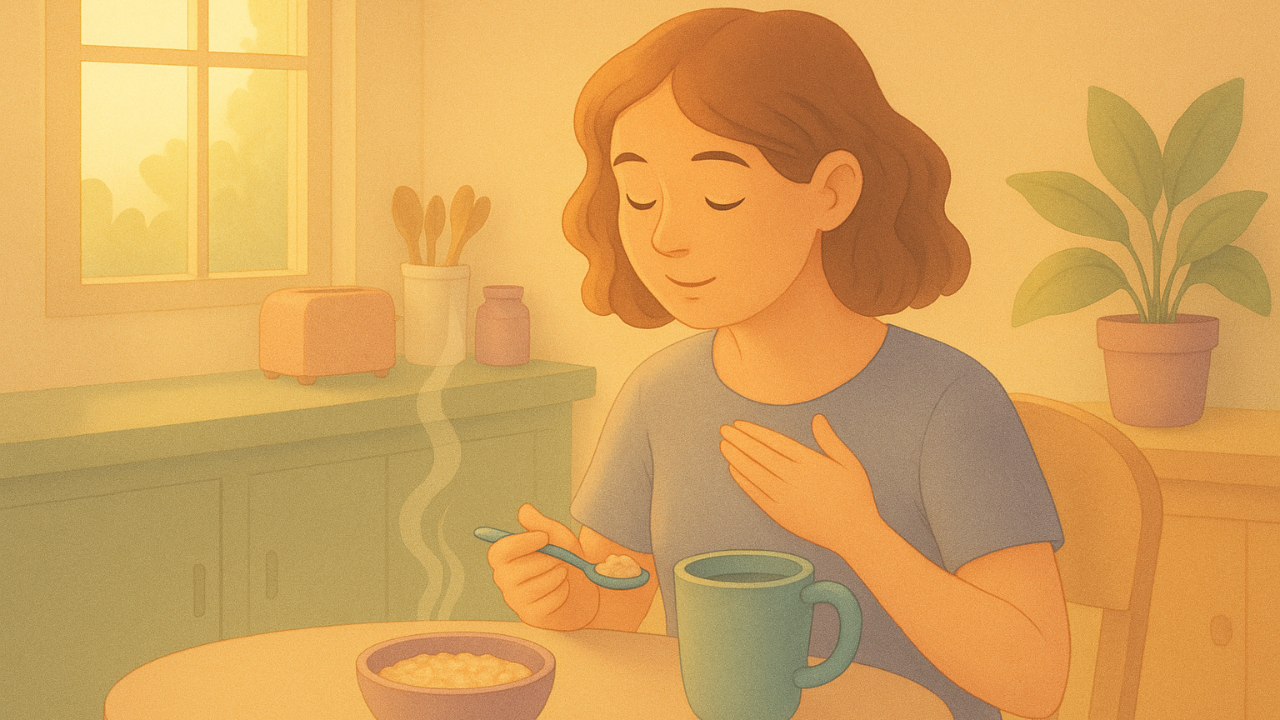
Take 20 to 30 seconds to settle your body in some small way. Feet on the floor. Hand on your chest. Eyes soft and looking around.
-
Take one small bite. Chew slowly. Notice the texture.
-
Take two more bites at your own pace.
-
Pause. Check in gently. “Do I feel okay enough for three more?”
-
If yes, repeat. If no, stop. Place the food somewhere safe. You can come back.
You might notice that some days this is all you can do. That is still something. Over time, tiny loops like this rebuild trust between your nervous system and your stomach.
If anxiety feels tangled with your sense of “I don’t even know what my body feels,” you might benefit from gentle interoception practice, which is simply training your awareness of internal signals like hunger, fullness, and tension.
You are not failing if you have to start this small. You are being precise and kind.
A Gentle 7-Day Mini Plan
This is not a strict program. It is a soft structure you can adapt. If any step feels too much, you can shrink it.
Day 1: One warm drink. Three small bites of soft food at some point in the day.
Day 2: Repeat Day 1. Add a simple carb like toast, rice, or oatmeal.
Day 3: Before you eat, use one nervous system practice for 30 to 60 seconds. That could be orienting your gaze around the room, holding something warm, or a gentle breath that does not spike your anxiety.
Day 4: Add a tiny portion of protein: yogurt, egg, beans, or nut butter. Think one or two spoonfuls, not a full serving.
Day 5: Choose one time of day to eat a small, predictable meal. Even if it is tiny, your body starts learning “food comes at this time.”
Day 6: Add a stabilizing snack in the middle of your day. A handful of nuts, a small smoothie, or crackers with cheese are all fine.
Day 7: Aim for three small eating moments instead of one big one. They can all be tiny. Consistency often calms your nervous system more than size.
If your anxiety and appetite swings seem tied to energy crashes or shakiness, this article on blood sugar swings and the nervous system may be a helpful next step.
If it feels useful, you can track how your body responds each day in a few short lines. You are looking for patterns, not perfection.
When Anxiety, Food, And Trauma Overlap
For many people, anxiety around eating is not just “I feel nervous.” It is layered with old experiences, body memories, or comments from others that landed like shame. If you feel that, you are not being dramatic. Your body is remembering.
You do not have to “dig everything up” all at once. Many people find that working gently with the nervous system first creates enough safety to approach food in a new way. This might look like:
-
Doing a short vagus nerve or grounding practice before sitting down to eat.
-
Eating while listening to kind, non-diet audio or soft music.
-
Letting someone you trust sit nearby, even if you do not talk.
If trauma is part of your story, this gentle, practical trauma nervous system guide may give language to what your body has been doing for years.
You are allowed to go slowly. Titration, not force, helps your system settle. If you want to know more on how titration is helpful for sensitive systems, this gentle resource might be supportive.
Common Sticking Points
“My stomach feels blocked, like there’s a wall.”
That “wall” feeling is often your body in high alert. Warm liquids and very soft foods can be easier to cross that wall than dense or crunchy foods. A few sips of broth or tea still count as care.
“I know I need to eat but I feel almost repulsed by food.”
This can be a sign that your nervous system feels overwhelmed. Try shifting your focus from “I must eat” to “I will help my body feel a tiny bit safer first.” Then offer one or two bites and stop. No force.
“I eat a little, then I feel more anxious.”
Sometimes the physical sensations of digestion (fullness, movement, heart rate) can mimic anxiety symptoms and set off alarms. This is where body-awareness training and nervous system tools can help your system learn, “This sensation is food, not danger.” Pairing small meals with somatic practices can be very helpful over time.
“I feel guilty for not eating like everyone else.”
There is nothing wrong with you for needing a different rhythm. Your system has been working very hard to keep you alive. Eating gently is not a failure. It is rehab for your nervous system.
If you want more support on the broader pattern of dysregulation and symptoms, you might like this gentle overview of signs your nervous system is dysregulated and what to do next.
More Gentle Reads
If this topic touches a tender place for you, you might also like:
-
A soft guide on gentle ways to eat after a panic-heavy day, for the times when your whole system feels wrung out.
-
A kind walkthrough of somatic tools for morning anxiety, when waking up and facing breakfast already feels like too much.
-
A simple explanation of hydration habits for steadier nerves, since even small things like fluids can support regulation.
FAQs
What if I feel nauseous when I’m anxious?
You are not alone. Many people feel nausea when their nervous system is in threat mode. Start with small sips of warm liquids, like tea or broth, and see if your body tolerates them better than solids. If nausea is intense or long-lasting, consider checking in with a healthcare professional.
Is it normal to lose hunger when I’m anxious?
Yes. When your system is focused on survival, digestion often goes quiet. It is common to feel “not hungry” during stress and then very hungry later. Your job is not to force hunger, but to offer gentle, doable nourishment.
Should I push myself to eat a full meal?
Pushing usually backfires and increases anxiety. Instead, think in tiny steps. A few bites, a small snack, or a warm drink can be enough for now. Over time, your capacity for more will likely grow.
How much should I aim to eat in a day?
There is no single “right amount.” If you are in a high-anxiety phase, aim first for consistency (a few small eating moments each day) rather than volume. As your nervous system settles, you and your care team can adjust.
What if anxiety and food have been tangled for years?
That deserves tenderness, not blame. It may help to work with a trauma-informed professional who understands both the nervous system and food. Slow, somatic work plus tiny eating experiments can help rebuild trust over time.
Can nervous system work really help appetite?
For many people, yes. When your body feels even a little safer, digestion often follows. Short daily practices, like gentle resets and awareness of internal cues, can make eating feel less scary over time.
Final Invitation
If you want more clarity on how your specific stress pattern works and which small steps may match your body best, you can take the Stress Loop Quiz.
You deserve food that feels safe, not like a test you keep failing. One tiny, kind bite at a time is enough.
Disclaimer: This article is educational and not medical advice. If you have health concerns about your appetite, digestion, or weight, consider speaking with a qualified professional.
Discover Your Vagal Tone
Find out how dysregulated your nervous system is and get your personalized roadmap to feeling calm, energized, and in control