How to Co-Regulate With a Toddler During Meltdowns
There is nothing quite like a toddler meltdown.
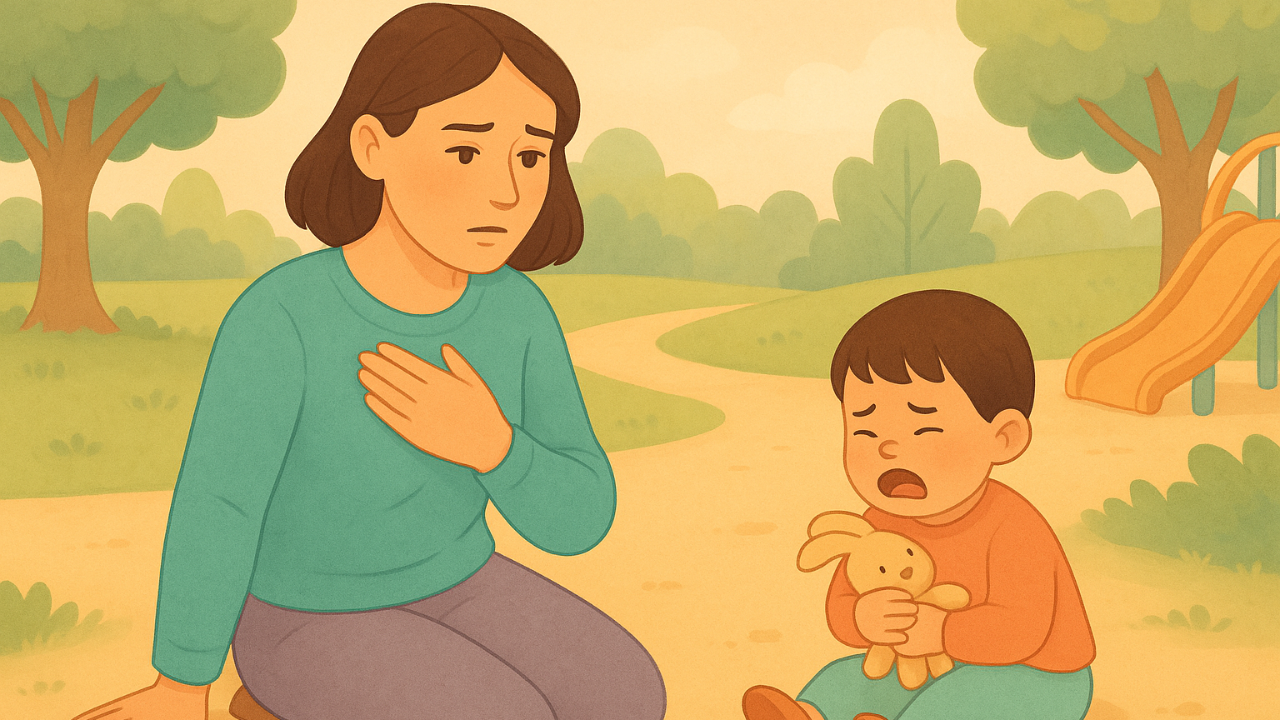
The crying. The rigid body. The look in their eyes that says, “This is too much.”
And if your own heart races or your chest tightens in those moments, you are not broken. Your nervous system is responding too.
If you want a simple starting point to understand your own patterns, you can take the Stress Loop Quiz.
What usually helps most in a meltdown is not the perfect script or discipline strategy. It is co-regulation, your ability to lend your steadier nervous system to your child while theirs is overwhelmed.
Quick Answer Box
Co-regulation during toddler meltdowns means you act as a “borrowed” nervous system while your child cannot calm themselves. Instead of expecting logic or self control, you offer steady presence, slower movements, warm voice tone, and simple, reassuring words. Your body becomes the signal of safety their body can match. Over time, these repeated experiences of “I fall apart and someone stays with me” help their brain and body learn self regulation later on.
Why Co-Regulation Matters for Toddler Meltdowns
Toddlers do not have a fully developed self soothing system yet. When something feels too big, their body often shifts into survival states like fight, flight, or collapse. None of this is bad behavior. It is biology.
Your presence becomes the anchor.
Not perfect parenting. Just a safer nervous system nearby.
If you want a simple explainer of how your body moves between stress and safety states, this gentle guide to polyvagal theory can give you a clear picture of what is happening under the surface.
You might also find it helpful to understand the idea of a “window of tolerance,” the zone where you and your child feel more settled and able to cope, and what gently widens that window over time.
Co-regulation says to your toddler, “Your big feelings are not too much for me. We stay connected, even when it is messy.”
How to Co-Regulate Step by Step
1. Regulate yourself first
Your toddler will feel your state before they hear your words.
So first, check in with your own body.
You might notice:
-
Jaw clenching
-
Shoulders up by your ears
-
Breath held or very shallow
Try one tiny shift:
Place your feet on the floor.
Let your shoulders drop a little.
Lengthen your exhale by one or two counts.
If you often feel pulled in many directions, it may help to learn a few small ways to steady yourself with small kids around, rather than waiting for perfect quiet time that never comes.
If you notice you feel on edge for “no reason,” this can be a sign your own system is already dysregulated before the meltdown even starts. This gentle article on spotting those early signs and what to do next may be comforting.
Your calm does not need to be flawless. “Slightly more settled than before” is enough to offer your child something different to lean on.
2. Get low and soften your posture
If it feels safe to do so, come down closer to your toddler’s level. Sit or kneel nearby rather than looming over them.
You might say softly:
“I’m here.”
“You’re safe. Your body is having a big feeling.”
Keep your voice low and warm. Let your shoulders relax. Let your face stay kind, even if you need to set a boundary later.
This is not about fixing it fast. It is about showing “I stay with you while you feel this.”
3. Offer containment without overpowering
Some toddlers will reach for a hug.
Others might shout “Go away!” while still glancing to check if you are there.
You can try:
“Do you want me closer or a little over here?”
If they choose distance, you can sit a few feet away and say,
“I’ll stay right here while you have your big feeling.”
Containment means you are the wall of the room, not the storm inside it.
If you are a caregiver who often feels overwhelmed by everyone’s emotions, you may appreciate a broader set of trauma-informed nervous system tips for caregivers that help you protect your own capacity too.
4. Mirror calm body pacing
Toddlers’ nervous systems are very sensitive to pacing.
Quick movements, slammed drawers, or sharp tone can feel like more threat.
See if you can:
Move more slowly.
Blink gently.
Put things down quietly.
Speak in simple, soft sentences.
For a child who is wildly activated, your slower rhythm is soothing.
For a child who has gone flat and quiet, a gentle sway or rocking motion while you hold them can add just enough movement to feel supported without being jolting.
Practices like orienting the eyes around the room, feeling feet on the floor, or naming three things you can see are all simple ways to show your child how bodies can return to the present moment. If you want a step by step version you can adapt for both you and them, this orienting guide is a good starting place.
5. Use simple, validating language
During a meltdown, your toddler’s thinking brain is not in charge. Long explanations often bounce off.
Short phrases land better:
“You are having a hard time.”
“I see how big this feels.”
“It makes sense that you are upset.”
You are not rewarding the meltdown. You are naming the experience and giving it a safe container.
Later, when everyone is calm, you can come back to boundaries, choices, and teaching. Right now, you are giving their body a sense of “held, not alone.”
6. After the storm, offer a small reconnection
Once the intensity drops, toddlers usually need a soft landing.
This might look like:
-
A cuddle on the couch
-
A snack or sip of water
-
Reading a short book together
-
Drawing for a couple of minutes
You might gently recap:
“That was really big. You were so angry and sad. I stayed with you. Now your body feels softer again.”
Over time, these small repairs build resilience. If you would like a few tiny, repeatable resets you can weave into everyday life as a parent, this guide for quick nervous system resets for new parents has easy ideas that fit into busy days.
If you want support understanding your own stress patterns as you parent, you can always come back to the Stress Loop Quiz.
Micro Scripts You Can Borrow
You can adapt these to your voice and your child:
-
“Your body feels really big right now. I am here with you.”
-
“You do not have to calm down fast. I am staying close.”
-
“It is okay for feelings to be loud. I am keeping you safe.”
-
“That was a lot for your body. We can rest now.”
Say less, with more warmth. Repetition is soothing.
A Gentle 7 Day Co-Regulation Mini Plan
This is not a challenge or a test. It is a soft framework you can adjust.
Day 1
Notice one early sign that you are getting overloaded during your child’s upset. Practice one slightly longer exhale before you respond.
Day 2
During a small frustration (like a snack delay), practice getting low and softening your posture while you speak.
Day 3
Use one validating phrase in the next tough moment. For example, “This feels really hard for you.”
Day 4
Practice staying present for 30 seconds longer than you usually can when a meltdown starts, even if you need to step away after.
Day 5
Pick one simple regulating tool you can use alongside your child, like looking around the room and naming three gentle things you see. Notice how that feels in your body.
Day 6
After a meltdown, intentionally add a small repair ritual, like a cuddle, story, or shared snack.
Day 7
Reflect: Which small things helped you stay more inside your window of tolerance, and which felt too much? Adjust. Go at the pace that feels kind to your body.
If you want more support building a life where you bend instead of break during stress, this article on building resilience to withstand the storms of stress may give you hopeful context that applies to you and your child.
You can also retake the Stress Loop Quiz as things shift over time.
Common Sticking Points
“My toddler pushes me away.”
This often means “I am overwhelmed and need space, but please do not disappear.”
You can respond with:
“Okay, I will sit over here. I am still staying with you.”
Your physical nearness, even without touch, still offers co regulation.
“Their screaming makes me feel like I will snap.”
Many parents have their own nervous systems that are already stretched thin. A child’s meltdown can feel like the final straw.
If you notice you are close to yelling, it is okay to say,
“I am feeling too full in my body. I am going to take three breaths in the doorway and then come back.”
You are allowed to protect your own system. Returning after a short pause and naming what you did models regulation, not abandonment.
“I try everything and the meltdown still lasts forever.”
A meltdown is a nervous system event, not a math problem. It has to run its course.
Co regulation does not always make the meltdown shorter. Instead, it helps your child’s body move through it with less shame, less fear, and an easier recovery at the end.
If you feel guilty that you “should” know how to handle this and you do not, you are not alone. Many parents are only now learning how to care for their own nervous systems too.
For more day to day support, you might like these tiny nervous system micro resets made for caregivers and people who have very little time or space.
FAQs
1. What does co-regulation actually look like in real life?
Co-regulation looks like you staying near, breathing a bit slower, using a warm tone, and offering simple reassurance while your toddler’s body rides out a big feeling. There may still be tears, yelling, or kicking. The difference is that you are not abandoning them emotionally. You are acting as a steady, safe presence their nervous system can slowly match.
2. What if my toddler does not want to be touched?
You can co regulate without touch. Sit nearby, keep your body language soft, and let them know you are staying close. Many toddlers need some personal space to discharge their energy while still being comforted by your presence.
3. Why do their meltdowns feel so intense for me?
Your own nervous system may be carrying old stress and exhaustion. Loud sounds, defiance, or feeling out of control can trigger your survival responses too. Noticing this is not failure. It is information that you may need your own support, tools, or rest where possible.
4. What should I say during a meltdown?
Short, kind phrases work best. “I am here.” “You are safe.” “Your feelings are real.” Avoid trying to explain or reason until everyone has calmed down. The thinking brain comes back online later.
5. How long should I stay with them?
Stay as long as feels safe for your body. Some meltdowns may be brief, others longer. If you feel yourself crossing into overwhelm, it is okay to step a short distance away and tell them when you will be back. Repair after you return matters more than staying perfectly calm the whole time.
6. Does co-regulation spoil kids or encourage more meltdowns?
No. Co-regulation does not reward meltdowns. It reduces shame and fear around big emotions, which can actually make overwhelming episodes less intense over time. Children who experience consistent co-regulation usually become better at self regulation as their brain develops.
More Gentle Reads
If you found this helpful, you may also like these related guides:
- A Soft, Connected Bedtime Routine For Anxious Kids (The Parent Version)
- A Gentle Nighttime Nervous System Routine for Busy Moms
- Regulating Your Nervous System With Small Kids Around
If you would like to understand where your own nervous system tends to get stuck, you can take the Stress Loop Quiz any time.
Disclaimer: This article is educational and not medical advice. If you have health concerns, consider speaking with a qualified professional.
Discover Your Vagal Tone
Find out how dysregulated your nervous system is and get your personalized roadmap to feeling calm, energized, and in control