Signs Your Nervous System Is Dysregulated During the Holiday Season
If the holiday season secretly leaves your body buzzing, on edge, or completely wiped out, you are not the only one. Your mind may say, “Everything is fine,” while your body behaves like it is bracing for impact.
You might feel pressure to be grateful, cheerful, and “on” for everyone else. At the same time, your heart races in the car, your shoulders live near your ears, or you shut down halfway through a gathering and wonder what is wrong with you.
Nothing is wrong with you. Your nervous system is trying very hard to protect you.
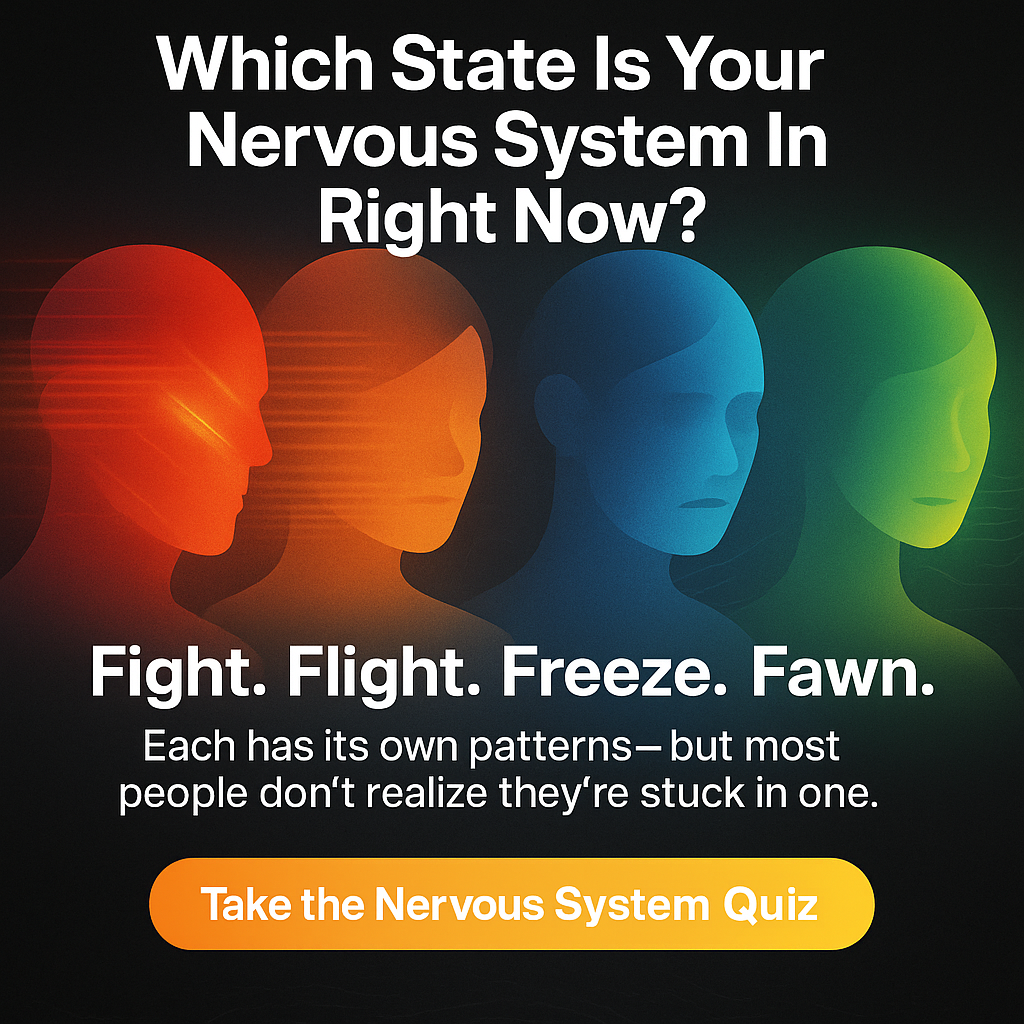
If you want a gentle way to understand how your stress patterns show up, you can start with the Stress Loop Quiz.
Quick Answer Box
Holiday nervous system dysregulation often looks like being “wired but tired,” snapping at people you care about, feeling panicky in crowded rooms, or shutting down and going emotionally numb. You may dread events you used to enjoy, have trouble sleeping, or feel physically sick without a clear reason. These are common nervous system responses when your body is carrying more emotional load, social pressure, and sensory input than it can comfortably handle. Small, body-based tools and kinder expectations may help you move through the season with more steadiness.
Why the Holidays Can Overload Your Nervous System
The holidays add layers of pressure. Social expectations. Family dynamics. Financial stress. Sensory overload from travel, noise, decorations, and schedule changes.
If you already walk through life feeling a bit “ready to jump out of your skin,” your baseline may be high before the season even begins. For many people, this has roots in old stress or trauma, which is described very simply in this piece about feeling constantly on edge for “no reason.”
On top of that, holiday anxiety itself has its own pattern. A gentle guide that looks specifically at holiday nervous system triggers can be reassuring when everything starts to spike at once.
Your body remembers past experiences, not just current events. So even if “nothing bad is happening,” your system may still be scanning for danger and reacting quickly.
Common Signs Your Nervous System Is Dysregulated During the Holiday Season
You do not need to have all of these. Even a few can signal that your nervous system is under strain.
1. You feel wired and exhausted at the same time
You are tired, but you cannot slow down. Your thoughts race through to-do lists, social worries, what you said yesterday, and what might go wrong at the next gathering.
Your muscles stay slightly clenched. Your jaw feels tight. You keep saying, “I just need to get through this week,” but that week keeps moving.
If you notice your system flipping into fight-or-flight all day, it can help to first understand how dysregulation shows up in general, not only during the holidays.
2. Your reactions feel “too big” for the moment
You snap at a small question. You feel hurt by a casual comment. You burst into tears after a minor mishap in the kitchen.
On the outside, it looks like “overreacting.” On the inside, your body is already carrying so much that one more drop spills the whole cup.
When that happens, you might also notice classic stress responses like fight, flight, freeze, or fawn, especially around family and social expectations.
3. Family gatherings leave you flooded or numb
Maybe you walk into a family gathering and your heart rate climbs before you even take off your coat. You scan everyone’s faces to see who is tense, who is OK, and whether anyone is upset with you.
Some people feel overwhelmed and agitated. Others go flat and disconnected, like they are watching themselves from the outside.
If get-togethers leave you feeling shaky or shut down, it may help to have nervous system tools focused specifically on staying safe and steady with family.
4. Sensory overload comes faster than usual
Bright lights. Constant music. Crowded shops. Kids’ noise layered over cooking timers, phones, and travel.
Your system takes in all of this. When your capacity is already stretched, the extra input can tip you toward panic, anger, or a shutdown that feels like “I cannot do any of this right now.”
Even a short, five-minute reset for sensory overload can give your body a small island of relief in the middle of all the noise.
5. You feel panicky or dissociated during “happy” moments
It can be confusing to feel your chest tighten in the middle of a holiday dinner. Or to suddenly feel far away, like the room is wrapped in cotton.
Panic and dissociation are not you being dramatic. They are your nervous system’s emergency brakes. If you have moments where your body surges into panic or shuts down, having simple grounding tools that do not rely on intense talk therapy can feel safer.
6. You struggle to self-soothe and end up abandoning yourself
When stress rises, you might numb out on your phone, overcommit to tasks, or keep meeting everyone else’s needs while ignoring your own body.
One way to interrupt this pattern is to literally hold yourself with kindness. Gentle self-holding practices can send your nervous system a clear signal of safety, especially when you feel alone inside a crowded room.
Small, Body-Based Practices You Can Use During the Holidays
You do not need a perfect routine. Just a few small, repeatable actions your body can recognize.
Practice 1: The three-breath check-in
Wherever you are, pause and feel the weight of your body. Maybe your feet on the ground. Your hips on a chair. Your back against a wall.
Take three slow, natural breaths. No need for deep breathing if that makes you more anxious. Just slightly longer exhales and a little more softness in your shoulders.
If deep breathing usually ramps you up, you are not broken. Many people feel this, and there are gentler alternatives explained in this guide about breathing that accidentally makes anxiety worse.
Practice 2: One tiny completion
Pick one very small task your body can complete in 10 to 30 seconds.
Straighten the edge of a blanket. Line up three items on a shelf. Wipe a small section of a counter.
The goal is not a clean house. It is giving your nervous system the felt sense of “I can finish something.” That small hit of completion can soften the feeling that everything is too much.
Practice 3: Quiet safety statement
Place a hand on your sternum or upper arm. Very softly, say inside your mind:
“I notice my body is working so hard. I do not have to fix everything right now. I am allowed to be human.”
It might feel cheesy at first. That is OK. You are speaking to parts of you that needed to hear this a long time ago.
If you anticipate difficult conversations over the holidays, this gentle guide on regulating before having them can be a helpful resource.
A 7-Day Micro Plan For A Gentler Holiday Season
You can repeat this plan each week or just choose what feels doable.
Day 1
Gently notice one sign of dysregulation without judging it. Maybe your jaw tension or racing thoughts. Put a hand on your body for five seconds and acknowledge it.
Day 2
Before a holiday task or event, pause for your three-breath check-in. Let your exhale be a little longer.
Day 3
Shorten one expectation by 20 percent. Fewer dishes. A simpler gift. Less travel in one day.
Day 4
When you feel overloaded, use one tiny completion. Finish a very small task and let your body feel the end.
Day 5
During a gathering, step away for a two-minute bathroom or hallway break. Feel your feet on the ground. Look around slowly and find three things that feel neutral or pleasant.
Day 6
Say one kinder boundary. It might sound like, “I wish I could, but I do not have the capacity for that this year.”
Day 7
Create a short evening ritual that your body can rely on. A warm drink, dimmer lights, and a few minutes away from screens can gently signal “we are winding down now.”
If you want more ideas for an overall gentle holiday nervous system support plan, you might like to pair this with a dedicated holiday-focused guide.
If This Feels Like You, You Are Not Broken
You may feel frustrated with yourself. You “know better,” but your body still goes into old responses.
This is not about willpower. It is about how your nervous system learned to protect you, and how much load you are carrying now.
You deserve support that meets your body where it actually is, not where people think you “should” be by now.
If you want help understanding your stress patterns so you can choose more of the right-sized tools, you can take the Stress Loop Quiz and get a clearer map of how your nervous system is looping.
FAQs
1. Why do I feel so emotional even when the holidays are “good”?
Your body responds to total load, not just current circumstances. Even happy events can be intense for a system that is already carrying old stress, grief, or exhaustion. Many people notice that their emotional reactions feel bigger around the holidays because everything is layered.
2. How do I know if this is anxiety or trauma?
You do not need to sort it perfectly to deserve care. Anxiety and trauma often live in the same body. Sudden spikes, shutdowns, or intense reactions to “small” things can be connected to earlier experiences. If your reactions feel out of proportion, that is information, not a character flaw.
3. Is it normal to feel numb instead of anxious?
Yes. Numbness, fogginess, or feeling far away can be a protective state, not a failure. Your system may temporarily turn down sensation because it believes you cannot safely process more. Gentle, slow reconnection is often safer than pushing yourself.
4. What if I have to attend gatherings I cannot avoid?
You can still give yourself micro choices inside the non-negotiables. Short breaks, smaller roles, simple grounding practices, and clearer “good enough” standards can make required events more tolerable for your nervous system.
5. Can I really change this, or am I just stuck like this forever?
Nervous systems can adapt, especially with consistent, tiny practices over time. You do not need to transform overnight. It is enough to create a bit more space and safety for your body this season, and build from there.
6. Is this medical or psychological advice?
No. This article is educational and not medical advice. If you have health or mental health concerns, consider speaking with a qualified professional who understands trauma-informed care.
More Gentle Reads
If you would like to keep exploring this slowly, here are a few kind next steps:
- How to Widen Your Window of Tolerance Daily
- Gentle Vagus Nerve Exercises For Real-Life Social Anxiety
- How to Set Boundaries to Protect Your Nervous System
And if you want a clearer picture of how your system is looping through stress, you can take the Stress Loop Quiz here.
Disclaimer: This article is educational and not medical advice. If you have health concerns, consider speaking with a qualified professional.
Discover Your Vagal Tone
Find out how dysregulated your nervous system is and get your personalized roadmap to feeling calm, energized, and in control