Somatic Resets Between Back-to-Back Meetings
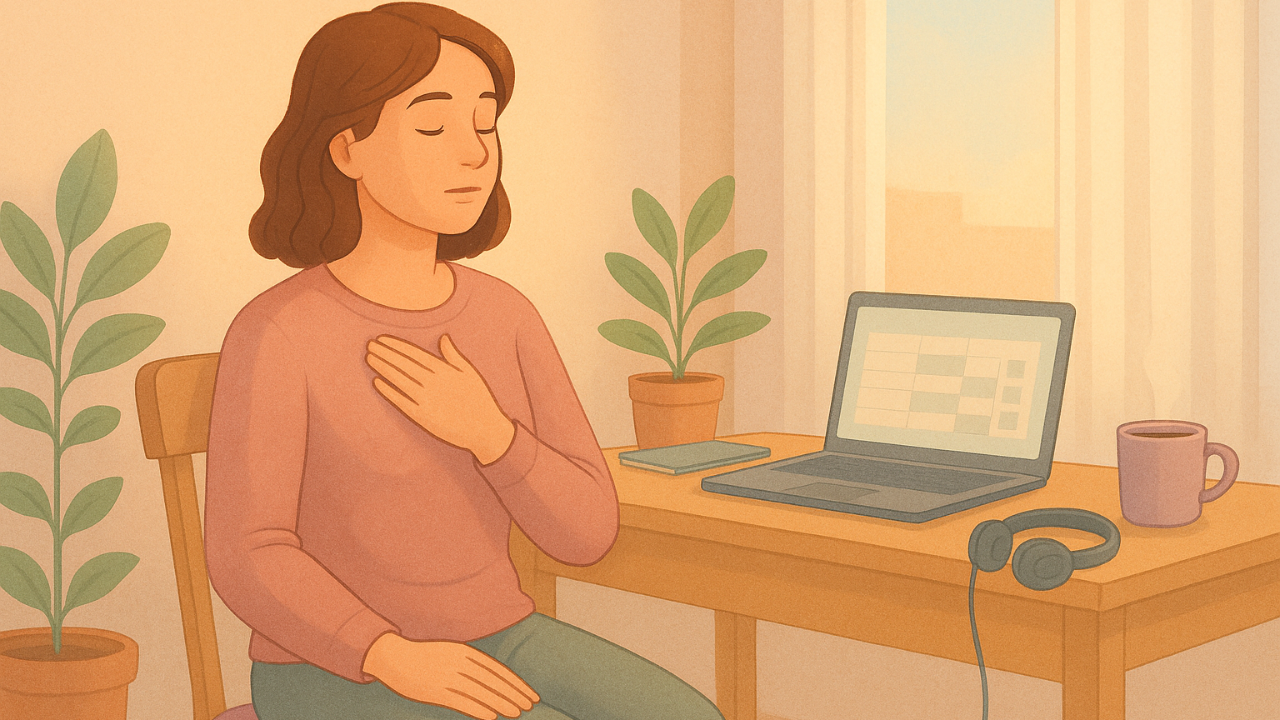
If your days are stacked with back to back meetings, your body probably feels it before your calendar does. You close one tab, open another, and somewhere in the background your chest tightens, your jaw clenches, or your shoulders creep up toward your ears.
Sometimes it can feel like you are always ready to jump out of your skin, even when the meeting is “fine.” If that sounds familiar, you might recognize pieces of yourself in this gentle look at why you may feel wired for no clear reason: https://www.neurotoned.com/blog/big-trauma.
Before we go further, you can take the free Stress Loop Quiz to see which stress pattern your system is getting stuck in: https://membership.neurotoned.com/quiz.
You are not broken for feeling this way. A nervous system that never gets transition time starts treating every notification, every calendar alert, and every raised eyebrow as a possible threat. Tiny somatic resets give your body a real exhale, even when your schedule looks impossible.
Quick Answer
Somatic resets between meetings are small, body-based practices that help your nervous system complete one interaction before it enters the next one. They may include gentle pressure, short breathing patterns that do not spike anxiety, grounding touch, or micro-movements. When practiced regularly, even 30 to 60 seconds at a time, they can help reduce that jumpy, overloaded feeling and support more focus and presence in your next call.
Other Ways People Talk About This Experience
If you searched for somatic resets between back to back meetings, you might have used different words to describe the same problem.
Many people don’t think in clinical or nervous-system language. They search for what their body actually feels like.
You might hear this described as:
-
Nervous system microbreaks during the workday
-
Quick nervous system resets between meetings
-
Calming your body between Zoom calls
-
Regulation tools for Zoom fatigue
-
Grounding practices at work
-
Somatic tools for work stress
-
Post-meeting nervous system reset
-
How to calm your body between meetings
-
Micro-resets for remote workers
-
Body-based stress relief at work
All of these phrases point to the same need.
Your body is trying to finish one interaction before starting the next.
That is why small, physical practices tend to help more than “thinking your way calm” when your schedule is packed. If you’ve noticed that talking yourself out of stress doesn’t work very well during workdays, you are not imagining it. Your nervous system is responding to pace, not logic.
If you want to understand your own stress pattern more clearly, the Stress Loop Quiz can help you name what your system is doing under pressure and why certain tools work better than others.
Why Back to Back Meetings Overload Your Nervous System
Most people imagine stress as a big dramatic event. In reality, your system is often reacting to small, stacked stressors all day.
In work life that can look like:
-
Holding your breath while someone gives you feedback
-
Smiling through tension in your neck and jaw
-
Feeling your heart race before you speak
-
Staying on “performance mode” and then crashing later
If you notice a pattern of feeling foggy, wired, or checked out after long stretches on calls, that may be early dysregulation. You can explore more examples and what to do about them in this kind, practical guide to early nervous system signs.
Many people in this situation also feel something close to burnout. The body tries to keep up, then eventually cannot. If you suspect you are drifting toward that edge, a deeper plan for nervous system regulation in burnout recovery may be helpful.
The core point is this: your system needs micro-chances to downshift, not just one big relaxation session at the end of the week.
What Is a Somatic Reset Between Meetings?
A somatic reset is simply a short, physical practice that reminds your nervous system, “You are allowed to land.”
It is not about perfect posture, or forcing stillness. It is about giving your body a chance to:
-
Notice where it is bracing
-
Release some of that tension
-
Orient to safety again
-
Re-enter the next task with a little more bandwidth
If you like structure, you might later enjoy a full list of tiny, nervous-system-friendly microbreaks designed for workdays. For now, we will keep it very small and simple.
If you want to understand your stress pattern more clearly before trying anything new, you can return to the Stress Loop Quiz anytime.
Micro Somatic Resets You Can Do in 30–60 Seconds
These are menu items, not obligations. Notice which ones feel even one percent helpful, and skip anything that feels too much.
1. Shoulder Drop and Soft Belly
Helps with subtle bracing you might not notice.
Steps
-
Let your next exhale leave your mouth with a soft sigh.
-
As you exhale, allow both shoulders to drop with gravity.
-
Place a hand on your belly and soften it a little, like it is allowed to un-clench.
-
Notice one inhale gently expanding into your hand.
If softening your belly feels too vulnerable, place your hand over your ribs or upper chest instead.
2. Three-Point Grounding Touch
Good for “floaty” or dissociated feelings.
Steps
-
Place one hand on your thigh.
-
Plant your feet on the floor or against the legs of your chair.
-
Let your other hand rest on the armrest, desk, or table.
-
Feel all three points of contact for two slow breaths.
If dissociation is a familiar response for you during long work days, you may find comfort in this guide to micro practices that help you exit dissociation at work a little more gently.
3. Orienting Through the Screen
Many meetings happen on video. Your body still needs to know where it is in real space.
Steps
-
Briefly look away from your screen and let your eyes wander around the room.
-
Name three objects you see that feel neutral or pleasant, either in your head or quietly out loud.
-
Let your neck move with your gaze instead of holding it stiff.
If your days include long video blocks, you may also like a short list of quick nervous system relief tools for Zoom fatigue.
4. Self-Hold for Containment
Supportive when a meeting has felt intense, personal, or emotionally loaded.
Steps
-
Cross your arms loosely and rest your hands on your upper arms or shoulders, like a gentle self-hug.
-
Apply steady, comforting pressure without squeezing.
-
Let your breath come and go naturally.
-
If it feels okay, imagine you are simply saying to yourself, “I am here with you.”
For days when a meeting has left your whole body buzzing, you might pair this with a slightly longer, post-meeting comedown routine that is still gentle and doable.
5. Micro-Shake for Wired Energy
Helpful when your body feels buzzy or restless after a high-stakes call.
Steps
-
Either standing or seated, let your hands hang by your sides.
-
Gently shake your hands for 5 to 10 seconds, then your forearms, as if you are flicking off water.
-
Pause and feel the tingling or warmth in your hands.
-
Allow that activation to settle on its own.
If shaking feels strange at first, know that you are not alone. Many beginners ease in with a very gentle somatic shaking practice and build from there.
6. One-Minute Reset for Sensory Overload
When your brain feels loud and crowded.
Steps
-
Close or soften your eyes if it is safe, or lower your gaze to one simple spot.
-
Let your exhale be a little longer than your inhale, without forcing it.
-
Release your tongue from the roof of your mouth.
-
Soften your brow and the muscles around your eyes.
-
If you can, reduce one sensory input for 30 seconds: lower the screen brightness, mute notifications, or take off headphones.
If sensory overload shows up a lot during your workday, this short, five-minute reset for sensory overload might be a good longer companion when you have a bit more time.
You can still use this one-minute version when all you have is the gap between “Leave Meeting” and “Join.”
A Simple 7-Day Somatic Reset Plan for Meeting-Heavy Weeks
You can treat this as an experiment, not a rulebook.
Day 1
Choose one meeting where you will practice the shoulder drop and soft belly at the end.
Day 2
Use three-point grounding touch after your first call of the day and again mid-afternoon.
Day 3
Add an orienting reset at least once every two hours, even if the meeting itself feels calm.
Day 4
Try the self-hold after a meeting that usually leaves you overthinking.
Day 5
Use the micro-shake after your most activating call.
Day 6
Practice the one-minute sensory overload reset before your last meeting of the day.
Day 7
Notice which reset felt easiest and most supportive. Repeat that one three times throughout the day, at any natural pause.
If you want a bit more structure beyond seven days, you can combine these with broader nervous system microbreak ideas that support remote workers in particular.
And if you want to see how your pattern changes over time, the Stress Loop Quiz can be a simple place to return to.
Common Sticking Points
“I only have 20 seconds between meetings.”
That is still enough. One longer exhale, one shoulder drop, and one small glance around the room is already a reset.
“I forget until I am completely overwhelmed.”
This is common. You can rename your calendar alerts with something like “Arrive in your body” or “Two breaths” to help your future self remember.
“I feel silly doing this in an office.”
Most of these can be done subtly. Your colleagues will probably just think you are adjusting your posture or taking a normal breath.
“I am scared to slow down because big feelings come up.”
You are allowed to keep things tiny. It may feel safer to start with orienting your eyes, or grounding through your feet, rather than going straight into deeper practices. If slowing down brings up intense panic, flashbacks, or despair, consider reaching out to a trauma-informed professional for more support.
FAQs
1. How often should I do somatic resets between meetings?
As often as feels supportive, not punishing. Many people find that even one tiny reset between every two or three meetings makes a difference. If your schedule is very dense, aim for a reset at least once an hour.
2. Can these somatic resets actually reduce anxiety?
They may not erase anxiety, but they often help your body come out of “constant alarm” mode so your mind has more room to think. Over time, pairing small somatic practices with understanding your nervous system can help you feel less stuck.
3. What if my body goes numb instead of feeling tense?
Numbness can be a protective response. It does not mean you are doing something wrong. Start with very gentle, concrete sensations like feeling your feet in your shoes, or the chair under you. You might also explore resources about why the body goes numb during stress and simple ways to reconnect.
4. Are these resets a replacement for therapy or medical care?
No. They are supportive tools that many people find helpful, but they are not a treatment or cure. If you have ongoing symptoms, panic attacks, or pain, consider talking with a qualified medical or mental health professional.
5. Can I use these if I am already burned out?
Often yes, especially if you keep them very small and kind. If anything makes you feel more overwhelmed, scale it down or stop. Pairing micro resets with a broader nervous system plan for burnout and rest can be especially helpful.
More Gentle Reads
If this article speaks to you, you might also like:
Disclaimer: This article is educational and not medical advice. If you have health concerns, consider speaking with a qualified professional.
Discover Your Vagal Tone
Find out how dysregulated your nervous system is and get your personalized roadmap to feeling calm, energized, and in control