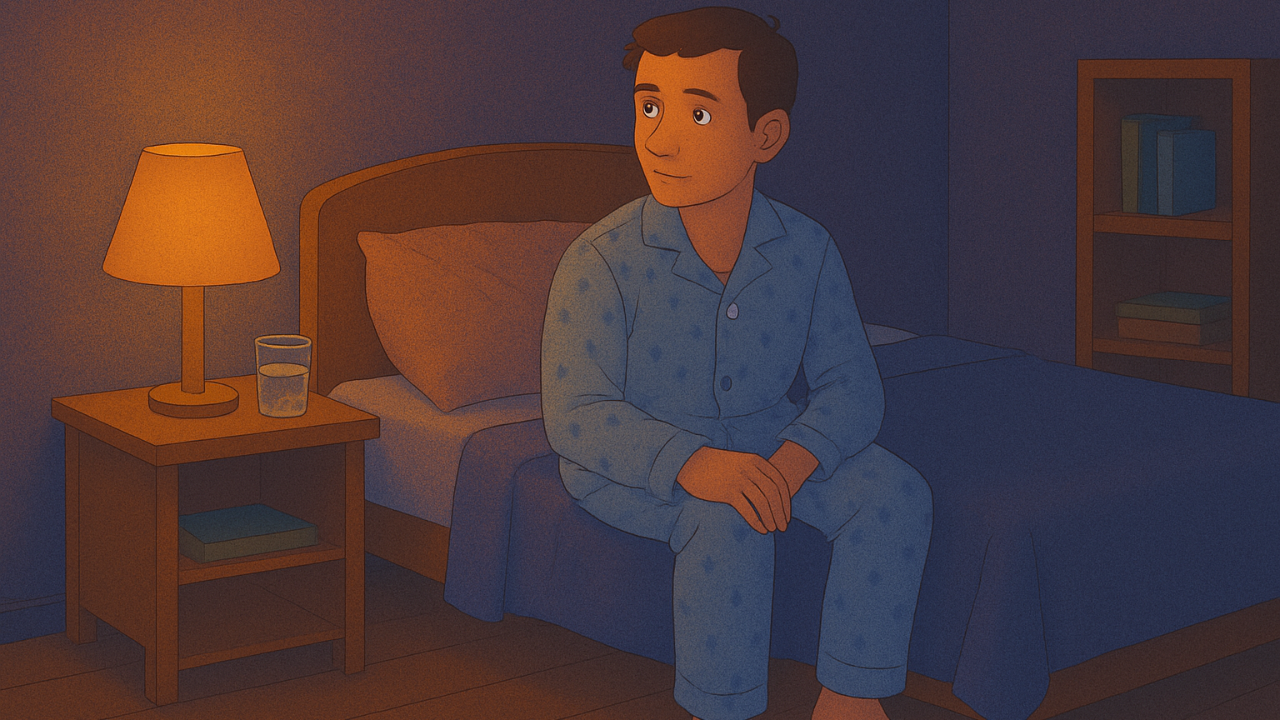
When Your Body Won’t Downshift at Night
You are tired. Your eyes feel heavy. You finally lie down, hoping for relief.
Then your body says, “Absolutely not.”
Your heart feels buzzy. Your mind starts rehearsing every conversation from the last ten years. Your muscles stay subtly braced, as if you might need to jump up at any second. It can feel confusing and lonely, especially if everyone else seems to just lie down and fall asleep.
If this is happening to you, it is not a character flaw. It is your nervous system trying to keep you safe in a way that is no longer helpful.
If you want a clearer picture of what your stress pattern looks like, you can take the short Stress Loop Quiz and get a simple map of your “stress loop.”
Quick answer: When your body won’t downshift at night
When your body will not downshift at night, it often means your nervous system is still in a daytime “survival setting.” Instead of trying to force sleep, you can help your body feel safer through gentle orienting, small movements, supportive posture, and kind self-talk. Many people find it helpful to create a short transition ritual between “day mode” and “night mode,” rather than going straight from screens and tasks into bed. If this keeps happening, exploring your stress pattern and creating a few repeatable tools can give your system a sense of predictability and safety over time.
Why downshifting at night feels impossible
Your nervous system does not flip off like a switch. It shifts state slowly, especially after long periods of stress.
Common reasons your system stays “up” at night:
-
You stayed in task mode until the very last minute
-
Your stress cycle never really got to complete during the day
-
Your body is carrying accumulated activation from old or chronic stress
-
You feel wired and jittery, or the opposite, numb and checked out
-
Your evenings are the only time you are truly alone with your thoughts
If you often notice that your body feels jumpy or “on edge” for no obvious reason, it can be validating to read a gentle breakdown of why that happens biologically, not just emotionally.
Sometimes the “nighttime problem” is really a “my system never had a chance to come down all day” problem. Your body may still be running on stress chemistry by the time your head hits the pillow.
Step one: Shift how your body feels, not just what you think
At night, many people try to manage their racing thoughts directly. That can help, but your thoughts usually follow your body state, not the other way around.
If your mind sprints the moment you lie down, it might help to build a tiny toolkit of nervous-system-first strategies for those racing thoughts. You can find a gentle, nervous-system-focused guide here if you want something you can copy word for word.
For your body, think in three layers:
-
What your eyes are doing
-
What your muscles are doing
-
What your breath and posture are doing
We will move through each.
Let your eyes signal “I’m safe enough”
Before you try to relax, give your survival system a small safety check.
You can try this “orienting” version:
-
Sit up or lie semi-reclined
-
Slowly let your eyes move around the room
-
Notice a few shapes, shadows, or colors
-
Let your head move slightly too, so your neck is not stiff
-
Take 2 or 3 soft exhales while looking at something that feels neutral or mildly pleasant
This is not about thinking positive. It is simply giving your nervous system concrete evidence: nothing dangerous is happening in this room right now.
If you want a deeper, step-by-step walkthrough of orienting you can repeat at night, there is a whole article that focuses on exactly that gentle visual practice.
Add movement before asking for stillness
For many people, going straight from “go go go” into complete stillness feels threatening. Your nervous system might say, “Something is wrong; why are we suddenly not moving?”
Instead of demanding stillness, try a few minutes of easy movement first:
-
In bed, press your feet gently into the mattress, then slowly release
-
Roll your shoulders forward and back 5 to 10 times
-
Tense your hands into soft fists, then let them melt open
-
Do a slow, comfortable twist side to side while seated on the edge of the bed
You are sending this message: “We are still here, things are okay, and we can gradually ease down.”
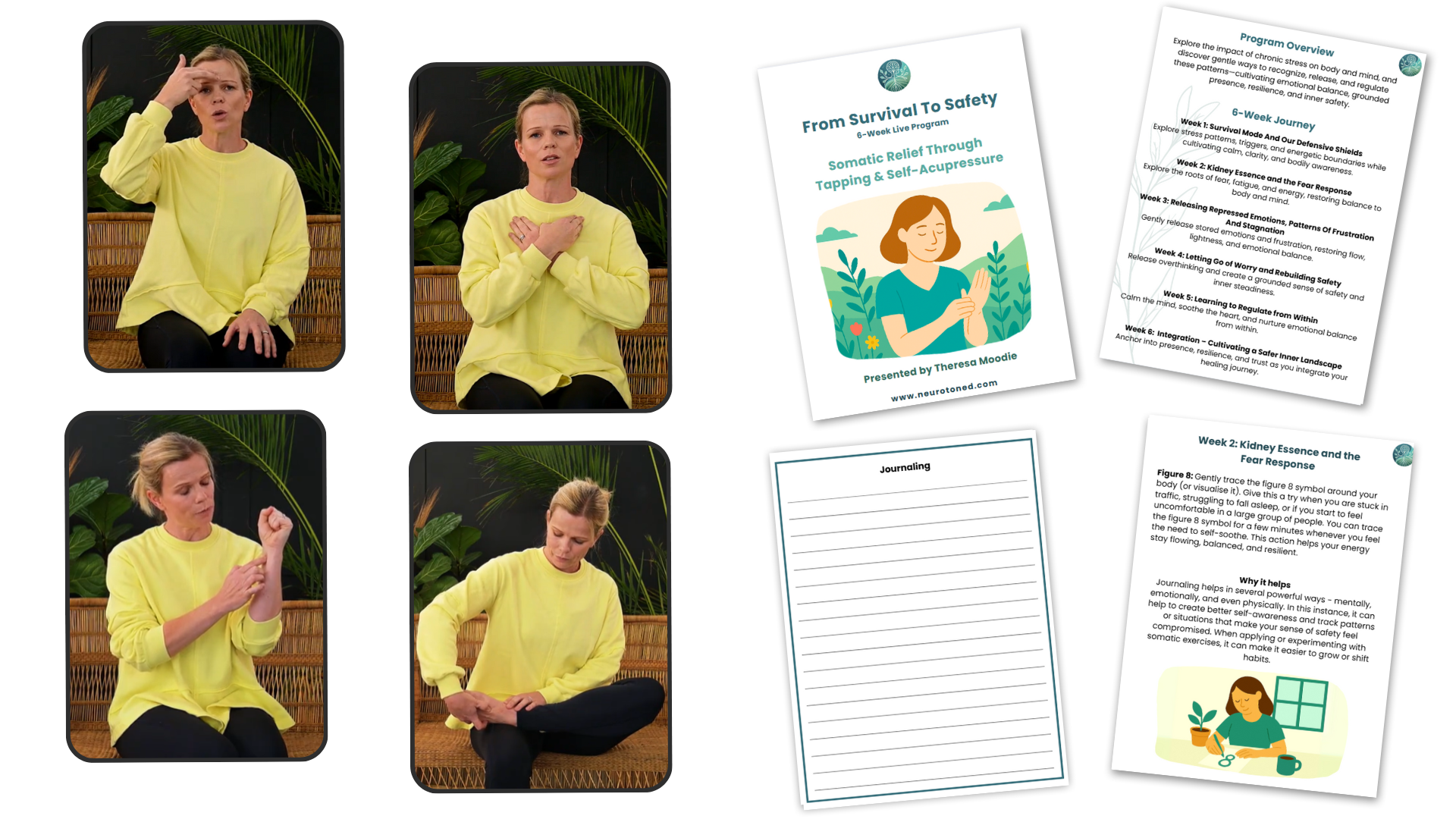
If you like structured practices, you may enjoy learning how to calm your nervous system before bed in a more intentional sequence, using simple somatic tools instead of pure willpower.
Give your breath gentler options than “big deep breaths”
You might have already noticed that big deep breathing sometimes makes you more anxious instead of calmer. Especially at night, forcing huge breaths can make your system feel like it is under pressure to perform.
Instead, think soft, small adjustments:
-
Try a slightly longer exhale than inhale
-
Let yourself sigh quietly a few times
-
Imagine your breath moving into the back and sides of your ribs, not just the front
If you have ever felt like breathing exercises “don’t work for you,” or they leave you more spun up, it may help to explore some nervous-system-friendly alternatives that do not rely on big deep breaths at all.
Create an evening ritual your body can recognize
Your nervous system loves repetition. A small, predictable sequence teaches your body, “When we do this, sleep is coming next.”
Your ritual does not have to be long or perfect. It can look like:
-
Dimming lights at the same time each night
-
Putting your phone in a different room or on a shelf
-
Doing 2 minutes of gentle neck and shoulder release
-
Sitting on the edge of your bed and looking slowly around the room
-
Whispering a short, kind script to your own body
You might say: “Body, you did a lot today. You do not have to be off instantly. We are easing down. It is safe enough to soften a little.”
If you know your evenings can spiral into scrolling or late-night stress, a “screen-free” evening routine can make a huge difference in whether your system can actually downshift. Here is a gentle guide focused on building that kind of evening environment.
Having an after-work downshift routine may also help signal your nervous system for a gentle reset as soon as you get home to help improve evening rest.
If you feel wired and buzzy
When you feel wired, it often helps to meet your nervous system where it is, instead of trying to drag it down several levels at once.
You might try:
-
Short bursts of shaking your hands or feet while seated or lying down
-
Slow, rhythmic stomps into the mattress, then gradually softer presses
-
Light, rhythmic tapping on your thighs or arms
-
A simple evening vagus nerve routine that uses gentle movement and sound
If you want a ready-made sequence that walks you through soothing your vagus nerve in the evenings, this kind routine might be a helpful place to start.
Remember, if anything feels like too much, you can shrink it. Two seconds of tapping is still a real practice. Your system learns from tiny, repeated signals, not from intensity.
If you feel numb, flat, or checked out
Sometimes the problem at night is not feeling wired. It is feeling like you are not really in your body at all.
Signs of this “numb” state can include:
-
Feeling far away or foggy
-
Struggling to track conversations or your own thoughts
-
Having trouble noticing hunger, fullness, or comfort levels
-
Feeling like sleep is the only escape
You can gently invite yourself back with warmth and contact:
-
Place a warm compress or warm hands over your chest or belly
-
Wrap yourself in a blanket and notice the weight on your shoulders
-
Press your feet against the footboard, wall, or mattress for a few breaths
-
Name three physical sensations you can feel right now, even if they are tiny
There is a deeper dive into why the body sometimes goes numb under stress, and how to reconnect slowly without overwhelming yourself.
And if your nights are specifically hard because of trauma history, you may find kindness and clarity in a piece focused just on sleep after trauma and small night practices that help.
A 7-day nighttime downshift experiment
You do not have to overhaul your whole life. Think of this as a 7-day experiment, not a test you can fail.
Day 1
Tonight, dim one light 20 minutes earlier than usual.
Name three objects in your room before bed.
Day 2
Add 30 seconds of gentle movement (shoulder rolls, foot presses) before lying down.
Day 3
Put your phone in a different spot than the bed.
Take two soft sighs while seated.
Day 4
Try one gentle breath variation that feels okay.
Maybe a slightly longer exhale or a quiet hum.
Day 5
Create a tiny script you repeat every night like:
“Body, thank you. We are safe enough for a small rest.”
Day 6
Notice whether you feel wired or numb.
Choose one tool from the “wired” list or the “numb” list.
Day 7
Look back at what helped.
Keep two or three tools and let the rest go for now.
If you would like a structured way to map how your stress states shift across a week, the Stress Loop Quiz can give you a simple starting point and language for what your body is doing.
Common sticking points and gentle adjustments
“I tried this for one night and nothing changed.”
Your nervous system is learning a new pattern, not installing an app. Many systems need repeated, predictable cues over time before they trust that it is really safe to downshift.
“I get sleepy and then snap awake as soon as I lie down.”
This can happen when lying down is a cue for your survival system to start processing everything it has shoved aside all day. Consider doing more movement or orienting while upright, and only lying down once your body feels at least a little softer.
“I feel guilty that I can’t just sleep like everyone else.”
This is not about effort or moral worth. It often reflects how much your system has had to carry. Your job now is not to blame yourself, but to offer your body new options.
“I am scared that if I relax, something bad will happen.”
This fear can be especially strong after trauma or periods of unpredictability. You can start with micro-softening, like relaxing your jaw for one exhale, instead of aiming for full-body surrender. Some people find it comforting to read about trauma-informed nervous system care so they know they are not doing anything “wrong.”
More Gentle Reads
If nighttime is your hardest time, you might also like:
- A Nighttime Routine for Nervous System Insomnia Relief
- Stop 3 AM Wakeups With a Gentle Nervous System Plan
- Why Heart Palpitations Feel Worse at Night, A Nervous System View
FAQs
1. Why do I feel wide awake even when I am exhausted?
Your body may still be running on daytime stress chemistry. If your system never got a chance to come down during the day, it can carry that activation into the night. Gentle orienting, movement, and breath changes give your body new cues that it is okay to shift gears.
2. How long does it take to teach my nervous system to downshift at night?
There is no single timeline. Some people feel different after a few evenings of consistent small practices. For others, especially with chronic stress or trauma, it can take weeks or months of tiny, repeatable cues. Progress often shows up as “slightly less awful” before it feels truly easy.
3. Should I force myself to stay in bed and relax?
Forcing usually makes a stressed system brace harder. You can absolutely sit up, move, or change positions. Think of giving your body options instead of orders.
4. What if my thoughts race the second I lie down?
This is very common. Try grounding your body first: orient to the room, move a little, find a supportive posture, and only then notice your thoughts. Often the mind will soften a bit once the body feels slightly safer.
5. What if I wake in the middle of the night and cannot get back to sleep?
Consider this a mini reset. Sit up, check the room with your eyes, add a bit of movement, and use a gentler breath pattern. You are not “starting from zero” but offering your system another path back toward rest.
6. Does this mean something is medically wrong with me?
Not necessarily. Many people with completely normal medical workups still struggle with nighttime nervous system activation. That said, if your symptoms worry you or interfere with daily life, consider speaking with a qualified healthcare professional to rule out medical concerns.
If you want a deeper look at your specific stress pattern and how it plays out at night, you can take the Stress Loop Quiz.
Disclaimer: This article is educational and not medical advice. If you have health concerns, consider speaking with a qualified professional.
Discover Your Vagal Tone
Find out how dysregulated your nervous system is and get your personalized roadmap to feeling calm, energized, and in control