How Posture Affects Vagal Tone (A Gentle Guide)
You might have spent years being told to “fix your posture” in a way that felt critical or shaming.
Chest up. Shoulders back. Stomach in.
If your body already hurts, feels exhausted, or carries a lot of old stress, those commands can land like one more “you are doing it wrong.” No wonder your body tenses even more.
This guide is different. We are going to talk about how posture affects vagal tone in a slow, body-friendly way, where you stay in charge and perfection is not required. Think tiny experiments, not rigid rules.
If you want a gentle way to understand your stress patterns while you read, you can also take the Stress Loop Quiz.
Quick answer, how posture affects vagal tone
Your vagus nerve runs from your brainstem through your face, throat, heart, lungs, and belly. The way you sit, stand, and curl up changes how easily you breathe, how your diaphragm moves, and how safe or braced your body feels.
Collapsed, twisted, or “armored” postures can keep breath shallow and tense, which may nudge vagal tone toward a more stuck, survival-mode pattern over time.
Supported, softly stacked positions give your diaphragm room, often send steadier signals from your heart and gut, and may gently support healthier vagal tone.
This is not about stiff “good posture.” It is about finding shapes where your body feels a little more supported and a little less in constant alarm.
A kind explanation of vagal tone
The vagus nerve is a long, wandering nerve that helps your body:
-
Slow the heart after stress
-
Support digestion and gut feelings
-
Shift into “rest and digest” when it feels safe enough
-
Soften tension after jolts or shocks
“Vagal tone” is a way of describing how flexible and responsive this system is.
-
Higher vagal tone often means your body can move between activation and calm more easily.
-
Lower vagal tone can feel like you get stuck in anxiety, shutdown, or a loop between the two.
If you want a simple overview of how different nervous system states work, you might like this very gentle explainer on polyvagal theory for beginners.
And if anxiety is a big part of your picture, this posture work can sit alongside a broader plan, like the kind, step-by-step ideas in how to improve vagal tone naturally for anxiety.
How posture affects vagal tone in daily life
Posture is not just about looking “professional” or “confident.” It changes:
-
How freely your ribcage and diaphragm can move
-
How your neck and jaw feel
-
How safe, braced, or collapsed your body feels from the inside
-
The messages your heart and gut send back to your brain through the vagus nerve
Common patterns many stressed or trauma-affected bodies fall into:
-
Chin jutting forward over a laptop, neck compressed
-
Chest lifted and rigid, like wearing a heavy armor of “I am fine”
-
Collapsed chest and rounded shoulders, curling in to protect
-
Twisted sitting where one hip, shoulder, or side takes all the load
These positions are not “bad” on their own. Your nervous system actually likes variety.
The trouble comes when you are stuck in one or two stress-shaped patterns for hours, especially while holding your breath or clenching your jaw.
For many people, posture follows their inner survival story. If your body often feels like it is about to jump out of its skin, that may show up in how you hold yourself, just like the anxious edge described in Neurotoned’s piece on feeling wired and on alert for no obvious reason.
The posture–breath–vagus loop
Here is the simple loop that matters:
-
Posture shapes breath.
When you are slumped and compressed, your diaphragm has less room. Breath becomes shallow and fast in the upper chest. -
Breath signals the body.
Shallow, rapid breathing tells your heart, lungs, and gut that something might be wrong. Deep, gentle breathing often sends “maybe we are safe enough” signals. -
The vagus nerve carries those signals.
Your vagus nerve carries a huge amount of information from body to brain. Calm, steady signals can support better vagal tone over time. -
The brain changes posture again.
If your brain thinks danger is near, it might make you brace your shoulders, lock your jaw, or hunch forward.
You do not have to “fix” the entire loop at once. A small change that gives your breath a bit more room can already shift the tone of the whole system.
If breath-focused tools have sometimes made you more anxious, you are not alone. Many people find a softer approach, like the one in vagus nerve breathing for trauma recovery, much easier on their body.
If you want to see where posture work best fits into your personal stress cycle, you can map it with the Stress Loop Quiz.
Friendly posture experiments (not strict fixes)
Think of these as tiny experiments. If something hurts or spikes your anxiety, that is information. You get to stop, scale down, or swap it.
1. The three-point stack
Try this sitting or standing.
-
Feet.
Notice where your feet are. See if both can rest on the floor. Let your weight spread through your whole sole, not only heels or toes. -
Pelvis.
Imagine your pelvis as a bowl. Gently tilt the bowl forward and back until you find more of a “centered” place, not poured out the front or back. -
Ribs over pelvis.
Let your ribs rest over your pelvis, like a light stack of blocks, not yanked back or caved in. Imagine a soft string at the back of your head lifting you just a little.
Then check:
-
Can your belly or sides expand even a little when you inhale
-
Does your jaw soften by 2 percent
-
Do your shoulders feel slightly less like armor
If yes, your vagus nerve may already be receiving a slightly calmer message.
If you want more ideas on when to do this, you might enjoy using it as one of your tiny nervous system microbreaks during the workday.
2. Softening the front without losing protection
Bodies with trauma histories often protect the front of the body.
Shoulders curl forward. Chest caves in. Belly clenches.
This can feel safer, but it also compresses the space where your vagus passes through your chest and diaphragm.
Try a micro-adjustment:
-
Let your back be supported by a chair, wall, or pillows
-
Imagine the center of your chest floating up just 1 centimeter
-
Let your shoulders slide down, not snap backward
-
On the exhale, think, “I can be a little softer here, without losing safety”
You can pair this with gentle self-holding, like one hand on your chest and one on your belly, similar to the practices in Neurotoned’s guide on self-holding techniques for emotional safety.
3. A posture reset for a “wired” body
If you are jittery, over-alert, or stuck in “go mode”:
-
Sit with both feet on the floor.
-
Lean your back into something solid. A chair, wall, or headboard.
-
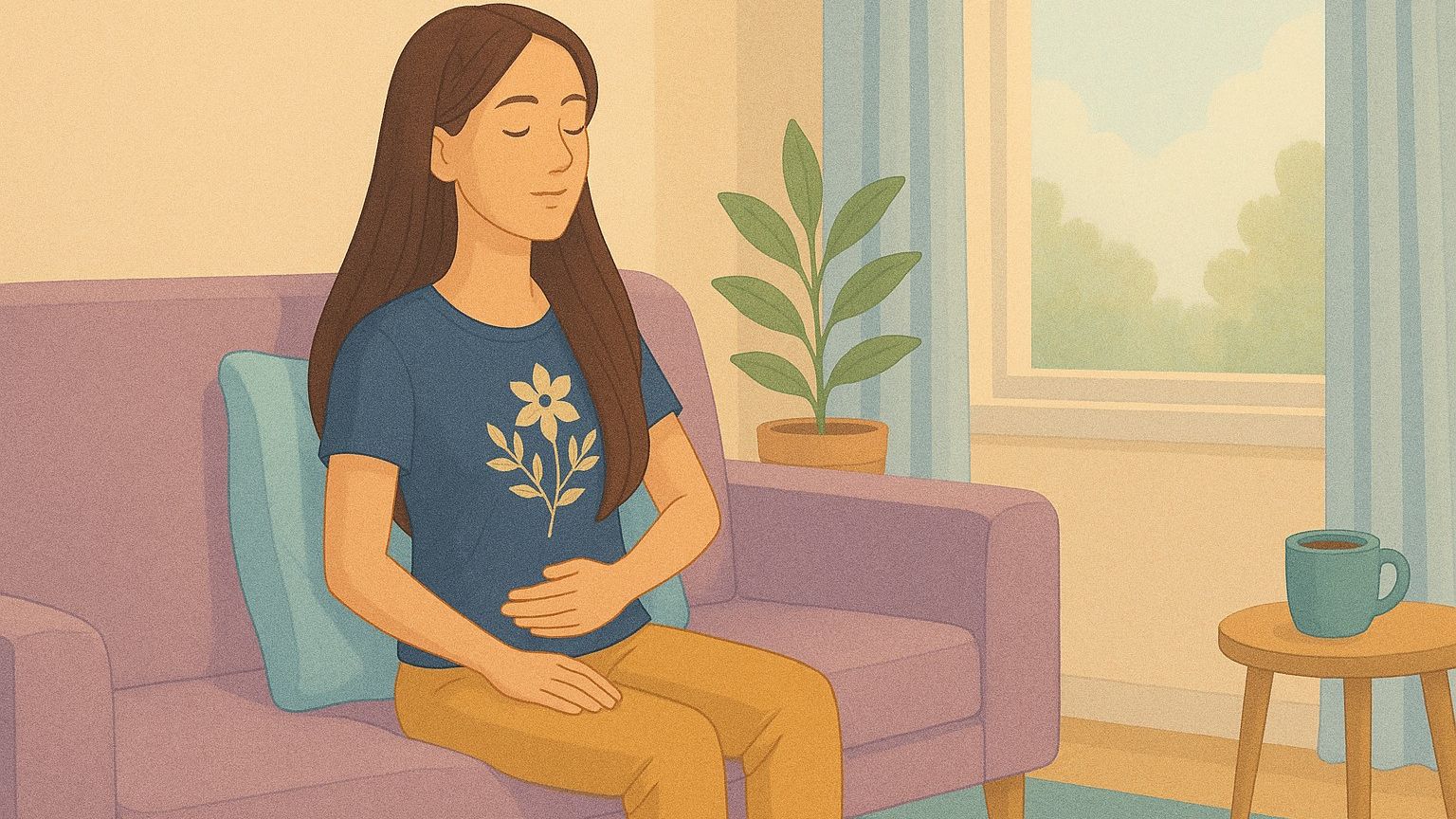
Hug a pillow, folded blanket, or wrap your arms gently around your torso.
-
Let your head tip a little forward until the back of your neck lengthens.
-
Take about 5 slower breaths, at any comfortable pace.
The goal is to give your nervous system a clear sense of support so your vagus nerve can ease out of emergency mode.
When you feel ready, you might blend this with small, device-free vagus practices, like the ones in vagus nerve stimulation exercises without devices.
4. A posture reset for a numb or collapsed body
If you feel flat, foggy, or heavy:
-
Sit or stand and find your three-point stack again.
-
Imagine someone lifting the back of your shirt collar. Let your spine lengthen just a little.
-
Slowly turn your head to look over one shoulder, then the other, noticing shapes or colors.
-
Let your eyes land on something neutral or vaguely pleasant for 10 to 20 seconds.
This gentle orienting can tell your nervous system that the environment is not only “not dangerous,” it might be okay. That can help your vagus nerve nudge you out of freeze little by little.
If posture work is part of a bigger plan to reset after long-term stress, you might appreciate the kind, practical guide on resetting your nervous system after trauma.
A tiny 7-day posture and vagal tone plan
This is not a strict program. Treat it like a menu. Each day’s practice can be 2 to 5 minutes.
Day 1: Only notice
Three times today, pause and notice your posture:
-
At your screen
-
While eating
-
Before bed
You do not have to change anything. Just quietly name it, like “collapsed,” “braced,” or “soft enough.”
Day 2: Add the three-point stack once
Choose one of those moments and try the three-point stack. Notice what shifts in your breathing.
Day 3: Bring in support
Use a pillow, rolled towel, or wall to support your back or arms during a stressful moment. See whether your shoulders can drop even slightly when something is holding you.
Day 4: Combine posture and orienting
In a safe-enough place, soften your posture a little, then slowly look around. Name three things you see or three colors.
Day 5: Pair posture with another vagus-friendly practice
Choose your gentlest posture and add one small vagus tool, like a soft exhale, a tiny hum, or a hand on your chest. When you have capacity, you can explore more options in vagus nerve breathing for trauma recovery.
Day 6: Choose a “vagus-friendly” position
Notice which position has felt best this week. Maybe it is sitting with a pillow in your lap, or lying on the floor with legs on a chair. Mark it as “my vagus-friendly posture for now,” even if it only feels good for 30 seconds.
Day 7: Reflect without attacking yourself
Ask yourself:
-
Which posture made my breathing easier
-
Which position intensified my anxiety or heaviness
-
What small change feels worth carrying into next week
When you are ready to widen the practice, it can be helpful to think about timing too. This article on the best time of day to train your vagal tone can give you ideas on when posture and vagus work might land most gently.
You can repeat this 7-day loop as often as you like, adjusting as your body gives feedback. If something flares pain or panic, that is reason enough to stop. Your body’s “no” is valid.
If you want help seeing your overall pattern as you experiment, the Stress Loop Quiz offers a simple starting map.
Common sticking points and gentle fixes
“I already have pain. Sitting up ‘straight’ hurts.”
You never have to force yourself into a stiff, vertical line. Traditional posture advice can be harmful if you live with chronic pain.
Instead of “straight,” think:
-
“Supported and breathable”
-
Letting cushions or props come to you, rather than lifting yourself to meet the chair
-
Hunting for positions where your breath can move and your muscles do not have to grip as hard
Posture work can be a tiny part of building resilience, like the slow, realistic approach in building resilience to withstand the storms of stress.
“I only notice my posture when I am already overwhelmed.”
This is so common. Brains under chronic stress do not treat posture as a priority.
You can try:
-
A very gentle phone reminder once or twice a day that says, “How is my body stacked right now”
-
Tying posture check-ins to existing habits, like opening your laptop, making tea, or brushing your teeth
-
Using visual cues, like a stone or small object on your desk that means “soften for one breath”
These small moments can become built-in microbreaks, like the ones in 10 nervous system microbreaks to calm your body during the workday.
“Changing posture makes me feel silly.”
If you were taught to ignore your body unless it was in big trouble, pausing to adjust your posture can feel strange at first.
You might experiment with a tiny self-script:
“I am allowed to make my body 2 percent more comfortable. That is not silly. It is care.”
Over time, that attitude of kindness may matter just as much as the shape you are sitting in.
“Opening my posture makes me feel exposed.”
For many people, especially with trauma histories, a more open posture can feel dangerous. Your body might have learned that curling in, hiding, or making yourself small was safer.
You never have to push past that. You can:
-
Keep a pillow, blanket, or cushion in front of your torso
-
Sit with your back to a wall
-
Only change your posture by a degree or two at a time
-
Pause the moment your body says “enough”
If posture work stirs big feelings, it may help to explore it with a therapist or trauma-informed practitioner, like the kind described in what trauma informed care really means.
“Is posture alone enough to improve vagal tone”
Posture is just one piece. Vagal tone is shaped by sleep, stress, food, relationships, movement, boundaries, and more.
What posture can offer is:
-
A low-effort daily practice
-
A way to send small “maybe we are a bit safer” signals to your brain
-
A doorway into more body awareness and self-kindness
Many people find that posture becomes one of several tools they use, side by side with breath, touch, routines, and other gentle vagus practices.
This article is educational and not medical advice. If you have health concerns, consider speaking with a qualified professional.
FAQs
1. What is vagal tone in simple words
Vagal tone describes how flexible and responsive your vagus nerve is. Higher vagal tone usually means your body can move more easily between stress and calm. Lower vagal tone can feel like being stuck in anxiety, shutdown, or a loop between the two.
2. Can changing my posture really improve vagal tone
Gentle, supported posture that allows fuller breathing may help your vagus nerve send steadier signals over time. It is rarely a quick fix, but for many people it becomes a helpful part of a wider nervous system care routine, alongside other tools like breath, grounding, and safe-enough connection.
3. What posture is “best” for my vagus nerve
There is no single perfect posture. In general, positions where your feet feel grounded, your pelvis and ribs are lightly stacked, and your breath has room to move are more supportive. The best posture is one your body can relax into without pain or heavy bracing.
4. Is slouching always bad for my vagus nerve
Short periods of slouching are not a problem. Your nervous system actually enjoys variety. Problems tend to show up when you are stuck in one pattern for many hours, especially if it keeps your breathing tight and shallow. Regular, kind movement between positions matters more than staying “correct.”
5. Can posture work help with anxiety and panic attacks
Posture alone is usually not enough to stop anxiety or panic, but it can be a useful companion. Positions that support calmer breathing and reduce bracing may lower the intensity of some sensations for some people. You might pair posture work with other tools, like grounding, gentle vagus practices, and education such as Neurotoned’s guide on what panic attacks are and why they happen.
6. How often should I check my posture for vagal tone support
Even 2 or 3 gentle check-ins a day can help. For example, once when you sit down to work, once while you eat, and once before bed. It is usually better to do tiny things regularly than to force big changes once in a while.
More gentle reads
If this topic speaks to you, you might also appreciate:
-
A soft evening vagus nerve routine for better sleep, especially if your body struggles to wind down at night.
-
A simple vagus nerve morning routine for anxious minds, if mornings are when your body feels most braced.
-
A realistic daily nervous system reset routine at home that you can gently fold posture work into over time.
And if you would like a simple, personalized starting point, you can always come back to the Stress Loop Quiz.
Disclaimer: This article is educational and not medical advice. If you have health concerns or symptoms that worry you, consider speaking with a qualified healthcare professional.
Discover Your Vagal Tone
Find out how dysregulated your nervous system is and get your personalized roadmap to feeling calm, energized, and in control