
When Your Child Is Melting Down and You Are Running on Empty
It is 5:30pm. Your child is on the kitchen floor, kicking, crying over the wrong color cup. Or maybe they have gone silent and far away, staring at the wall, and nothing you say reaches them. You have tried reasoning. You have tried time-outs. You searched for nervous system activities for kids because you want something that actually helps their body, not just their behavior.
You are in the right place. The activities below are small, playful and body-based. Most take a minute or two. None of them ask your child to calm down on command, because a body that feels unsafe cannot do that.
One gentle note before we start: your own nervous system is part of this too. If you want to understand where your body tends to get stuck when the house gets loud, the Stress Loop Quiz can give you a quick picture.
Quick Answer: Nervous system activities for kids are simple games that help a child's body shift from upset to settled, like bubble breathing, wall pushes, animal walks, humming and a cozy corner. They work best when a calm adult does them alongside the child, and when they are practiced in easy moments, not only in the middle of a meltdown. A nervous system reset for kids is not about making feelings go away. It is about helping their body find its way back to feeling safe enough.
Why Kids Get Stuck: The Gas Pedal and the Brake
Every child has a nervous system, the brain, spinal cord and nerves that carry signals all around the body. Part of its job is to keep watch for danger, all day, without asking permission.
A simple way to explain it, to yourself and to your child, is a car with two pedals:
- The gas pedal is fight or flight, the body getting ready to push or run. You see it as yelling, hitting, running off, a racing heart, fast talking or not being able to sit still.
- The emergency brake is freeze or shutdown, the body going still or switching off when things feel like too much. You see it as going blank, hiding, a flat voice, "I don't care," or suddenly seeming very tired.
- The steady middle is safety, sometimes called the safe and social state. This is when your child can play, laugh, listen and learn.
Kids have a smaller range than adults. Hunger, tiredness, noise, a change in plans or a hard day at school can tip them out of the middle fast. That is not bad behavior or bad parenting. It is a young body doing its job a little too well.
Children also borrow calm from the adults near them. This is called co-regulation: one nervous system helping another settle through tone, pace and presence. So the most powerful tool in this whole post is you, a little slower and a little softer. If that feels impossible some days, Regulating Your Nervous System With Small Kids Around has quick ideas for you first.
10 Simple Nervous System Activities for Kids
Try these when things are calm first, so they feel like games, not punishments. Then they are easier to reach for when feelings get big. Do them with your child. Your body is the demonstration.
- Engine check. Ask, "How is your engine running? Too fast, too slow, or just right?" Younger kids can point to a drawing of a turtle, a rabbit and a cheetah. What you may notice: just naming it often takes a little heat out. It also gives your child words for later.
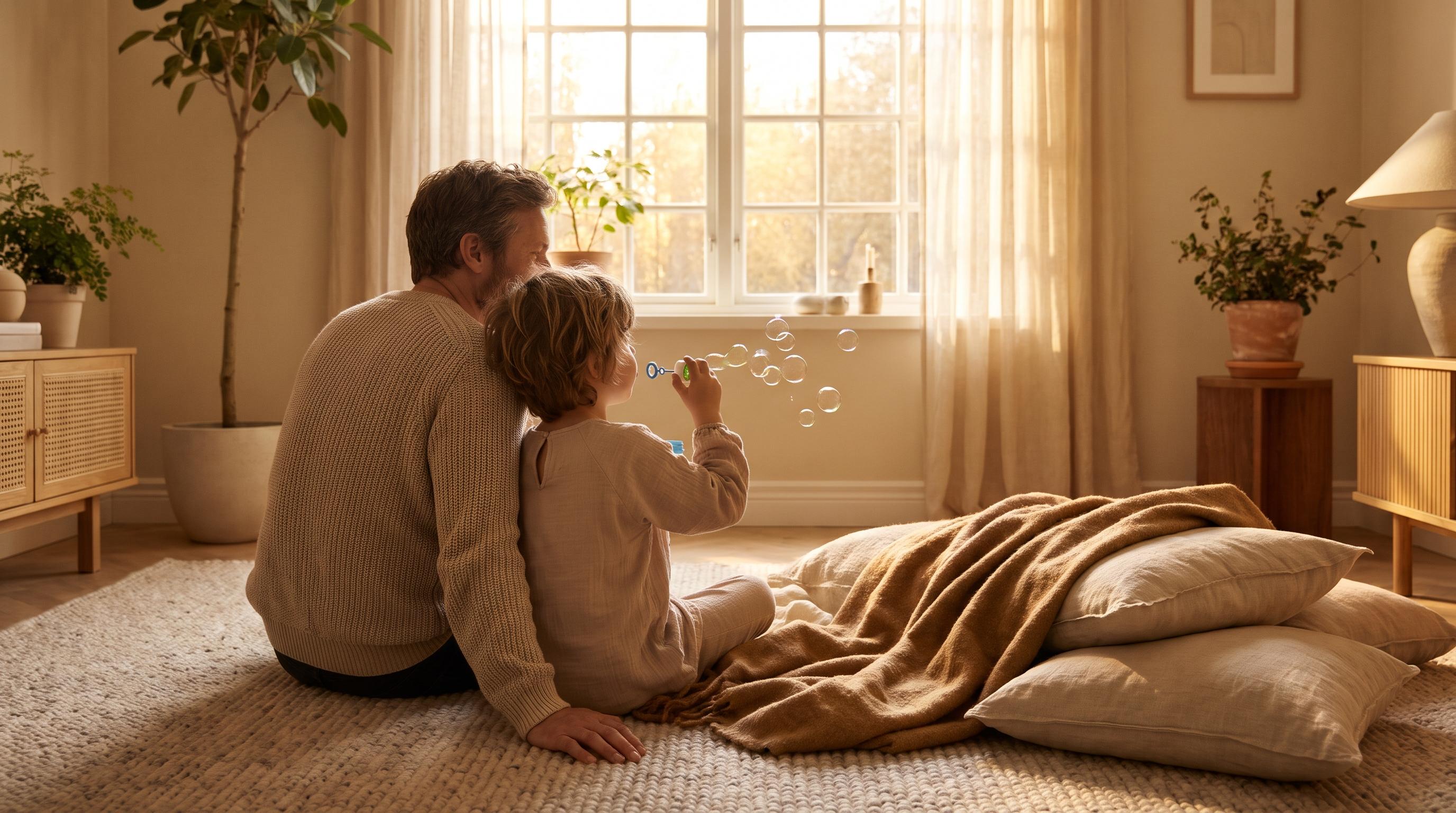
- Bubble breaths. Blow real bubbles, or pretend. A slow, long breath out makes the biggest bubble. You can also try "blow out the birthday candles" one at a time. What you may notice: shoulders drop, the crying gets less jagged. A longer out-breath tends to nudge the body toward the brake gently.
- Wall pushes. Stand facing a wall, hands flat, and push like you are trying to move the house. Count to five, rest, repeat three times. What you may notice: "heavy work" like pushing gives big energy somewhere to go. Many wired kids look steadier afterward.
- Animal walks. Bear crawls down the hall, frog jumps, crab walks, a slow sloth stretch at the end. What you may notice: giggles, sweat, and then a natural slowing down. Movement lets the gas pedal finish what it started.
- Big hug, little hug. Your child wraps their arms around themselves and squeezes tight for three breaths, then loosens. Or try the crossed-arm tapping in Butterfly Hug: How to Do the Technique, Step by Step. What you may notice: firm, rhythmic touch can feel organizing and private, which older kids like.
- I spy safety. "I spy five blue things." Then four soft things, three sounds. What you may notice: eyes start moving and looking around again. This is called orienting, and it tells the body, "I am here, now, and it is okay."
- Humming bee. Lips together, hum like a sleepy bee for one long breath. Hum a favorite song if they prefer. What you may notice: a buzzy feeling in the face and chest, a softer jaw. Some kids love feeling it with a hand on their throat.
- Rock and sway. Rock in a chair, sway side to side together, or swing at the park. What you may notice: soothing, rhythmic movement is one of the oldest ways bodies settle. You may feel it calm you too.
- Cool cloth. A gently cool, damp washcloth on the face, wrists or back of the neck, or splashing hands in cool water at the sink. Keep it comfortable, never icy, with an adult right there. What you may notice: a small "reset" moment, often a deep breath on its own.
- Cozy corner. A small, quiet nest with a soft blanket, pillows, a stuffed animal and maybe a book. For an older child, a heavy pillow resting on the lap can feel grounding. What you may notice: some kids need less input, not more. Going there is not being sent away. You can sit nearby.
If your child is wired: angry, loud, can't stop moving
Start with movement before stillness: wall pushes, animal walks, a run to the mailbox and back. Then add bubble breaths once they can catch their breath. Use fewer words. Lower your voice and get lower to the ground. For little ones in full meltdown, How to Co-Regulate With a Toddler During Meltdowns walks through it step by step.
If your child is flat or shut down: blank, hiding, "I don't care"
Go gentle and warm. Skip demands to talk. Sit near them. Offer a blanket, a warm drink, slow rocking, or I spy with very easy questions. Small, interesting things can help a frozen body wake up: a funny sound, a squishy toy, humming. Pressure to "use your words" usually makes the brake press harder.
Two Playful Ways to Learn About the Nervous System
Many parents searching for nervous system activities for kids also want something educational. These two are low-prep and pair nicely with the calming games, because kids are more willing to use a tool they understand.
- The ruler drop. Hold a ruler upright just above your child's open fingers. Drop it without warning and see where they catch it. Try again when they are tired, or after a big laugh. The lesson: signals travel from eyes to brain to hand, and how we feel changes how fast that happens.
- The touch map. With eyes closed, gently touch your child's fingertip with one or two cotton swab tips and ask, "One or two?" Then try the back of the hand or the arm. The lesson: fingertips feel more because they have more sensory receptors. Use soft tips, stay away from the face, and supervise closely.
For more ideas, Simple, Kid-Friendly Ways to Teach Kids About the Nervous System has scripts and games by age.
Which Activities Suit Which Age
- Ages 2 to 4: keep it physical and simple. Bubbles, rocking, big hugs, animal walks. You lead, every time. Words should be short: "Big breath out. I'm here."
- Ages 5 to 8: games and pretend play shine here. Engine check, I spy, humming bee, a cozy corner they help build.
- Ages 9 to 12: offer choices and privacy. Wall pushes, cool cloth, self-hug, music. Explain the gas and brake so it feels like their own knowledge, not your rule.
Every child is different. Neurodivergent kids may find some sensations soothing that others find too much, and the other way around. Follow their lead. If a tool makes things worse, that is useful information, not failure.
A Gentle 7-Day Plan
Practice in calm moments, a few minutes a day. Think of it as play, not homework.
| Day | Focus | Time |
|---|---|---|
| 1 | Draw the gas pedal and brake together, do an engine check | 3 min |
| 2 | Bubble breaths or birthday candles | 2 min |
| 3 | Wall pushes and one animal walk | 3 min |
| 4 | I spy safety on the way to school or at dinner | 2 min |
| 5 | Humming bee and big hug, little hug | 2 min |
| 6 | Build a cozy corner together | 5 min |
| 7 | Let your child pick their two favorites and practice them | 3 min |
If evenings are the hardest time, you might fold one or two of these into A Soft, Connected Bedtime Routine For Anxious Kids.
Common Sticking Points
"My child refuses."
That is very common, especially mid-meltdown. Don't push. Do the activity yourself, quietly, nearby. Many kids join in a minute later, or the next day, once it feels like their idea.
"It worked once, then stopped working."
Novelty fades. Rotate tools, change the game, let your child invent a new animal walk. Nothing works every single time, and that is okay.
"I lose it before they do."
You are human, and you are probably tired. Take your own breath out first, even one. Repair afterward with something simple: "I got loud. I'm sorry. Let's try again." Repair teaches as much as calm does.
"They use the tools to avoid things."
Sometimes a child does need a break before they can face the hard thing. Keep breaks short and clear: "Two minutes in your cozy corner, then we'll look at homework together."
When to Talk to a Professional
Big feelings are a normal part of childhood. But it is worth talking with your pediatrician or a child therapist if meltdowns or shutdowns are frequent, getting worse, started after a frightening or traumatic event, or are affecting sleep, school, eating or safety. These activities can sit alongside professional support. They are not a replacement for it.
FAQs
What does a nervous system reset for kids actually mean?
It means helping your child's body shift from upset back toward feeling safe enough. It is not a switch that wipes away feelings for good. It is a small return to the steady middle, practiced many times.
Can kids do these activities at school?
Many can. Quiet ones like a self-hug, humming under the breath, pushing palms together or I spy work almost anywhere. You might share the ones your child likes with their teacher.
How long does it take to see a difference?
It varies for every child. Some settle a little faster within days, others take longer. Look for small signs, like recovering a bit sooner or asking for a tool themselves.
Do weighted blankets help kids calm down?
Some children find deep pressure comforting. Pediatric guidance says weighted blankets are only suitable for children over 12 months, and it is wise to check with your child's doctor about size and weight first.
Should I give my child supplements for their nervous system?
Please talk with your child's doctor before giving any supplement. The activities here focus on simple, everyday things like movement, breath, routine, sleep and connection.
What is the most important nervous system care for kids?
A calm, warm adult nearby, predictable routines, enough sleep and food, and time to move and play. The games help, but your steady presence is what they lean on most.
More Gentle Reads
- Simple Regulation Scripts Teens Actually Learn From
- Fight, Flight, Freeze, Fawn: Examples in Everyday Life
- Parent Nervous System Reset After Long Caregiving Days
- Five-Minute Reset for Sensory Overload
Disclaimer: This article is educational and not medical advice. If you have concerns about your child's health or behavior, consider speaking with their pediatrician or a qualified professional.